Re: [SIGCIS-Members] [Ext] Re: CfP: „Flexibility“ and „Agility“ Strategies, Practices, and Ambivalences of a Key Concept since the 1980s

Seconding Dave’s thoughts here, and I wanted to note that Prof. Miriam Posner of UCLA (who may not be on this list) has a new piece coming out about this in an upcoming LOGIC issue. It’s titled “Agile and the Long Crisis of Software.” Best, MH ______________________ Mar Hicks, Ph.D. Associate Professor of History of Technology Humanities Department Illinois Institute of Technology marhicks.com *Programmed Inequality <https://mitpress.mit.edu/books/programmed-inequality>: How Britain Discarded Women Technologists and Lost Its Edge in Computing *(2017) *Your Computer Is On Fire <https://mitpress.mit.edu/books/your-computer-fire> * (2021) On Mar 26, 2022, at 6:57 PM, Dave Foster <dwfoster1@outlook.com> wrote: Luke Scrum and agile are absolutely new forms of Taylorism. This was not original intent but it is what they have become in the corporate world, a new universal program management religion that has gone far beyond software development purposes. In school we studied the oldies of Gantt and PERT, then in my working experience I have gone through various fashion waves spanning TQM, Earned Value, Lean/Six Sigma, etc. crazes during their respective heydays and most recently scrum/agile. We have spent a lot of time over the years and continue to spend a good deal of planning time setting up our stories, features, epics, etc. and working the plan. Software development has always been a sub-task so I don't have any direct experience with the comparative value on those types of projects - I've always worked in higher levels of overall systems development where, IMO, a waterfall or whatever is as good as anything else, thought this is heresy in the scrum/agile. I think it is the organizational pressure to institute a consistent framework, which is certainly a fair objective. But to me, the framework has never made any difference - we are fundamentally tracking progress and dollars. Note, my experience has been on technical development projects in the Defense Dept and in private sector consulting. I don't have any specific references in mind. I think that you may find that the primary challenges to the way of scrum & agile come from outside the software development world where, nevertheless, the concepts have been enthusiastically adopted and adapted. Best/Dave Texas Tech University (PhD student) and Accenture AI ------------------------------ *From:* Members <members-bounces@lists.sigcis.org> on behalf of Luke Fernandez <luke.fernandez@gmail.com> *Sent:* Saturday, March 26, 2022 12:44 *To:* Schmitt, Martin <martin.schmitt@tu-darmstadt.de> *Cc:* Sigcis <members@sigcis.org> *Subject:* Re: [SIGCIS-Members] CfP: „Flexibility“ and „Agility“ Strategies, Practices, and Ambivalences of a Key Concept since the 1980s What an interesting conference. And what interesting questions it poses! For example, this one on page 5 of the CFP: "How did agile software development shape the concepts of work and employment?" If anyone from this listserv has some cites that speak to this question I'd be psyched if you shared a few. I make no claims to know anything about this subject apart from recently finishing Cal Newport's *A World Without Email *where he touches on these concerns. Among other things, Newport wishes for a productivity revolution in knowledge work. And he thinks that it might happen if we replace email with some of the productivity tools and techniques that are used in software development like kanban boards and scrum and agile work processes. He insists that this can happen without knowledge work suffering the same forms of regimentation/acceleration/dehumanization/surveillance that happened to many forms of manual labor with the implementation of Taylorism and Fordism (cf. page 119). But how plausible are Newport's claims? Are scrum and agile new forms of Taylorism? Or are they something altogether different? Is it even helpful to view these techniques through the lens of Taylorism? Best, Luke Fernandez Weber State University On Sat, Mar 26, 2022 at 8:23 AM Schmitt, Martin < martin.schmitt@tu-darmstadt.de> wrote: Dear SIGCIS, We will host a conference on „Flexibility“ and „Agility“: Strategies, Practices, and Ambivalences of a Key Concept since the 1980s (together with Leibniz Centre for Contemporary History Potsdam (ZZF), Helmut-Schmidt-University/University of the Federal Armed Forces Hamburg (HSU), SPP 2267 “The Digitalization of Working Worlds. Conceptualising and Capturing a Systemic Transformation.“). Keynote speaker is Richard Sennett. Date: 17/18 November 2022 Location: Darmstadt You will find the call for paper here( https://www.geschichte.tu-darmstadt.de/flexibility <https://urldefense.com/v3/__https://www.geschichte.tu-darmstadt.de/flexibility__;!!LIr3w8kk_Xxm!7sGpzhf1Qw30f4UTimKQ8Tk8T0a9Y0f9OQw6SCuqmqL6IgPuZvKwlO5JU4M29uo$>). Please submit your proposed papers by 30 May 2022. For the SIGCIS community, especially the parts on agility/software programing and digital automation are the most interesting one. Best Martin Wissenschaftlicher Mitarbeiter | Post-Doc | digital enthusiast Technische Universität Darmstadt Institut für Geschichte Fachgebiet Technikgeschichte Mail: martin.schmitt@tu-darmstadt.de Tel: +49 6151-16-57327 http://www.computerisierung.com <https://urldefense.com/v3/__http://www.computerisierung.com__;!!LIr3w8kk_Xxm!7sGpzhf1Qw30f4UTimKQ8Tk8T0a9Y0f9OQw6SCuqmqL6IgPuZvKwlO5JphCCEh4$> & Assoziierter Wissenschaftler LEIBNIZ-ZENTRUM FÜR ZEITHISTORISCHE FORSCHUNG | POTSDAM Vice Chair IFIP WG 9.7 „History of computing“ Zuletzt erschienen: *Die Digitalisierung der Kreditwirtschaft*. Computereinsatz in den Sparkassen der Bundesrepublik und der DDR 1957-1991, Göttingen: Wallstein-Verlag 2021, https://www.wallstein-verlag.de/9783835333710-die-digitalisierung-der-kredit... <https://urldefense.com/v3/__https://www.wallstein-verlag.de/9783835333710-die-digitalisierung-der-kreditwirtschaft.html__;!!LIr3w8kk_Xxm!7sGpzhf1Qw30f4UTimKQ8Tk8T0a9Y0f9OQw6SCuqmqL6IgPuZvKwlO5JLr9b4Jw$> _______________________________________________ This email is relayed from members at sigcis.org <https://urldefense.com/v3/__http://sigcis.org__;!!LIr3w8kk_Xxm!7sGpzhf1Qw30f4UTimKQ8Tk8T0a9Y0f9OQw6SCuqmqL6IgPuZvKwlO5J-D7hcB8$>, the email discussion list of SHOT SIGCIS. Opinions expressed here are those of the member posting and are not reviewed, edited, or endorsed by SIGCIS. The list archives are at http://lists.sigcis.org/pipermail/members-sigcis.org/ <https://urldefense.com/v3/__http://lists.sigcis.org/pipermail/members-sigcis.org/__;!!LIr3w8kk_Xxm!7sGpzhf1Qw30f4UTimKQ8Tk8T0a9Y0f9OQw6SCuqmqL6IgPuZvKwlO5J9XADJ2s$> and you can change your subscription options at http://lists.sigcis.org/listinfo.cgi/members-sigcis.org <https://urldefense.com/v3/__http://lists.sigcis.org/listinfo.cgi/members-sigcis.org__;!!LIr3w8kk_Xxm!7sGpzhf1Qw30f4UTimKQ8Tk8T0a9Y0f9OQw6SCuqmqL6IgPuZvKwlO5JrPtShlA$> _______________________________________________ This email is relayed from members at sigcis.org, the email discussion list of SHOT SIGCIS. Opinions expressed here are those of the member posting and are not reviewed, edited, or endorsed by SIGCIS. The list archives are at http://lists.sigcis.org/pipermail/members-sigcis.org/ and you can change your subscription options at http://lists.sigcis.org/listinfo.cgi/members-sigcis.org

Hi all, Prolog was a programming language based on formal logic, designed in 1972 at the university of Marseille by Alain Colmerauer and his team. It was adopted ten years later in Japan to develop AI systems. Nowadays, it is almost as forgotten as Algol or APL. A conference is planned for November 2022 in Paris to pay hommage to Colmerauer and his work. A Colmerauer Prize Committee is formed, chaired by Prof. em. Robert Kowalski, Distinguished Research Fellow at Imperial College, London. I would like to know whether people, beyond Colmerauer's circle, have included Prolog, its development and use, in their historical research. Thanks for your answers! Best regards, Pierre Mounier-Kuhn

On Mar 30, 2022, at 4:59 AM, Pierre Mounier-Kuhn <mounier@msh-paris.fr> wrote:
. I would like to know whether people, beyond Colmerauer's circle, have included Prolog, its development and use, in their historical research.
I have been in search of source code, documentation, etc., from historic Prolog and related logic programming projects for several years, as described here: https://www.cs.nmsu.edu/ALP/2020/10/preserving-more-of-the-history-of-logic-... A web site with the materials I’ve found is available here: http://www.softwarepreservation.org/projects/prolog/ Paul McJones

Hi Pierre, This may be known to you already, but prior to Prolog, Colmerauer headed up a machine translation project at the Université de Montréal, 1968-1971. Brian Harris – translation theorist – shares some recollections of working with Colmerauer here: https://unprofessionaltranslation.blogspot.com/2017/06/alain-colmerauer-mach... I have a report on the systèmes-Q / Q-systems Colmerauer wrote in Montreal if anyone is interested. Q-systems became the foundation of a system called TAUM-MÉTÉO, used to translate Canadian government weather reports – used for 20 years. I can't answer questions about Q-systems themselves, but am familiar with the project in Montreal. (TAUM – Projet de traduction automatique de l'Université de Montréal.) Best, Christine On Wed, Mar 30, 2022 at 8:04 AM Pierre Mounier-Kuhn <mounier@msh-paris.fr> wrote:
Hi all, Prolog was a programming language based on formal logic, designed in 1972 at the university of Marseille by Alain Colmerauer and his team. It was adopted ten years later in Japan to develop AI systems. Nowadays, it is almost as forgotten as Algol or APL. A conference is planned for November 2022 in Paris to pay hommage to Colmerauer and his work. A Colmerauer Prize Committee is formed, chaired by Prof. em. Robert Kowalski, Distinguished Research Fellow at Imperial College, London. I would like to know whether people, beyond Colmerauer's circle, have included Prolog, its development and use, in their historical research. Thanks for your answers! Best regards, Pierre Mounier-Kuhn _______________________________________________ This email is relayed from members at sigcis.org, the email discussion list of SHOT SIGCIS. Opinions expressed here are those of the member posting and are not reviewed, edited, or endorsed by SIGCIS. The list archives are at http://lists.sigcis.org/pipermail/members-sigcis.org/ and you can change your subscription options at http://lists.sigcis.org/listinfo.cgi/members-sigcis.org
On Mar 30, 2022, at 8:19 AM, christine mitchell <christletine@gmail.com> wrote:
I have a report on the systèmes-Q / Q-systems Colmerauer wrote in Montreal if anyone is interested. Q-systems became the foundation of a system called TAUM-MÉTÉO, used to translate Canadian government weather reports – used for 20 years. I can't answer questions about Q-systems themselves, but am familiar with the project in Montreal. (TAUM – Projet de traduction automatique de l'Université de Montréal.)
Christine, A scan of Colmerauer’s original Q-systems report is online at his personal web site:
Alain Colmerauer. Les systèmes-q ou un formalisme pour analyser et synthétiser des phrases sur ordinateur. Internal publication no 43, Département d'Informatique, Université de Montréal, September 1970. Online at alain.colmerauer.free.fr <http://alain.colmerauer.free.fr/alcol/ArchivesPublications/SystemesQ/SystemesQ.pdf> After coming across Brian Harris’s article I have been trying (so far unsuccessfully) to find a copy of the 1971 TAUM report:
Alain Colmerauer, editor. TAUM 71. Montreal: Projet de Traduction Automatique de l'Université de Montréal, January 1971, 223 pages. Brian Harris and Laurent Belisle. POLYGRAM grapho-morphology analyzer for English. In TAUM 71, pp. 46-105.
Here’s the Q-systems section of the web site I mentioned in my previous message: http://www.softwarepreservation.org/projects/prolog/l#Montreal <http://www.softwarepreservation.org/projects/prolog/l#Montreal> Paul

I might suggest Prolog is still showing signs of life. The rather famous IBM Watson system that played on Jeopardy a few years back included a Prolog component that was non-trivial and quite interesting. https://www.cs.nmsu.edu/ALP/2011/03/natural-language-processing-with-prolog-... --- Dr. Ted Pedersen http://www.d.umn.edu/~tpederse UEA-A Member : https://sites.google.com/d.umn.edu/ueaumd On Wed, Mar 30, 2022 at 11:54 AM Paul McJones <paul@mcjones.org> wrote:
On Mar 30, 2022, at 8:19 AM, christine mitchell <christletine@gmail.com> wrote:
I have a report on the systèmes-Q / Q-systems Colmerauer wrote in Montreal if anyone is interested. Q-systems became the foundation of a system called TAUM-MÉTÉO, used to translate Canadian government weather reports – used for 20 years. I can't answer questions about Q-systems themselves, but am familiar with the project in Montreal. (TAUM – Projet de traduction automatique de l'Université de Montréal.)
Christine,
A scan of Colmerauer’s original Q-systems report is online at his personal web site:
- Alain Colmerauer. Les systèmes-q ou un formalisme pour analyser et synthétiser des phrases sur ordinateur. Internal publication no 43, Département d'Informatique, Université de Montréal, September 1970. Online at alain.colmerauer.free.fr <http://alain.colmerauer.free.fr/alcol/ArchivesPublications/SystemesQ/SystemesQ.pdf>
After coming across Brian Harris’s article I have been trying (so far unsuccessfully) to find a copy of the 1971 TAUM report:
- Alain Colmerauer, editor. TAUM 71. Montreal: Projet de Traduction Automatique de l'Université de Montréal, January 1971, 223 pages. - Brian Harris and Laurent Belisle. POLYGRAM grapho-morphology analyzer for English. In TAUM 71, pp. 46-105.
Here’s the Q-systems section of the web site I mentioned in my previous message:
http://www.softwarepreservation.org/projects/prolog/l#Montreal
Paul _______________________________________________ This email is relayed from members at sigcis.org, the email discussion list of SHOT SIGCIS. Opinions expressed here are those of the member posting and are not reviewed, edited, or endorsed by SIGCIS. The list archives are at http://lists.sigcis.org/pipermail/members-sigcis.org/ and you can change your subscription options at http://lists.sigcis.org/listinfo.cgi/members-sigcis.org

Pierre, you mention the use of Prolog in Japan, but IBM was also quite interested in it during the 1980s (I believe in the U.S.). They had a recruiting table set up at the 1984 ACM Computer Science Conference just to recruit Prolog developers. You're probably familiar with a Windows-based "Prolog" that was sold under the name Turbo Prolog (possibly from Borland). I put Prolog in quotes because Turbo Prolog required compile-time variable-type binding, which is good for efficiency, but so inflexible for AI systems that it was useless. There were several other Prolog implementations, such as Arity Prolog, that were real Prolog, but that had their own extensions to support things like character-based windows for the UI (hot stuff in the 1980s). I may have docs or info on some of these other Prologs if anyone is interested. Personal note: Prolog is still the most powerful programming language ever developed. I found that the number of lines of C or Java code to the number of lines of Prolog code to implement the same functionality (exclusive of the UI) was 10 to 100, depending on the complexity. But good use of Prolog requires extensive rewiring of the programmer's brain to do anything but simple stuff. (OK, OK, APL fans, I'll admit you have the same advantage for numerical apps!) Bill ________________________________ From: Members <members-bounces@lists.sigcis.org> on behalf of Pierre Mounier-Kuhn <mounier@msh-paris.fr> Sent: Wednesday, March 30, 2022 7:58 AM To: members <members@sigcis.org> Subject: [SIGCIS-Members] History of Prolog CAUTION: This email originated from outside of Concordia University. Do not click links or open attachments unless you recognize the sender and know the content is safe. Hi all, Prolog was a programming language based on formal logic, designed in 1972 at the university of Marseille by Alain Colmerauer and his team. It was adopted ten years later in Japan to develop AI systems. Nowadays, it is almost as forgotten as Algol or APL. A conference is planned for November 2022 in Paris to pay hommage to Colmerauer and his work. A Colmerauer Prize Committee is formed, chaired by Prof. em. Robert Kowalski, Distinguished Research Fellow at Imperial College, London. I would like to know whether people, beyond Colmerauer's circle, have included Prolog, its development and use, in their historical research. Thanks for your answers! Best regards, Pierre Mounier-Kuhn

On 31-Mar-22 05:29, McMillan, William W wrote: ...
Personal note: Prolog is still the most powerful programming language ever developed. I found that the number of lines of C or Java code to the number of lines of Prolog code to implement the same functionality (exclusive of the UI) was 10 to 100, depending on the complexity. But good use of Prolog requires extensive rewiring of the programmer's brain to do anything but simple stuff.
(OK, OK, APL fans, I'll admit you have the same advantage for numerical apps!)
SNOBOL4 also had the reputation for economy of lines of code, and of obscure coding. Easily a factor 10 compared to Algol, and 20 compared to PL/I, for string processing, if I recall correctly. SNOBOL still has its fans, apparently. Regards Brian Carpenter

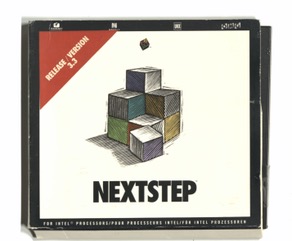
Sorry guys, but I am going to object :) Objective C and the NextStep Operating System changed the world. Howie Schneider howiehow@mac.com 718-290-0681
On Mar 30, 2022, at 4:49 PM, Brian E Carpenter <brian.e.carpenter@gmail.com> wrote:
On 31-Mar-22 05:29, McMillan, William W wrote: ...
Personal note: Prolog is still the most powerful programming language ever developed. I found that the number of lines of C or Java code to the number of lines of Prolog code to implement the same functionality (exclusive of the UI) was 10 to 100, depending on the complexity. But good use of Prolog requires extensive rewiring of the programmer's brain to do anything but simple stuff. (OK, OK, APL fans, I'll admit you have the same advantage for numerical apps!)
SNOBOL4 also had the reputation for economy of lines of code, and of obscure coding. Easily a factor 10 compared to Algol, and 20 compared to PL/I, for string processing, if I recall correctly. SNOBOL still has its fans, apparently.
Regards Brian Carpenter
_______________________________________________ This email is relayed from members at sigcis.org, the email discussion list of SHOT SIGCIS. Opinions expressed here are those of the member posting and are not reviewed, edited, or endorsed by SIGCIS. The list archives are at http://lists.sigcis.org/pipermail/members-sigcis.org/ and you can change your subscription options at http://lists.sigcis.org/listinfo.cgi/members-sigcis.org

I took my first Prolog course in the summer of 1984 and got hooked immediately. In the late 80s, the Japanese state gave 12 years of generous funding to SICS, the Swedish Institute of Computer Science - until its disappearance in 2018 the largest computer science research institute in Sweden for >30 years - to "develop 5th generation programming languages." This led to many things, including SICStus Prolog, which still has many active users and is in the top10 of most thanked code libraries in published research: https://sicstus.sics.se/ Some of the people still developing solvers for Prolog are among the best programmers I have had the pleasure to work with. I worked at SICS for 18 years and wrote many meta-interpreters for Prolog myself, but I did not commit any new constraint solvers to the core of SICStus. A story typical of early 90s Prolog development is me asking one of my mentors, Torkel Franzén, whom some of you would remember from the Usenet days, why he did not promote his latest solver, was it no good? (I used it in my course on automated theorem proving and it rocked.) Well, he said, it's the fastest prover in the world, by far. But it's for intuitionistic logic. Thus, it has no merit. Torkel and I taught a string of Ph D courses in the 90s, including Foundations of Logic Programming, based on the wonderful book by Lloyd. Torkel said to the students that if you can't find a 1st ed, just buy a later edition and rip out the added chapters. We had lots of fun in particular with not(not(not( constructions, i.e. negated negation-as-failure clauses... M. On Wed, 30 Mar 2022 at 18:30, McMillan, William W <william.mcmillan@cuaa.edu> wrote:
Pierre, you mention the use of Prolog in Japan, but IBM was also quite interested in it during the 1980s (I believe in the U.S.). They had a recruiting table set up at the 1984 ACM Computer Science Conference just to recruit Prolog developers.
You're probably familiar with a Windows-based "Prolog" that was sold under the name Turbo Prolog (possibly from Borland). I put Prolog in quotes because Turbo Prolog required compile-time variable-type binding, which is good for efficiency, but so inflexible for AI systems that it was useless.
There were several other Prolog implementations, such as Arity Prolog, that were real Prolog, but that had their own extensions to support things like character-based windows for the UI (hot stuff in the 1980s).
I may have docs or info on some of these other Prologs if anyone is interested.
Personal note: Prolog is still the most powerful programming language ever developed. I found that the number of lines of C or Java code to the number of lines of Prolog code to implement the same functionality (exclusive of the UI) was 10 to 100, depending on the complexity. But good use of Prolog requires extensive rewiring of the programmer's brain to do anything but simple stuff.
(OK, OK, APL fans, I'll admit you have the same advantage for numerical apps!)
Bill
------------------------------ *From:* Members <members-bounces@lists.sigcis.org> on behalf of Pierre Mounier-Kuhn <mounier@msh-paris.fr> *Sent:* Wednesday, March 30, 2022 7:58 AM *To:* members <members@sigcis.org> *Subject:* [SIGCIS-Members] History of Prolog
*CAUTION:* This email originated from outside of Concordia University. Do not click links or open attachments unless you recognize the sender and know the content is safe. Hi all, Prolog was a programming language based on formal logic, designed in 1972 at the university of Marseille by Alain Colmerauer and his team. It was adopted ten years later in Japan to develop AI systems. Nowadays, it is almost as forgotten as Algol or APL. A conference is planned for November 2022 in Paris to pay hommage to Colmerauer and his work. A Colmerauer Prize Committee is formed, chaired by Prof. em. Robert Kowalski, Distinguished Research Fellow at Imperial College, London. I would like to know whether people, beyond Colmerauer's circle, have included Prolog, its development and use, in their historical research. Thanks for your answers! Best regards, Pierre Mounier-Kuhn _______________________________________________ This email is relayed from members at sigcis.org, the email discussion list of SHOT SIGCIS. Opinions expressed here are those of the member posting and are not reviewed, edited, or endorsed by SIGCIS. The list archives are at http://lists.sigcis.org/pipermail/members-sigcis.org/ and you can change your subscription options at http://lists.sigcis.org/listinfo.cgi/members-sigcis.org

Thanks so much, Mar! I am actually on the list but missed this discussion. It's true, I have a piece on Agile coming out in LOGIC any day now, focusing on Agile as one in a line of management strategies to corral software labor. In my research, the best critique of Agile I discovered is Michael Eby's in the *New Left Review: * https://newleftreview.org/sidecar/posts/129. There are many, many other critiques of Agile out there, but I thought Eby's was the most astute, in terms of its political analysis. You might also be interested in dorian taylor's "Agile as Trauma": https://doriantaylor.com/agile-as-trauma. Clive Thompson's *Coders* also has some useful information about Agile and its relationship to continuous deployment. For the piece, I interviewed quite a number of developers and other technical workers, and, looking at my notes, I see that many of them independently raised the issue of Agile's resemblance to Taylorism. This is perhaps counterintuitive, since Agile explicitly prioritizes workers' control over their work, but the developers I spoke to cited the reduction of tasks into small units ("user stories"), the universal visibility of everyone's progress, and the metrics ("story points") that have steadily calcified from worker-generated estimates to vehicles for surveillance (e.g., "velocity" dashboards). One developer told me that his disillusionment with Agile started when he described to his aunt, a lawyer, what happens in daily standup. She was appalled that a highly skilled professional was required to account for his every decision in such a granular way. There is much more work to do on Agile, in my opinion. For example, one section from my article that got left on the cutting-room floor was about the coevolution of Agile/lean methods of software development and the just-in-time model of factory production. (T*he Phoenix Project*, from 2018, is a weird novel about DevOps [for real] that makes this connection startlingly explicit.) Just some thoughts! Really interesting topic to think about. Miriam Posner Assistant Professor, Information Studies & Digital Humanities UCLA On Mon, Mar 28, 2022 at 1:54 PM Mar Hicks <mhicks1@iit.edu> wrote:
Seconding Dave’s thoughts here, and I wanted to note that Prof. Miriam Posner of UCLA (who may not be on this list) has a new piece coming out about this in an upcoming LOGIC issue. It’s titled “Agile and the Long Crisis of Software.”
Best, MH ______________________ Mar Hicks, Ph.D. Associate Professor of History of Technology Humanities Department Illinois Institute of Technology marhicks.com
*Programmed Inequality <https://mitpress.mit.edu/books/programmed-inequality>: How Britain Discarded Women Technologists and Lost Its Edge in Computing *(2017) *Your Computer Is On Fire <https://mitpress.mit.edu/books/your-computer-fire> * (2021)
On Mar 26, 2022, at 6:57 PM, Dave Foster <dwfoster1@outlook.com> wrote:
Luke
Scrum and agile are absolutely new forms of Taylorism. This was not original intent but it is what they have become in the corporate world, a new universal program management religion that has gone far beyond software development purposes. In school we studied the oldies of Gantt and PERT, then in my working experience I have gone through various fashion waves spanning TQM, Earned Value, Lean/Six Sigma, etc. crazes during their respective heydays and most recently scrum/agile. We have spent a lot of time over the years and continue to spend a good deal of planning time setting up our stories, features, epics, etc. and working the plan. Software development has always been a sub-task so I don't have any direct experience with the comparative value on those types of projects - I've always worked in higher levels of overall systems development where, IMO, a waterfall or whatever is as good as anything else, thought this is heresy in the scrum/agile. I think it is the organizational pressure to institute a consistent framework, which is certainly a fair objective. But to me, the framework has never made any difference - we are fundamentally tracking progress and dollars. Note, my experience has been on technical development projects in the Defense Dept and in private sector consulting.
I don't have any specific references in mind. I think that you may find that the primary challenges to the way of scrum & agile come from outside the software development world where, nevertheless, the concepts have been enthusiastically adopted and adapted.
Best/Dave Texas Tech University (PhD student) and Accenture AI ------------------------------ *From:* Members <members-bounces@lists.sigcis.org> on behalf of Luke Fernandez <luke.fernandez@gmail.com> *Sent:* Saturday, March 26, 2022 12:44 *To:* Schmitt, Martin <martin.schmitt@tu-darmstadt.de> *Cc:* Sigcis <members@sigcis.org> *Subject:* Re: [SIGCIS-Members] CfP: „Flexibility“ and „Agility“ Strategies, Practices, and Ambivalences of a Key Concept since the 1980s
What an interesting conference. And what interesting questions it poses! For example, this one on page 5 of the CFP:
"How did agile software development shape the concepts of work and employment?"
If anyone from this listserv has some cites that speak to this question I'd be psyched if you shared a few.
I make no claims to know anything about this subject apart from recently finishing Cal Newport's *A World Without Email *where he touches on these concerns. Among other things, Newport wishes for a productivity revolution in knowledge work. And he thinks that it might happen if we replace email with some of the productivity tools and techniques that are used in software development like kanban boards and scrum and agile work processes. He insists that this can happen without knowledge work suffering the same forms of regimentation/acceleration/dehumanization/surveillance that happened to many forms of manual labor with the implementation of Taylorism and Fordism (cf. page 119). But how plausible are Newport's claims? Are scrum and agile new forms of Taylorism? Or are they something altogether different? Is it even helpful to view these techniques through the lens of Taylorism?
Best,
Luke Fernandez Weber State University
On Sat, Mar 26, 2022 at 8:23 AM Schmitt, Martin < martin.schmitt@tu-darmstadt.de> wrote:
Dear SIGCIS,
We will host a conference on „Flexibility“ and „Agility“: Strategies, Practices, and Ambivalences of a Key Concept since the 1980s (together with Leibniz Centre for Contemporary History Potsdam (ZZF), Helmut-Schmidt-University/University of the Federal Armed Forces Hamburg (HSU), SPP 2267 “The Digitalization of Working Worlds. Conceptualising and Capturing a Systemic Transformation.“). Keynote speaker is Richard Sennett. Date: 17/18 November 2022 Location: Darmstadt You will find the call for paper here( https://www.geschichte.tu-darmstadt.de/flexibility <https://urldefense.com/v3/__https://www.geschichte.tu-darmstadt.de/flexibility__;!!LIr3w8kk_Xxm!7sGpzhf1Qw30f4UTimKQ8Tk8T0a9Y0f9OQw6SCuqmqL6IgPuZvKwlO5JU4M29uo$>). Please submit your proposed papers by 30 May 2022.
For the SIGCIS community, especially the parts on agility/software programing and digital automation are the most interesting one.
Best Martin
Wissenschaftlicher Mitarbeiter | Post-Doc | digital enthusiast
Technische Universität Darmstadt Institut für Geschichte Fachgebiet Technikgeschichte
Mail: martin.schmitt@tu-darmstadt.de Tel: +49 6151-16-57327 http://www.computerisierung.com <https://urldefense.com/v3/__http://www.computerisierung.com__;!!LIr3w8kk_Xxm!7sGpzhf1Qw30f4UTimKQ8Tk8T0a9Y0f9OQw6SCuqmqL6IgPuZvKwlO5JphCCEh4$>
&
Assoziierter Wissenschaftler LEIBNIZ-ZENTRUM FÜR ZEITHISTORISCHE FORSCHUNG | POTSDAM
Vice Chair IFIP WG 9.7 „History of computing“
Zuletzt erschienen: *Die Digitalisierung der Kreditwirtschaft*. Computereinsatz in den Sparkassen der Bundesrepublik und der DDR 1957-1991, Göttingen: Wallstein-Verlag 2021, https://www.wallstein-verlag.de/9783835333710-die-digitalisierung-der-kredit... <https://urldefense.com/v3/__https://www.wallstein-verlag.de/9783835333710-die-digitalisierung-der-kreditwirtschaft.html__;!!LIr3w8kk_Xxm!7sGpzhf1Qw30f4UTimKQ8Tk8T0a9Y0f9OQw6SCuqmqL6IgPuZvKwlO5JLr9b4Jw$>
_______________________________________________ This email is relayed from members at sigcis.org <https://urldefense.com/v3/__http://sigcis.org__;!!LIr3w8kk_Xxm!7sGpzhf1Qw30f4UTimKQ8Tk8T0a9Y0f9OQw6SCuqmqL6IgPuZvKwlO5J-D7hcB8$>, the email discussion list of SHOT SIGCIS. Opinions expressed here are those of the member posting and are not reviewed, edited, or endorsed by SIGCIS. The list archives are at http://lists.sigcis.org/pipermail/members-sigcis.org/ <https://urldefense.com/v3/__http://lists.sigcis.org/pipermail/members-sigcis.org/__;!!LIr3w8kk_Xxm!7sGpzhf1Qw30f4UTimKQ8Tk8T0a9Y0f9OQw6SCuqmqL6IgPuZvKwlO5J9XADJ2s$> and you can change your subscription options at http://lists.sigcis.org/listinfo.cgi/members-sigcis.org <https://urldefense.com/v3/__http://lists.sigcis.org/listinfo.cgi/members-sigcis.org__;!!LIr3w8kk_Xxm!7sGpzhf1Qw30f4UTimKQ8Tk8T0a9Y0f9OQw6SCuqmqL6IgPuZvKwlO5JrPtShlA$>
_______________________________________________ This email is relayed from members at sigcis.org, the email discussion list of SHOT SIGCIS. Opinions expressed here are those of the member posting and are not reviewed, edited, or endorsed by SIGCIS. The list archives are at http://lists.sigcis.org/pipermail/members-sigcis.org/ and you can change your subscription options at http://lists.sigcis.org/listinfo.cgi/members-sigcis.org
_______________________________________________ This email is relayed from members at sigcis.org, the email discussion list of SHOT SIGCIS. Opinions expressed here are those of the member posting and are not reviewed, edited, or endorsed by SIGCIS. The list archives are at http://lists.sigcis.org/pipermail/members-sigcis.org/ and you can change your subscription options at http://lists.sigcis.org/listinfo.cgi/members-sigcis.org

I just happened upon this thread and it has triggered some thoughts about "workflow". I just read "Prediction Machines" by Agrawal, Gans, & Goldfarb. They are discussing the introduction of AI-type software and assume that there is a pre-existing process that will be partially replaced or changed. Their AI Canvas <https://docs.google.com/presentation/d/1TAJ2A4NvMLFi7b0mTvNyL1pMVRy84UhzhgcsXknhR2g/edit#slide=id.p1> tool ends with: "How will this AI impact on the overall workflow? Explain here how the AI for this task/decision will impact on related tasks in the overall workflow. Will it cause a staff replacement? Will it involve staff retraining or job redesign?" This approach may be useful for large organizations that slide employees in and out of defined jobs or for established organizations that do the same process repeatedly. But for startups or innovation oriented groups nobody really knows how to get to the goal. For myself and for my clients, I keep running into the problem that there is no well-defined "workflow" to use as a starting point for the design of a software tool. From one side, the client has an intuitive notion that automation might help them with their practice. From the other side the "full stack developer" knows that s/he can implement from a set of requirements. Sadly nobody wants to do the work of documenting the workflow so that a coherent requirements document can be written. What seems clear to me (and perhaps so obvious to all of you that it doesn't bear repeating), is that Agile and similar productivity methods are maximally useful in well-defined, repetitive situations. In new and/or creative endeavors, trying to follow one of these methods can interfere with a more playful flow (as compared to a 'workflow'). Trying to implement the method can actually detract from focus on invention and impede the 'flow' of ideas. Liza Loop Vision Keeper, LO*OP Center, Inc. <http://www.loopcenter.org> On Wed, Mar 30, 2022 at 12:55 PM Miriam Posner <miriam.posner@gmail.com> wrote:
Thanks so much, Mar! I am actually on the list but missed this discussion. It's true, I have a piece on Agile coming out in LOGIC any day now, focusing on Agile as one in a line of management strategies to corral software labor. In my research, the best critique of Agile I discovered is Michael Eby's in the *New Left Review: * https://newleftreview.org/sidecar/posts/129. There are many, many other critiques of Agile out there, but I thought Eby's was the most astute, in terms of its political analysis. You might also be interested in dorian taylor's "Agile as Trauma": https://doriantaylor.com/agile-as-trauma. Clive Thompson's *Coders* also has some useful information about Agile and its relationship to continuous deployment.
For the piece, I interviewed quite a number of developers and other technical workers, and, looking at my notes, I see that many of them independently raised the issue of Agile's resemblance to Taylorism. This is perhaps counterintuitive, since Agile explicitly prioritizes workers' control over their work, but the developers I spoke to cited the reduction of tasks into small units ("user stories"), the universal visibility of everyone's progress, and the metrics ("story points") that have steadily calcified from worker-generated estimates to vehicles for surveillance (e.g., "velocity" dashboards). One developer told me that his disillusionment with Agile started when he described to his aunt, a lawyer, what happens in daily standup. She was appalled that a highly skilled professional was required to account for his every decision in such a granular way.
There is much more work to do on Agile, in my opinion. For example, one section from my article that got left on the cutting-room floor was about the coevolution of Agile/lean methods of software development and the just-in-time model of factory production. (T*he Phoenix Project*, from 2018, is a weird novel about DevOps [for real] that makes this connection startlingly explicit.)
Just some thoughts! Really interesting topic to think about.
Miriam Posner Assistant Professor, Information Studies & Digital Humanities UCLA
On Mon, Mar 28, 2022 at 1:54 PM Mar Hicks <mhicks1@iit.edu> wrote:
Seconding Dave’s thoughts here, and I wanted to note that Prof. Miriam Posner of UCLA (who may not be on this list) has a new piece coming out about this in an upcoming LOGIC issue. It’s titled “Agile and the Long Crisis of Software.”
Best, MH ______________________ Mar Hicks, Ph.D. Associate Professor of History of Technology Humanities Department Illinois Institute of Technology marhicks.com
*Programmed Inequality <https://mitpress.mit.edu/books/programmed-inequality>: How Britain Discarded Women Technologists and Lost Its Edge in Computing *(2017) *Your Computer Is On Fire <https://mitpress.mit.edu/books/your-computer-fire> * (2021)
On Mar 26, 2022, at 6:57 PM, Dave Foster <dwfoster1@outlook.com> wrote:
Luke
Scrum and agile are absolutely new forms of Taylorism. This was not original intent but it is what they have become in the corporate world, a new universal program management religion that has gone far beyond software development purposes. In school we studied the oldies of Gantt and PERT, then in my working experience I have gone through various fashion waves spanning TQM, Earned Value, Lean/Six Sigma, etc. crazes during their respective heydays and most recently scrum/agile. We have spent a lot of time over the years and continue to spend a good deal of planning time setting up our stories, features, epics, etc. and working the plan. Software development has always been a sub-task so I don't have any direct experience with the comparative value on those types of projects - I've always worked in higher levels of overall systems development where, IMO, a waterfall or whatever is as good as anything else, thought this is heresy in the scrum/agile. I think it is the organizational pressure to institute a consistent framework, which is certainly a fair objective. But to me, the framework has never made any difference - we are fundamentally tracking progress and dollars. Note, my experience has been on technical development projects in the Defense Dept and in private sector consulting.
I don't have any specific references in mind. I think that you may find that the primary challenges to the way of scrum & agile come from outside the software development world where, nevertheless, the concepts have been enthusiastically adopted and adapted.
Best/Dave Texas Tech University (PhD student) and Accenture AI ------------------------------ *From:* Members <members-bounces@lists.sigcis.org> on behalf of Luke Fernandez <luke.fernandez@gmail.com> *Sent:* Saturday, March 26, 2022 12:44 *To:* Schmitt, Martin <martin.schmitt@tu-darmstadt.de> *Cc:* Sigcis <members@sigcis.org> *Subject:* Re: [SIGCIS-Members] CfP: „Flexibility“ and „Agility“ Strategies, Practices, and Ambivalences of a Key Concept since the 1980s
What an interesting conference. And what interesting questions it poses! For example, this one on page 5 of the CFP:
"How did agile software development shape the concepts of work and employment?"
If anyone from this listserv has some cites that speak to this question I'd be psyched if you shared a few.
I make no claims to know anything about this subject apart from recently finishing Cal Newport's *A World Without Email *where he touches on these concerns. Among other things, Newport wishes for a productivity revolution in knowledge work. And he thinks that it might happen if we replace email with some of the productivity tools and techniques that are used in software development like kanban boards and scrum and agile work processes. He insists that this can happen without knowledge work suffering the same forms of regimentation/acceleration/dehumanization/surveillance that happened to many forms of manual labor with the implementation of Taylorism and Fordism (cf. page 119). But how plausible are Newport's claims? Are scrum and agile new forms of Taylorism? Or are they something altogether different? Is it even helpful to view these techniques through the lens of Taylorism?
Best,
Luke Fernandez Weber State University
On Sat, Mar 26, 2022 at 8:23 AM Schmitt, Martin < martin.schmitt@tu-darmstadt.de> wrote:
Dear SIGCIS,
We will host a conference on „Flexibility“ and „Agility“: Strategies, Practices, and Ambivalences of a Key Concept since the 1980s (together with Leibniz Centre for Contemporary History Potsdam (ZZF), Helmut-Schmidt-University/University of the Federal Armed Forces Hamburg (HSU), SPP 2267 “The Digitalization of Working Worlds. Conceptualising and Capturing a Systemic Transformation.“). Keynote speaker is Richard Sennett. Date: 17/18 November 2022 Location: Darmstadt You will find the call for paper here( https://www.geschichte.tu-darmstadt.de/flexibility <https://urldefense.com/v3/__https://www.geschichte.tu-darmstadt.de/flexibility__;!!LIr3w8kk_Xxm!7sGpzhf1Qw30f4UTimKQ8Tk8T0a9Y0f9OQw6SCuqmqL6IgPuZvKwlO5JU4M29uo$>). Please submit your proposed papers by 30 May 2022.
For the SIGCIS community, especially the parts on agility/software programing and digital automation are the most interesting one.
Best Martin
Wissenschaftlicher Mitarbeiter | Post-Doc | digital enthusiast
Technische Universität Darmstadt Institut für Geschichte Fachgebiet Technikgeschichte
Mail: martin.schmitt@tu-darmstadt.de Tel: +49 6151-16-57327 http://www.computerisierung.com <https://urldefense.com/v3/__http://www.computerisierung.com__;!!LIr3w8kk_Xxm!7sGpzhf1Qw30f4UTimKQ8Tk8T0a9Y0f9OQw6SCuqmqL6IgPuZvKwlO5JphCCEh4$>
&
Assoziierter Wissenschaftler LEIBNIZ-ZENTRUM FÜR ZEITHISTORISCHE FORSCHUNG | POTSDAM
Vice Chair IFIP WG 9.7 „History of computing“
Zuletzt erschienen: *Die Digitalisierung der Kreditwirtschaft*. Computereinsatz in den Sparkassen der Bundesrepublik und der DDR 1957-1991, Göttingen: Wallstein-Verlag 2021, https://www.wallstein-verlag.de/9783835333710-die-digitalisierung-der-kredit... <https://urldefense.com/v3/__https://www.wallstein-verlag.de/9783835333710-die-digitalisierung-der-kreditwirtschaft.html__;!!LIr3w8kk_Xxm!7sGpzhf1Qw30f4UTimKQ8Tk8T0a9Y0f9OQw6SCuqmqL6IgPuZvKwlO5JLr9b4Jw$>
_______________________________________________ This email is relayed from members at sigcis.org <https://urldefense.com/v3/__http://sigcis.org__;!!LIr3w8kk_Xxm!7sGpzhf1Qw30f4UTimKQ8Tk8T0a9Y0f9OQw6SCuqmqL6IgPuZvKwlO5J-D7hcB8$>, the email discussion list of SHOT SIGCIS. Opinions expressed here are those of the member posting and are not reviewed, edited, or endorsed by SIGCIS. The list archives are at http://lists.sigcis.org/pipermail/members-sigcis.org/ <https://urldefense.com/v3/__http://lists.sigcis.org/pipermail/members-sigcis.org/__;!!LIr3w8kk_Xxm!7sGpzhf1Qw30f4UTimKQ8Tk8T0a9Y0f9OQw6SCuqmqL6IgPuZvKwlO5J9XADJ2s$> and you can change your subscription options at http://lists.sigcis.org/listinfo.cgi/members-sigcis.org <https://urldefense.com/v3/__http://lists.sigcis.org/listinfo.cgi/members-sigcis.org__;!!LIr3w8kk_Xxm!7sGpzhf1Qw30f4UTimKQ8Tk8T0a9Y0f9OQw6SCuqmqL6IgPuZvKwlO5JrPtShlA$>
_______________________________________________ This email is relayed from members at sigcis.org, the email discussion list of SHOT SIGCIS. Opinions expressed here are those of the member posting and are not reviewed, edited, or endorsed by SIGCIS. The list archives are at http://lists.sigcis.org/pipermail/members-sigcis.org/ and you can change your subscription options at http://lists.sigcis.org/listinfo.cgi/members-sigcis.org
_______________________________________________ This email is relayed from members at sigcis.org, the email discussion list of SHOT SIGCIS. Opinions expressed here are those of the member posting and are not reviewed, edited, or endorsed by SIGCIS. The list archives are at http://lists.sigcis.org/pipermail/members-sigcis.org/ and you can change your subscription options at http://lists.sigcis.org/listinfo.cgi/members-sigcis.org
_______________________________________________ This email is relayed from members at sigcis.org, the email discussion list of SHOT SIGCIS. Opinions expressed here are those of the member posting and are not reviewed, edited, or endorsed by SIGCIS. The list archives are at http://lists.sigcis.org/pipermail/members-sigcis.org/ and you can change your subscription options at http://lists.sigcis.org/listinfo.cgi/members-sigcis.org
-- Liza Loop Executive Director, LO*OP Center, Inc. Guerneville, CA 95446 www.loopcenter.org 650 619 1099 (between 8 am and 10 pm Pacific time only please)
participants (11)
-
 Brian E Carpenter
 -
 christine mitchell
 -
 Howard Schneider
 -
 LO*OP CENTER, INC.
 -
 Magnus Boman
 -
 Mar Hicks
 -
 McMillan, William W
 -
 Miriam Posner
 -
 Paul McJones
 -
 Pierre Mounier-Kuhn
 -
 Ted Pedersen