“Unprogramming” the ENIAC: Lehmer Child’s Play

A new story by John Markoff posted as a blog to the Computer History Museum's website. I did not find anything about this in the Thomas Haigh, *et al.* book *ENIAC in Action* book. Brian Berg “Unprogramming” the ENIAC: Lehmer Child’s Play <http://www.computerhistory.org/atchm/unprogramming-the-eniac-lehmer-childs-play/> At the dawn of the modern computing era teenager Laura Gould and her brother Donald Lehmer were the youngest “un-programmers.” That is because ENIAC, one of the world’s first general-purpose computers, was programmed with an array of switches and cables. When each program had been run, someone had to return the cables to their proper storage box to be available for the next program. Shortly after the installation of the ENIAC their parents, Derrick Henry Lehmer and Emma Trotskaya Lehmer, who were well-known number theorists at the University of California at Berkeley, were invited to use the machine for mathematical research. Designed to aid the war effort and completed in 1945 at the Moore School of the University of Pennsylvania by John Mauchly and J. Presper Eckert, ENIAC, or Electronic Numerical Integrator and Computer, was a pioneering electronic digital computer. However, it was not a stored-program computer in the modern sense of the term. Historian David Alan Grier described it as more like an array of electronic adding machines and arithmetic units that were held together by a web of large electrical cables. The machine itself, which was about one thousand times faster than the electro-mechanical calculators of that time, occupied a large room and was evocative of a telephone switchboard of the era, with a plugboard array that could be rewired with cables of different lengths. That’s where Gould and her brother came in. As youngsters they would accompany their parents on cross-country car trips to gather valuable research time on the machine. The ENIAC would be programmed with plugboard-style cables that were operated in the manner of a mechanical telephone switchboard. While traveling with their parents, a babysitter wasn’t always available, and so the two children who were then in their early teens, would accompany their parents for the long programming sessions that often stretched into the evening. After the programs ran, their job was to aid in resetting the computer by laboriously disconnected all of the cables and placing them in boxes according to length. “It was our job to strike when the program was over and put all of the cables in their appropriate boxes sorted by lengths,” she recalled. Neither brother nor sister remember precisely what programs their parents were developing. It is possible that they were exploring different methods for predicting the next prime number, but it is also conceivable that they were involved in some aspect of classified military research. The ENIAC had been commissioned to help the United States Army calculate artillery trajectories. However, Donald Lehmer noted that his father was a pacifist: “He had no interest in doing anything that would kill people. I suspect he was thinking about prime numbers.” [snip]

On May 10, 2017, at 8:01 AM, Brian Berg <brianberg@gmail.com> wrote:
A new story by John Markoff posted as a blog to the Computer History Museum's website. I did not find anything about this in the Thomas Haigh, et al. book ENIAC in Action book. Brian Berg
“Unprogramming” the ENIAC: Lehmer Child’s Play <http://www.computerhistory.org/atchm/unprogramming-the-eniac-lehmer-childs-play/>This article gives background on the program that Derick and Emma Lehmer were working on that weekend:
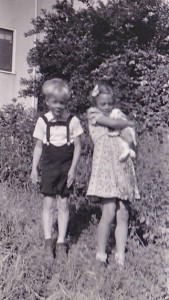
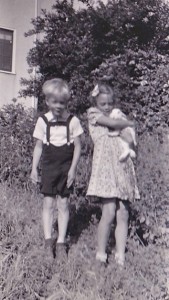
Liesbeth De Mol, Maarten Bullynck. A Week-End Off: The First Extensive Number-Theoretical Computation on the ENIAC. Lecture notes in computer science, springer, 2008, 5028, pp.158-167. <10.1007/978-3-540-69407-6 19>. <hal-01396832> http://hal.univ-lille3.fr/hal-01396832 <http://hal.univ-lille3.fr/hal-01396832> Also, in the second photograph, Lehmer is on the left, not the right. (I’ve reported this to Markoff.) Paul McJones

It’s a nice story. Paul is right that Maarten and Lisebeth have a lot more to say about Lehmer’s use of ENIAC than we do. IIRC ENIAC in Action lists it on page 96 in a table of all known jobs run on ENIAC in its Moore School days. We then spend about a page discussing in, on pages 104/5. It’s a good example of how, in the early days, ENIAC was sometimes operated by non-specialists in what was later termed an “open shop” manner. Thanks to their work this seemed one of the better covered parts of ENIAC history, so we didn’t feel we needed to discuss it at great length. Mark Priestley ran the setup reimplementing Lehmer’s job proposed in their article on his ENIAC simulator and found that, with a minor fix, it worked as promised. Also, as discussed in footnotes 57-59 on page 309 we weren’t able to verify that the job was run, as Lehmer later recalled, on the July 4 weekend in 1946. The ENIAC log records Lehmer working on ENIAC during April and May and makes no mention of a July visit. However we did find an archival list of applications run on ENIAC that mentions “computations completed during several holiday weekends,” which lends credence to the idea. It seems quite possible that an irregular team, including Lehmer’s children, might not have been updating the log book. NB: Wikipedia, I just noticed, gets the date wrong, saying that the problem was run over Thanksgiving 1945 – before ENIAC was properly operational. https://en.wikipedia.org/wiki/Derrick_Henry_Lehmer Lehmer’s son may be rather romanticizing the exoticism of the Moore School basement, which is quite high but not monumental and was certainly not pressurized to keep out dust. In fact the building was in bad enough shape that it had flooded over Christmas when snow melted. The BRL site in Aberdeen, MD where ENIAC was housed from 1947 onward was considerably more modern and purpose built, with high-tech features such as a suspended ceiling and air conditioning. It was a showpiece for tour groups. So if the children returned in 1947 their memories of what Markoff calls “the ENIAC facility” may be conflating the two. However in summer 1947 ENIAC wasn’t really working again after its move so they would have had little to do. And from March 1948 onward all the cables remained in place, as ENIAC was then programmed by loading a program expressed as a series of numerical instructions onto the function table switches. Also, Markov is a little confused about Lehmer’s involvement with ENIAC. It started in 1945 when he was one of the members of a committee charged with figuring out what jobs to run on ENIAC once it arrived at BRL and how to handle them. This worked started before ENIAC was finished and all took place prior to its installation at BRL in 1947. I’m not sure exactly when the committee started work, or if Lehmer was already at BRL to tackle other tasks. However, identifying him only as a UC Berkeley number theorist who was invited to use ENIAC for research “shortly after the installation of the ENIAC” misstates the timing of the involvement. Best wishes, Tom From: Members [mailto:members-bounces@lists.sigcis.org] On Behalf Of Brian Berg Sent: Wednesday, May 10, 2017 10:02 AM To: SIGCIS Listserver <members@sigcis.org> Subject: [SIGCIS-Members] “Unprogramming” the ENIAC: Lehmer Child’s Play A new story by John Markoff posted as a blog to the Computer History Museum's website. I did not find anything about this in the Thomas Haigh, et al. book ENIAC in Action book. Brian Berg “Unprogramming” the ENIAC: Lehmer Child’s Play <http://www.computerhistory.org/atchm/unprogramming-the-eniac-lehmer-childs-play/> At the dawn of the modern computing era teenager Laura Gould and her brother Donald Lehmer were the youngest “un-programmers.” That is because ENIAC, one of the world’s first general-purpose computers, was programmed with an array of switches and cables. When each program had been run, someone had to return the cables to their proper storage box to be available for the next program. Shortly after the installation of the ENIAC their parents, Derrick Henry Lehmer and Emma Trotskaya Lehmer, who were well-known number theorists at the University of California at Berkeley, were invited to use the machine for mathematical research. Designed to aid the war effort and completed in 1945 at the Moore School of the University of Pennsylvania by John Mauchly and J. Presper Eckert, ENIAC, or Electronic Numerical Integrator and Computer, was a pioneering electronic digital computer. However, it was not a stored-program computer in the modern sense of the term. Historian David Alan Grier described it as more like an array of electronic adding machines and arithmetic units that were held together by a web of large electrical cables. The machine itself, which was about one thousand times faster than the electro-mechanical calculators of that time, occupied a large room and was evocative of a telephone switchboard of the era, with a plugboard array that could be rewired with cables of different lengths. That’s where Gould and her brother came in. As youngsters they would accompany their parents on cross-country car trips to gather valuable research time on the machine. The ENIAC would be programmed with plugboard-style cables that were operated in the manner of a mechanical telephone switchboard. While traveling with their parents, a babysitter wasn’t always available, and so the two children who were then in their early teens, would accompany their parents for the long programming sessions that often stretched into the evening. After the programs ran, their job was to aid in resetting the computer by laboriously disconnected all of the cables and placing them in boxes according to length. “It was our job to strike when the program was over and put all of the cables in their appropriate boxes sorted by lengths,” she recalled. Neither brother nor sister remember precisely what programs their parents were developing. It is possible that they were exploring different methods for predicting the next prime number, but it is also conceivable that they were involved in some aspect of classified military research. The ENIAC had been commissioned to help the United States Army calculate artillery trajectories. However, Donald Lehmer noted that his father was a pacifist: “He had no interest in doing anything that would kill people. I suspect he was thinking about prime numbers.” [snip]

Dear Sigcis-members. It is a nice story indeed, and thanks Paul and Tom for setting some parts of Markoff's story straight. (by the way, the same anecdote is already recounted in S. Ornstein's excellent memoirs "Computing in the Middle Ages: A View From the Trenches 1955-1983") Lehmer's work on the ENIAC was not secret, though it took some time before it was published (1947 and 1949), essentially Emma and Dick Lehmer computed particular number-theoretical properties of integers to correct a table that Kraitchik had manually calculated some years before. A more complete and elaborate discussion of programming the original ENIAC, and of Lehmer's program can be found in the follow-up to the article Paul referred to, viz. Bullynck, M. & De Mol, L.: Setting-up early computer programs: D. H. Lehmer’s ENIAC computation, Arch. Math. Logic (2010) 49: 123. It is online here: http://link.springer.com/article/10.1007/s00153-009-0169-8 Or for a freely accessible draft version https://biblio.ugent.be/publication/934535/file/6828128.pdf As Tom remarked, Lehmer was part of a committee at BRL to prepare for setting up (ballistic) computations on the Moore differential analyzer, the IBM machines, the ENIAC, the Bell V machine (under construction, delivered 1947) all at Aberdeen Proving Ground. The committee seemed to have been selected ad-hoc, the other members were Franz Alt, L. Cunningham (both enlisted by the army for BRL) and Haskell Curry, professor at the nearby Penn University. As we described in another article, Curry also prepared a program for the ENIAC that became the nucleus of his later work on the composition of programs that offers a completely different approach to programming (compared to the Goldstine-von Neumann planning). Lehmer was also involved with the journal Mathematical Tables and other Aids to Computation, that functioned as a publication venue for early computing. He served as the main editor, first under RCA Archibald, later as editor-in-chief. And to add a final thing, though Lehmer's program on the ENIAC was not "doing anything that would kill people", in his role as a mathematician enlisted for the war effort, he did help devising schemes that helped kill people (more efficiently), e.g. a cooperative study on area bombing (1944), best regards, Maarten On 2017-05-10 20:33, Thomas Haigh wrote:
It’s a nice story. Paul is right that Maarten and Lisebeth have a lot more to say about Lehmer’s use of ENIAC than we do. IIRC _ENIAC in Action_ lists it on page 96 in a table of all known jobs run on ENIAC in its Moore School days. We then spend about a page discussing in, on pages 104/5. It’s a good example of how, in the early days, ENIAC was sometimes operated by non-specialists in what was later termed an “open shop” manner.
Thanks to their work this seemed one of the better covered parts of ENIAC history, so we didn’t feel we needed to discuss it at great length. Mark Priestley ran the setup reimplementing Lehmer’s job proposed in their article on his ENIAC simulator and found that, with a minor fix, it worked as promised. Also, as discussed in footnotes 57-59 on page 309 we weren’t able to verify that the job was run, as Lehmer later recalled, on the July 4 weekend in 1946. The ENIAC log records Lehmer working on ENIAC during April and May and makes no mention of a July visit. However we did find an archival list of applications run on ENIAC that mentions “computations completed during several holiday weekends,” which lends credence to the idea. It seems quite possible that an irregular team, including Lehmer’s children, might not have been updating the log book. NB: Wikipedia, I just noticed, gets the date wrong, saying that the problem was run over Thanksgiving 1945 – before ENIAC was properly operational. https://en.wikipedia.org/wiki/Derrick_Henry_Lehmer [1]
Lehmer’s son may be rather romanticizing the exoticism of the Moore School basement, which is quite high but not monumental and was certainly not pressurized to keep out dust. In fact the building was in bad enough shape that it had flooded over Christmas when snow melted. The BRL site in Aberdeen, MD where ENIAC was housed from 1947 onward was considerably more modern and purpose built, with high-tech features such as a suspended ceiling and air conditioning. It was a showpiece for tour groups. So if the children returned in 1947 their memories of what Markoff calls “the ENIAC facility” may be conflating the two. However in summer 1947 ENIAC wasn’t really working again after its move so they would have had little to do. And from March 1948 onward all the cables remained in place, as ENIAC was then programmed by loading a program expressed as a series of numerical instructions onto the function table switches.
Also, Markov is a little confused about Lehmer’s involvement with ENIAC. It started in 1945 when he was one of the members of a committee charged with figuring out what jobs to run on ENIAC once it arrived at BRL and how to handle them. This worked started before ENIAC was finished and all took place prior to its installation at BRL in 1947. I’m not sure exactly when the committee started work, or if Lehmer was already at BRL to tackle other tasks. However, identifying him only as a UC Berkeley number theorist who was invited to use ENIAC for research “shortly after the installation of the ENIAC” misstates the timing of the involvement.
Best wishes,
Tom
FROM: Members [mailto:members-bounces@lists.sigcis.org] ON BEHALF OF Brian Berg SENT: Wednesday, May 10, 2017 10:02 AM TO: SIGCIS Listserver <members@sigcis.org> SUBJECT: [SIGCIS-Members] “Unprogramming” the ENIAC: Lehmer Child’s Play
A new story by John Markoff posted as a blog to the Computer History Museum's website. I did not find anything about this in the Thomas Haigh, _et al._ book _ENIAC in Action_ book. Brian Berg
“UNPROGRAMMING” THE ENIAC: LEHMER CHILD’S PLAY [2]
At the dawn of the modern computing era teenager Laura Gould and her brother Donald Lehmer were the youngest “un-programmers.” That is because ENIAC, one of the world’s first general-purpose computers, was programmed with an array of switches and cables. When each program had been run, someone had to return the cables to their proper storage box to be available for the next program. Shortly after the installation of the ENIAC their parents, Derrick Henry Lehmer and Emma Trotskaya Lehmer, who were well-known number theorists at the University of California at Berkeley, were invited to use the machine for mathematical research.
Designed to aid the war effort and completed in 1945 at the Moore School of the University of Pennsylvania by John Mauchly and J. Presper Eckert, ENIAC, or Electronic Numerical Integrator and Computer, was a pioneering electronic digital computer. However, it was not a stored-program computer in the modern sense of the term. Historian David Alan Grier described it as more like an array of electronic adding machines and arithmetic units that were held together by a web of large electrical cables.
The machine itself, which was about one thousand times faster than the electro-mechanical calculators of that time, occupied a large room and was evocative of a telephone switchboard of the era, with a plugboard array that could be rewired with cables of different lengths.
That’s where Gould and her brother came in.
As youngsters they would accompany their parents on cross-country car trips to gather valuable research time on the machine. The ENIAC would be programmed with plugboard-style cables that were operated in the manner of a mechanical telephone switchboard. While traveling with their parents, a babysitter wasn’t always available, and so the two children who were then in their early teens, would accompany their parents for the long programming sessions that often stretched into the evening. After the programs ran, their job was to aid in resetting the computer by laboriously disconnected all of the cables and placing them in boxes according to length.
“It was our job to strike when the program was over and put all of the cables in their appropriate boxes sorted by lengths,” she recalled.
Neither brother nor sister remember precisely what programs their parents were developing. It is possible that they were exploring different methods for predicting the next prime number, but it is also conceivable that they were involved in some aspect of classified military research.
The ENIAC had been commissioned to help the United States Army calculate artillery trajectories. However, Donald Lehmer noted that his father was a pacifist: “He had no interest in doing anything that would kill people. I suspect he was thinking about prime numbers.”
[snip]
Links: ------ [1] https://en.wikipedia.org/wiki/Derrick_Henry_Lehmer [2] http://www.computerhistory.org/atchm/unprogramming-the-eniac-lehmer-childs-p...
_______________________________________________ This email is relayed from members at sigcis.org, the email discussion list of SHOT SIGCIS. Opinions expressed here are those of the member posting and are not reviewed, edited, or endorsed by SIGCIS. The list archives are at http://lists.sigcis.org/pipermail/members-sigcis.org/ and you can change your subscription options at http://lists.sigcis.org/listinfo.cgi/members-sigcis.org
participants (4)
-
 Brian Berg
 -
 Maarten Bullynck
 -
 Paul McJones
 -
 Thomas Haigh