eBay is selling an Apple 1 for $1.5 million

https://www.ebay.com/i/174195921349. There is at least a "Make offer" button. I have to say that this is more than a little unhinged, possibly a further sign (as if one were needed) of the approach of the end times. Though I did recently pay $250 for a working Apple IIe with disk drives and monitor. Simple mathematics suggests for a Bezos, Musk or Zuckerberg this would be a very much smaller purchase relative to net worth. Full description at http://vi.raptor.ebaydesc.com/ws/eBayISAPI.dll?ViewItemDescV4 <http://vi.raptor.ebaydesc.com/ws/eBayISAPI.dll?ViewItemDescV4&item=17419592 1349&category=162075&pm=1&ds=0&t=1582079090000&ver=0> &item=174195921349&category=162075&pm=1&ds=0&t=1582079090000&ver=0 Also an entry in the Apple 1 registry (which of course): https://www.apple1registry.com/en/79.html. Best wishes, Tom

I talked to Krishna a few years ago. I don’t think he is unhinged, but I can’t imagine any Apple 1 fetching that price, even though it appears to be one of the nicer survivors. It’s funny, when I first became interested in Apple 1s, condition mattered little, but now the market has evolved to the point where condition seems to matter. Note that the Henry Ford Museum paid around 1 million dollars for an Apple 1 several years ago, though that price hasn’t been approached since. Regards, Mike Willegal
On Jul 31, 2020, at 4:05 PM, <thomas.haigh@gmail.com> <thomas.haigh@gmail.com> wrote:
https://www.ebay.com/i/174195921349 <https://www.ebay.com/i/174195921349>. There is at least a “Make offer” button.
I have to say that this is more than a little unhinged, possibly a further sign (as if one were needed) of the approach of the end times. Though I did recently pay $250 for a working Apple IIe with disk drives and monitor. Simple mathematics suggests for a Bezos, Musk or Zuckerberg this would be a very much smaller purchase relative to net worth.
Full description at http://vi.raptor.ebaydesc.com/ws/eBayISAPI.dll?ViewItemDescV4&item=174195921349&category=162075&pm=1&ds=0&t=1582079090000&ver=0 <http://vi.raptor.ebaydesc.com/ws/eBayISAPI.dll?ViewItemDescV4&item=174195921349&category=162075&pm=1&ds=0&t=1582079090000&ver=0>
Also an entry in the Apple 1 registry (which of course): https://www.apple1registry.com/en/79.html <https://www.apple1registry.com/en/79.html>.
Best wishes,
Tom _______________________________________________ This email is relayed from members at sigcis.org <http://sigcis.org/>, the email discussion list of SHOT SIGCIS. Opinions expressed here are those of the member posting and are not reviewed, edited, or endorsed by SIGCIS. The list archives are at http://lists.sigcis.org/pipermail/members-sigcis.org/ <http://lists.sigcis.org/pipermail/members-sigcis.org/> and you can change your subscription options at http://lists.sigcis.org/listinfo.cgi/members-sigcis.org <http://lists.sigcis.org/listinfo.cgi/members-sigcis.org>

For those who are curious here are some of the prices paid for Apple 1 computers in the past 6 years. 2014: $910,000 (Charity auction) https://www.cultofmac.com/498888/apple-history-celebration-apple-1-auction/ 2016: $815,000 (Charity auction) https://www.cultofmac.com/498888/apple-history-celebration-apple-1-auction/ 2018: $375,000 https://www.cnet.com/news/rare-apple-1-sells-at-auction-for-over-500-times-o... 2019: $470,000 https://www.cnbc.com/2019/05/28/wozniak-built-apple-1-computer-sold-for-almo... 2020: $458,711.25. https://appleinsider.com/articles/20/03/13/rare-functional-apple-1-computer-... Debbie Douglas On Jul 31, 2020, at 6:24 PM, mike@willegal.net<mailto:mike@willegal.net> wrote: I talked to Krishna a few years ago. I don’t think he is unhinged, but I can’t imagine any Apple 1 fetching that price, even though it appears to be one of the nicer survivors. It’s funny, when I first became interested in Apple 1s, condition mattered little, but now the market has evolved to the point where condition seems to matter. Note that the Henry Ford Museum paid around 1 million dollars for an Apple 1 several years ago, though that price hasn’t been approached since. Regards, Mike Willegal On Jul 31, 2020, at 4:05 PM, <thomas.haigh@gmail.com<mailto:thomas.haigh@gmail.com>> <thomas.haigh@gmail.com<mailto:thomas.haigh@gmail.com>> wrote: https://www.ebay.com/i/174195921349. There is at least a “Make offer” button. I have to say that this is more than a little unhinged, possibly a further sign (as if one were needed) of the approach of the end times. Though I did recently pay $250 for a working Apple IIe with disk drives and monitor. Simple mathematics suggests for a Bezos, Musk or Zuckerberg this would be a very much smaller purchase relative to net worth. Full description at http://vi.raptor.ebaydesc.com/ws/eBayISAPI.dll?ViewItemDescV4&item=174195921349&category=162075&pm=1&ds=0&t=1582079090000&ver=0 Also an entry in the Apple 1 registry (which of course): https://www.apple1registry.com/en/79.html. Best wishes, Tom _______________________________________________ This email is relayed from members at sigcis.org<http://sigcis.org/>, the email discussion list of SHOT SIGCIS. Opinions expressed here are those of the member posting and are not reviewed, edited, or endorsed by SIGCIS. The list archives are at http://lists.sigcis.org/pipermail/members-sigcis.org/ and you can change your subscription options at http://lists.sigcis.org/listinfo.cgi/members-sigcis.org _______________________________________________ This email is relayed from members at sigcis.org<http://sigcis.org>, the email discussion list of SHOT SIGCIS. Opinions expressed here are those of the member posting and are not reviewed, edited, or endorsed by SIGCIS. The list archives are at http://lists.sigcis.org/pipermail/members-sigcis.org/ and you can change your subscription options at http://lists.sigcis.org/listinfo.cgi/members-sigcis.org Deborah G. Douglas, PhD • Director of Collections and Curator of Science and Technology, MIT Museum; Research Associate, Program in Science, Technology, and Society • Room N51-209 • 265 Massachusetts Avenue • Cambridge, MA 02139-4307 • ddouglas@mit.edu<mailto:ddouglas@mit.edu> • 617-253-1766 telephone • 617-253-8994 facsimile • http://mitmuseum.mit.edu • she/her/hers

I feel like I ought to say something in response to this thread but I'm not sure what. Do you-all think the first Apple 1 should be worth more than the others? Pricing collectables is sooooo difficult. Cheers, Liza On Fri, Jul 31, 2020 at 4:13 PM Deborah Douglas <ddouglas@mit.edu> wrote:
For those who are curious here are some of the prices paid for Apple 1 computers in the past 6 years.
2014: $910,000 (Charity auction) https://www.cultofmac.com/498888/apple-history-celebration-apple-1-auction/ 2016: $815,000 (Charity auction) https://www.cultofmac.com/498888/apple-history-celebration-apple-1-auction/ 2018: $375,000 https://www.cnet.com/news/rare-apple-1-sells-at-auction-for-over-500-times-o... 2019: $470,000 https://www.cnbc.com/2019/05/28/wozniak-built-apple-1-computer-sold-for-almo... 2020: $458,711.25. https://appleinsider.com/articles/20/03/13/rare-functional-apple-1-computer-...
Debbie Douglas
On Jul 31, 2020, at 6:24 PM, mike@willegal.net wrote:
I talked to Krishna a few years ago. I don’t think he is unhinged, but I can’t imagine any Apple 1 fetching that price, even though it appears to be one of the nicer survivors. It’s funny, when I first became interested in Apple 1s, condition mattered little, but now the market has evolved to the point where condition seems to matter. Note that the Henry Ford Museum paid around 1 million dollars for an Apple 1 several years ago, though that price hasn’t been approached since.
Regards, Mike Willegal
On Jul 31, 2020, at 4:05 PM, <thomas.haigh@gmail.com> < thomas.haigh@gmail.com> wrote:
https://www.ebay.com/i/174195921349. There is at least a “Make offer” button.
I have to say that this is more than a little unhinged, possibly a further sign (as if one were needed) of the approach of the end times. Though I did recently pay $250 for a working Apple IIe with disk drives and monitor. Simple mathematics suggests for a Bezos, Musk or Zuckerberg this would be a very much smaller purchase relative to net worth.
Full description at http://vi.raptor.ebaydesc.com/ws/eBayISAPI.dll?ViewItemDescV4&item=174195921349&category=162075&pm=1&ds=0&t=1582079090000&ver=0
Also an entry in the Apple 1 registry (which of course): https://www.apple1registry.com/en/79.html.
Best wishes,
Tom _______________________________________________ This email is relayed from members at sigcis.org, the email discussion list of SHOT SIGCIS. Opinions expressed here are those of the member posting and are not reviewed, edited, or endorsed by SIGCIS. The list archives are at http://lists.sigcis.org/pipermail/members-sigcis.org/ and you can change your subscription options at http://lists.sigcis.org/listinfo.cgi/members-sigcis.org
_______________________________________________ This email is relayed from members at sigcis.org, the email discussion list of SHOT SIGCIS. Opinions expressed here are those of the member posting and are not reviewed, edited, or endorsed by SIGCIS. The list archives are at http://lists.sigcis.org/pipermail/members-sigcis.org/ and you can change your subscription options at http://lists.sigcis.org/listinfo.cgi/members-sigcis.org
*Deborah G. Douglas, PhD *• Director of Collections and Curator of Science and Technology, MIT Museum; Research Associate, Program in Science, Technology, and Society • Room N51-209 • 265 Massachusetts Avenue • Cambridge, MA 02139-4307 • ddouglas@mit.edu • 617-253-1766 telephone • 617-253-8994 facsimile • http://mitmuseum.mit.edu • she/her/hers
_______________________________________________ This email is relayed from members at sigcis.org, the email discussion list of SHOT SIGCIS. Opinions expressed here are those of the member posting and are not reviewed, edited, or endorsed by SIGCIS. The list archives are at http://lists.sigcis.org/pipermail/members-sigcis.org/ and you can change your subscription options at http://lists.sigcis.org/listinfo.cgi/members-sigcis.org
-- Liza Loop Executive Director, LO*OP Center, Inc. Guerneville, CA 95446 www.loopcenter.org 650 619 1099 (between 8 am and 10 pm Pacific time only please)
Hmm. I posted this as a kind of quirky head scratching moment, but Lisa asks a valid question so let me attempt an answer informed by our recent work on the Revised History of Modern Computing. The “unhinged” comment referred not to the specific seller, but to the market that might make such a price at least somewhat plausible. (Apparently the listing started at $1.75 million last year, so maybe a further reduction will follow). First off, the real competence to answer this question would come from economic sociology within which there’s a thriving group of scholars looking at the pricing and collection of artworks. There’s a also a literature on collections and collectors that goes back to Walter Benjamin, and an associated steam looking at “authenticity” and the reproduction of cultural artifacts. Like artwork the price of the Apple 1 would be set by collectors and auction houses guided by an infrastructure of authentication, evaluation, and (as Debbie shared) previous sales of similar items. Everyone involved in that process has an incentive to see values rise. Compared to a van Gough, Picasso, or Banksy the Apple 1 in question is rather affordable. But unlike traditional artworks, where uniqueness is the point, the Apple 1 is only accidentally rare. So the parallel is stronger with well-established expensive collectibles like classic sportscars. Today’s Bloomberg reports a Ferrari sold for $3 million at auction. I assume this is the direct model being followed with Apple 1s. There’s also the recent boom in prices for unopened Nintendo cartridges, the fixation on pristine condition creating an artificial scarcity for a mass produced item for which supply generally exceeds current demand. (https://www.nytimes.com/2020/01/27/business/video-games-wata-heritage.html) Like Star Wars toys, old comics, and the former bubble in baseball cards, I think the conventional explanation is that rich men of a certain age want to own the things they dreamed of having as a boy. No child ever dreamed of having an Apple 1 and hung its poster on the wall. Actual customers quickly traded them in for better machines. And it’s a rather ugly bare circuit board, though the hand built wooden case that’s also part of the eBay offering does evoke the amateur nature of the early personal computing community. But there is certainly a lot of money floating around the tech industry and so (entering my actual area of expertise) the question is how the Apple 1 became the definitive early personal computing artifact that a museum or wealthy collector might justify spending so much money on. Being a famous _personal_ computer certainly helps. A PDP-1 or Univac 1 would be more historically significant and rarer, but you’d need to know something about history to appreciate that and they are all rather bulky. Fewer people feel personal ties to those technologies, and for the 1950s computers their generations have faded out. (IIRC there was a crash in Elvis memorabilia a few years ago, as the people who cared about Elvis left the marketplace). The Cray 1 is a lot better looking than an Apple 1, more technologically interesting (miles of hardwired connections), and was actually expensive at the time. The one and only prototype Cray 4 processor fetched just $37,500 when auctioned (https://www.bonhams.com/auctions/22964/lot/78/), and what claimed to be a piece of the Serial 001 Cray 1 from Los Alamos failed to sell for GBP 550 (https://www.theregister.com/2010/05/24/cray_1_gate_module_ebay/). Some significant portions of ENIAC, which does have name recognition, are not controlled by the Smithsonian but I don’t think any kind of secondary market has developed for them. The Apple 1 was not, in itself, a particularly important or successful machine. It also wasn’t a “first” anything, except the first Apple product. It gets two sentences in our book, which serve as a bridge from the Homebrew Computer Club to the Apple II. The Altair 8800 was much “firstier” and did far more to establish the personal computer category, though people who care about such things have documented many earlier personal computers and microprocessor based machines. An Altair sold at auction for $8,125 in 2017. (https://www.bonhams.com/auctions/24495/lot/108/) Cromemcos, IMSAIS, the Processor Technology Sol, etc. were also more visible in 1976 than the Apple 1. The Apple 1 matters because it led to the Apple II, but even that was not the most initially important of the three mass produced personal computers launched in 1977. The TRS-80 sold much better for several years (allegedly until 1981). Steve Wozniak is said to have produced an impressively efficient design, but at the time Chuck Peddle was more renowned as a designer of elegant circuits (having produced the MOS 6502 chip the Apple was based on) and according to Wikipedia he also designed the third of the 1977 trio, the Commodore Pet 2001 (currently being auctioned on eBay for $211.50). So even the Apple II didn’t really establish itself as _the_ important machine of its generation years later. The Apple IIe, which outsold the 1970s models many times over to account for the bulk of Apple II sales, wasn’t launched until 1983 (well after the IBM PC which complicates the traditional succession story). Rarity clearly matters (which the Apple 1 achieved by not being a particularly strong seller). Wozniak’s cult following is important, but Wozniak himself is prouder of the Apple II and proudest of the Apple II disk controller. You can easily buy the former for $150 in working condition, and the latter for about $20. The IBM PC matters a lot more to history, but those also cost just a few hundred dollars. A very low serial number might make a difference, but not enough to add several zeros to the prices. The thing that really sets the Apple 1 apart is the fact that Apple is the world’s most successful company and many people feel a personal connection to it and its products. A billionaire can point to it and say “The first Apple, very rare (subtext, very expensive)” and visitors won’t need a history lecture to appreciate the importance. The story of Woz and Jobs in the garage has become the paradigmatic story of innovation, told in movies, documentaries, a bestselling books. (Misapplication of the Woz/Jobs template crippled the first season of Halt and Catch Fire, so if you haven’t seen it skip that and start with season 2). There’s the allure of thinking that one or both handled this circuit board in that garage. Add the rarity of its first product to that cult following and the amount of money percolating in Silicon Valley and you have a unique combination of factors converging to pump up the value of a computer that didn’t, in itself, much matter to the course of history. Best wishes, Tom From: Members <members-bounces@lists.sigcis.org> On Behalf Of LO*OP CENTER, INC. Sent: Friday, July 31, 2020 11:34 PM To: Deborah Douglas <ddouglas@mit.edu> Cc: Sigcis <members@sigcis.org> Subject: Re: [SIGCIS-Members] eBay is selling an Apple 1 for $1.5 million I feel like I ought to say something in response to this thread but I'm not sure what. Do you-all think the first Apple 1 should be worth more than the others? Pricing collectables is sooooo difficult. Cheers, Liza On Fri, Jul 31, 2020 at 4:13 PM Deborah Douglas <ddouglas@mit.edu <mailto:ddouglas@mit.edu> > wrote: For those who are curious here are some of the prices paid for Apple 1 computers in the past 6 years. 2014: $910,000 (Charity auction) https://www.cultofmac.com/498888/apple-history-celebration-apple-1-auction/ 2016: $815,000 (Charity auction) https://www.cultofmac.com/498888/apple-history-celebration-apple-1-auction/ 2018: $375,000 https://www.cnet.com/news/rare-apple-1-sells-at-auction-for-over-500-times-o... 2019: $470,000 https://www.cnbc.com/2019/05/28/wozniak-built-apple-1-computer-sold-for-almo... 2020: $458,711.25. https://appleinsider.com/articles/20/03/13/rare-functional-apple-1-computer-... Debbie Douglas On Jul 31, 2020, at 6:24 PM, mike@willegal.net <mailto:mike@willegal.net> wrote: I talked to Krishna a few years ago. I don’t think he is unhinged, but I can’t imagine any Apple 1 fetching that price, even though it appears to be one of the nicer survivors. It’s funny, when I first became interested in Apple 1s, condition mattered little, but now the market has evolved to the point where condition seems to matter. Note that the Henry Ford Museum paid around 1 million dollars for an Apple 1 several years ago, though that price hasn’t been approached since. Regards, Mike Willegal On Jul 31, 2020, at 4:05 PM, <thomas.haigh@gmail.com <mailto:thomas.haigh@gmail.com> > <thomas.haigh@gmail.com <mailto:thomas.haigh@gmail.com> > wrote: <https://www.ebay.com/i/174195921349> https://www.ebay.com/i/174195921349. There is at least a “Make offer” button. I have to say that this is more than a little unhinged, possibly a further sign (as if one were needed) of the approach of the end times. Though I did recently pay $250 for a working Apple IIe with disk drives and monitor. Simple mathematics suggests for a Bezos, Musk or Zuckerberg this would be a very much smaller purchase relative to net worth. Full description at <http://vi.raptor.ebaydesc.com/ws/eBayISAPI.dll?ViewItemDescV4&item=174195921349&category=162075&pm=1&ds=0&t=1582079090000&ver=0> http://vi.raptor.ebaydesc.com/ws/eBayISAPI.dll?ViewItemDescV4&item=174195921349&category=162075&pm=1&ds=0&t=1582079090000&ver=0 Also an entry in the Apple 1 registry (which of course): <https://www.apple1registry.com/en/79.html> https://www.apple1registry.com/en/79.html. Best wishes, Tom _______________________________________________ This email is relayed from members at <http://sigcis.org/> sigcis.org, the email discussion list of SHOT SIGCIS. Opinions expressed here are those of the member posting and are not reviewed, edited, or endorsed by SIGCIS. The list archives are at <http://lists.sigcis.org/pipermail/members-sigcis.org/> http://lists.sigcis.org/pipermail/members-sigcis.org/ and you can change your subscription options at <http://lists.sigcis.org/listinfo.cgi/members-sigcis.org> http://lists.sigcis.org/listinfo.cgi/members-sigcis.org _______________________________________________ This email is relayed from members at sigcis.org <http://sigcis.org> , the email discussion list of SHOT SIGCIS. Opinions expressed here are those of the member posting and are not reviewed, edited, or endorsed by SIGCIS. The list archives are at http://lists.sigcis.org/pipermail/members-sigcis.org/ and you can change your subscription options at http://lists.sigcis.org/listinfo.cgi/members-sigcis.org Deborah G. Douglas, PhD • Director of Collections and Curator of Science and Technology, MIT Museum; Research Associate, Program in Science, Technology, and Society • Room N51-209 • 265 Massachusetts Avenue • Cambridge, MA 02139-4307 • ddouglas@mit.edu <mailto:ddouglas@mit.edu> • 617-253-1766 telephone • 617-253-8994 facsimile • http://mitmuseum.mit.edu • she/her/hers _______________________________________________ This email is relayed from members at sigcis.org <http://sigcis.org> , the email discussion list of SHOT SIGCIS. Opinions expressed here are those of the member posting and are not reviewed, edited, or endorsed by SIGCIS. The list archives are at http://lists.sigcis.org/pipermail/members-sigcis.org/ and you can change your subscription options at http://lists.sigcis.org/listinfo.cgi/members-sigcis.org -- Liza Loop Executive Director, LO*OP Center, Inc. Guerneville, CA 95446 www.loopcenter.org <http://www.loopcenter.org> 650 619 1099 (between 8 am and 10 pm Pacific time only please)

Is there an earlier example of a commercialized, consumer grade microcomputer with on-board video terminal display and keyboard interface, than the Apple I? i believe the SOL-20 comes out later in 1976 (but i'd be happy to proven wrong here!) (and this might require debate wrt to how we determine a date on the "release" of the Apple I) this feels like the most significant part of the Apple I--the fact that its design ethos was based on extending a TV terminal's capacity through the embedding of a microprocessor, rather than the more progressivist, linear assumption that Wozniak was trying to make his own version of a more user-friendly Altair. it's a productive complication of the computer history timeline. Laine Nooney <http://www.lainenooney.com/> MCC <http://steinhardt.nyu.edu/mcc/> @ NYU <http://www.nyu.edu/> Assistant Professor -Need to make an appt? Click, don't email: https://bit.ly/2GIHuK0 -Probably typed by voice recognition, so please cherish typos On Sat, Aug 1, 2020 at 12:37 PM <thomas.haigh@gmail.com> wrote:
Hmm. I posted this as a kind of quirky head scratching moment, but Lisa asks a valid question so let me attempt an answer informed by our recent work on the Revised History of Modern Computing. The “unhinged” comment referred not to the specific seller, but to the market that might make such a price at least somewhat plausible. (Apparently the listing started at $1.75 million last year, so maybe a further reduction will follow).
First off, the real competence to answer this question would come from economic sociology within which there’s a thriving group of scholars looking at the pricing and collection of artworks. There’s a also a literature on collections and collectors that goes back to Walter Benjamin, and an associated steam looking at “authenticity” and the reproduction of cultural artifacts.
Like artwork the price of the Apple 1 would be set by collectors and auction houses guided by an infrastructure of authentication, evaluation, and (as Debbie shared) previous sales of similar items. Everyone involved in that process has an incentive to see values rise. Compared to a van Gough, Picasso, or Banksy the Apple 1 in question is rather affordable. But unlike traditional artworks, where uniqueness is the point, the Apple 1 is only accidentally rare.
So the parallel is stronger with well-established expensive collectibles like classic sportscars. Today’s Bloomberg reports a Ferrari sold for $3 million at auction. I assume this is the direct model being followed with Apple 1s. There’s also the recent boom in prices for unopened Nintendo cartridges, the fixation on pristine condition creating an artificial scarcity for a mass produced item for which supply generally exceeds current demand. ( https://www.nytimes.com/2020/01/27/business/video-games-wata-heritage.html) Like Star Wars toys, old comics, and the former bubble in baseball cards, I think the conventional explanation is that rich men of a certain age want to own the things they dreamed of having as a boy.
No child ever dreamed of having an Apple 1 and hung its poster on the wall. Actual customers quickly traded them in for better machines. And it’s a rather ugly bare circuit board, though the hand built wooden case that’s also part of the eBay offering does evoke the amateur nature of the early personal computing community. But there is certainly a lot of money floating around the tech industry and so (entering my actual area of expertise) the question is how the Apple 1 became the definitive early personal computing artifact that a museum or wealthy collector might justify spending so much money on.
Being a famous _*personal*_ computer certainly helps. A PDP-1 or Univac 1 would be more historically significant and rarer, but you’d need to know something about history to appreciate that and they are all rather bulky. Fewer people feel personal ties to those technologies, and for the 1950s computers their generations have faded out. (IIRC there was a crash in Elvis memorabilia a few years ago, as the people who cared about Elvis left the marketplace). The Cray 1 is a lot better looking than an Apple 1, more technologically interesting (miles of hardwired connections), and was actually expensive at the time. The one and only prototype Cray 4 processor fetched just $37,500 when auctioned ( https://www.bonhams.com/auctions/22964/lot/78/), and what claimed to be a piece of the Serial 001 Cray 1 from Los Alamos failed to sell for GBP 550 ( https://www.theregister.com/2010/05/24/cray_1_gate_module_ebay/). Some significant portions of ENIAC, which does have name recognition, are not controlled by the Smithsonian but I don’t think any kind of secondary market has developed for them.
The Apple 1 was not, in itself, a particularly important or successful machine. It also wasn’t a “first” anything, except the first Apple product. It gets two sentences in our book, which serve as a bridge from the Homebrew Computer Club to the Apple II. The Altair 8800 was much “firstier” and did far more to establish the personal computer category, though people who care about such things have documented many earlier personal computers and microprocessor based machines. An Altair sold at auction for $8,125 in 2017. (https://www.bonhams.com/auctions/24495/lot/108/) Cromemcos, IMSAIS, the Processor Technology Sol, etc. were also more visible in 1976 than the Apple 1. The Apple 1 matters because it led to the Apple II, but even that was not the most initially important of the three mass produced personal computers launched in 1977. The TRS-80 sold much better for several years (allegedly until 1981). Steve Wozniak is said to have produced an impressively efficient design, but at the time Chuck Peddle was more renowned as a designer of elegant circuits (having produced the MOS 6502 chip the Apple was based on) and according to Wikipedia he also designed the third of the 1977 trio, the Commodore Pet 2001 (currently being auctioned on eBay for $211.50). So even the Apple II didn’t really establish itself as _*the*_ important machine of its generation years later. The Apple IIe, which outsold the 1970s models many times over to account for the bulk of Apple II sales, wasn’t launched until 1983 (well after the IBM PC which complicates the traditional succession story).
Rarity clearly matters (which the Apple 1 achieved by not being a particularly strong seller). Wozniak’s cult following is important, but Wozniak himself is prouder of the Apple II and proudest of the Apple II disk controller. You can easily buy the former for $150 in working condition, and the latter for about $20. The IBM PC matters a lot more to history, but those also cost just a few hundred dollars. A very low serial number might make a difference, but not enough to add several zeros to the prices.
The thing that really sets the Apple 1 apart is the fact that Apple is the world’s most successful company and many people feel a personal connection to it and its products. A billionaire can point to it and say “The first Apple, very rare (subtext, very expensive)” and visitors won’t need a history lecture to appreciate the importance. The story of Woz and Jobs in the garage has become the paradigmatic story of innovation, told in movies, documentaries, a bestselling books. (Misapplication of the Woz/Jobs template crippled the first season of *Halt and Catch Fire*, so if you haven’t seen it skip that and start with season 2). There’s the allure of thinking that one or both handled this circuit board in that garage. Add the rarity of its first product to that cult following and the amount of money percolating in Silicon Valley and you have a unique combination of factors converging to pump up the value of a computer that didn’t, in itself, much matter to the course of history.
Best wishes,
Tom
*From:* Members <members-bounces@lists.sigcis.org> *On Behalf Of *LO*OP CENTER, INC. *Sent:* Friday, July 31, 2020 11:34 PM *To:* Deborah Douglas <ddouglas@mit.edu> *Cc:* Sigcis <members@sigcis.org> *Subject:* Re: [SIGCIS-Members] eBay is selling an Apple 1 for $1.5 million
I feel like I ought to say something in response to this thread but I'm not sure what. Do you-all think the first Apple 1 should be worth more than the others? Pricing collectables is sooooo difficult.
Cheers,
Liza
On Fri, Jul 31, 2020 at 4:13 PM Deborah Douglas <ddouglas@mit.edu> wrote:
For those who are curious here are some of the prices paid for Apple 1 computers in the past 6 years.
2014: $910,000 (Charity auction) https://www.cultofmac.com/498888/apple-history-celebration-apple-1-auction/
2016: $815,000 (Charity auction) https://www.cultofmac.com/498888/apple-history-celebration-apple-1-auction/
2018: $375,000 https://www.cnet.com/news/rare-apple-1-sells-at-auction-for-over-500-times-o...
2019: $470,000 https://www.cnbc.com/2019/05/28/wozniak-built-apple-1-computer-sold-for-almo...
2020: $458,711.25. https://appleinsider.com/articles/20/03/13/rare-functional-apple-1-computer-...
Debbie Douglas
On Jul 31, 2020, at 6:24 PM, mike@willegal.net wrote:
I talked to Krishna a few years ago. I don’t think he is unhinged, but I can’t imagine any Apple 1 fetching that price, even though it appears to be one of the nicer survivors. It’s funny, when I first became interested in Apple 1s, condition mattered little, but now the market has evolved to the point where condition seems to matter. Note that the Henry Ford Museum paid around 1 million dollars for an Apple 1 several years ago, though that price hasn’t been approached since.
Regards,
Mike Willegal
On Jul 31, 2020, at 4:05 PM, <thomas.haigh@gmail.com> < thomas.haigh@gmail.com> wrote:
https://www.ebay.com/i/174195921349. There is at least a “Make offer” button.
I have to say that this is more than a little unhinged, possibly a further sign (as if one were needed) of the approach of the end times. Though I did recently pay $250 for a working Apple IIe with disk drives and monitor. Simple mathematics suggests for a Bezos, Musk or Zuckerberg this would be a very much smaller purchase relative to net worth.
Full description at http://vi.raptor.ebaydesc.com/ws/eBayISAPI.dll?ViewItemDescV4&item=174195921349&category=162075&pm=1&ds=0&t=1582079090000&ver=0
Also an entry in the Apple 1 registry (which of course): https://www.apple1registry.com/en/79.html.
Best wishes,
Tom
_______________________________________________ This email is relayed from members at sigcis.org, the email discussion list of SHOT SIGCIS. Opinions expressed here are those of the member posting and are not reviewed, edited, or endorsed by SIGCIS. The list archives are at http://lists.sigcis.org/pipermail/members-sigcis.org/ and you can change your subscription options at http://lists.sigcis.org/listinfo.cgi/members-sigcis.org
_______________________________________________ This email is relayed from members at sigcis.org, the email discussion list of SHOT SIGCIS. Opinions expressed here are those of the member posting and are not reviewed, edited, or endorsed by SIGCIS. The list archives are at http://lists.sigcis.org/pipermail/members-sigcis.org/ and you can change your subscription options at http://lists.sigcis.org/listinfo.cgi/members-sigcis.org
*Deborah G. Douglas, PhD *• Director of Collections and Curator of Science and Technology, MIT Museum; Research Associate, Program in Science, Technology, and Society • Room N51-209 • 265 Massachusetts Avenue • Cambridge, MA 02139-4307 • ddouglas@mit.edu • 617-253-1766 telephone • 617-253-8994 facsimile • http://mitmuseum.mit.edu • she/her/hers
_______________________________________________ This email is relayed from members at sigcis.org, the email discussion list of SHOT SIGCIS. Opinions expressed here are those of the member posting and are not reviewed, edited, or endorsed by SIGCIS. The list archives are at http://lists.sigcis.org/pipermail/members-sigcis.org/ and you can change your subscription options at http://lists.sigcis.org/listinfo.cgi/members-sigcis.org
--
Liza Loop
Executive Director, LO*OP Center, Inc.
Guerneville, CA 95446
www.loopcenter.org
650 619 1099 (between 8 am and 10 pm Pacific time only please)
_______________________________________________ This email is relayed from members at sigcis.org, the email discussion list of SHOT SIGCIS. Opinions expressed here are those of the member posting and are not reviewed, edited, or endorsed by SIGCIS. The list archives are at http://lists.sigcis.org/pipermail/members-sigcis.org/ and you can change your subscription options at http://lists.sigcis.org/listinfo.cgi/members-sigcis.org

I worked with Steve Wozniak and Tom Coughlin on the Apple I IEEE Milestone (which was scheduled to be dedicated in May, but has been delayed by the COVID crisis). The description of its significance, etc., is here <http://ieeemilestones.ethw.org/Milestone-Proposal:Introduction_of_the_Apple_I_Computer:_1976>, including this citation for the bronze plaque (and notice that we used Roman Numeral I and not Arabic Numeral 1): *Introduction of the Apple I Computer, 1976*The features essential for a personal computer were first encompassed by the Apple I: a fully-assembled circuit board with dynamic RAM, video interface, keyboard, mass storage and a high-level programming language. This affordable computer platform triggered a software industry that grew as the sophistication of these essential features grew, and the Apple I thus helped launch the personal computer revolution. For reference here is the Apple II <http://ieeemilestones.ethw.org/Milestone-Proposal:Introduction_of_the_Apple_I_Computer:_1976> citation: *Introduction of the Apple II Computer, 1977-78*The Apple II spurred software and hardware suppliers to help create the worldwide personal computing industry. It was the first low-cost computer to offer quick start-up, pre-addressed standard expansion slots, processor RAM-based bit-mapped NTSC color graphics and random access storage in a handsome compact package. It had an economy of design with a BASIC interpreter and assembler in ROM as well as gaming and graphics features. Brian Berg On Sat, Aug 1, 2020 at 10:54 AM Laine Nooney <laine.nooney@gmail.com> wrote:
Is there an earlier example of a commercialized, consumer grade microcomputer with on-board video terminal display and keyboard interface, than the Apple I? i believe the SOL-20 comes out later in 1976 (but i'd be happy to proven wrong here!) (and this might require debate wrt to how we determine a date on the "release" of the Apple I)
this feels like the most significant part of the Apple I--the fact that its design ethos was based on extending a TV terminal's capacity through the embedding of a microprocessor, rather than the more progressivist, linear assumption that Wozniak was trying to make his own version of a more user-friendly Altair. it's a productive complication of the computer history timeline.
Laine Nooney <http://www.lainenooney.com/>
MCC <http://steinhardt.nyu.edu/mcc/> @ NYU <http://www.nyu.edu/> Assistant Professor
-Need to make an appt? Click, don't email: https://bit.ly/2GIHuK0 -Probably typed by voice recognition, so please cherish typos
On Sat, Aug 1, 2020 at 12:37 PM <thomas.haigh@gmail.com> wrote:
Hmm. I posted this as a kind of quirky head scratching moment, but Lisa asks a valid question so let me attempt an answer informed by our recent work on the Revised History of Modern Computing. The “unhinged” comment referred not to the specific seller, but to the market that might make such a price at least somewhat plausible. (Apparently the listing started at $1.75 million last year, so maybe a further reduction will follow).
First off, the real competence to answer this question would come from economic sociology within which there’s a thriving group of scholars looking at the pricing and collection of artworks. There’s a also a literature on collections and collectors that goes back to Walter Benjamin, and an associated steam looking at “authenticity” and the reproduction of cultural artifacts.
Like artwork the price of the Apple 1 would be set by collectors and auction houses guided by an infrastructure of authentication, evaluation, and (as Debbie shared) previous sales of similar items. Everyone involved in that process has an incentive to see values rise. Compared to a van Gough, Picasso, or Banksy the Apple 1 in question is rather affordable. But unlike traditional artworks, where uniqueness is the point, the Apple 1 is only accidentally rare.
So the parallel is stronger with well-established expensive collectibles like classic sportscars. Today’s Bloomberg reports a Ferrari sold for $3 million at auction. I assume this is the direct model being followed with Apple 1s. There’s also the recent boom in prices for unopened Nintendo cartridges, the fixation on pristine condition creating an artificial scarcity for a mass produced item for which supply generally exceeds current demand. ( https://www.nytimes.com/2020/01/27/business/video-games-wata-heritage.html) Like Star Wars toys, old comics, and the former bubble in baseball cards, I think the conventional explanation is that rich men of a certain age want to own the things they dreamed of having as a boy.
No child ever dreamed of having an Apple 1 and hung its poster on the wall. Actual customers quickly traded them in for better machines. And it’s a rather ugly bare circuit board, though the hand built wooden case that’s also part of the eBay offering does evoke the amateur nature of the early personal computing community. But there is certainly a lot of money floating around the tech industry and so (entering my actual area of expertise) the question is how the Apple 1 became the definitive early personal computing artifact that a museum or wealthy collector might justify spending so much money on.
Being a famous _*personal*_ computer certainly helps. A PDP-1 or Univac 1 would be more historically significant and rarer, but you’d need to know something about history to appreciate that and they are all rather bulky. Fewer people feel personal ties to those technologies, and for the 1950s computers their generations have faded out. (IIRC there was a crash in Elvis memorabilia a few years ago, as the people who cared about Elvis left the marketplace). The Cray 1 is a lot better looking than an Apple 1, more technologically interesting (miles of hardwired connections), and was actually expensive at the time. The one and only prototype Cray 4 processor fetched just $37,500 when auctioned ( https://www.bonhams.com/auctions/22964/lot/78/), and what claimed to be a piece of the Serial 001 Cray 1 from Los Alamos failed to sell for GBP 550 (https://www.theregister.com/2010/05/24/cray_1_gate_module_ebay/). Some significant portions of ENIAC, which does have name recognition, are not controlled by the Smithsonian but I don’t think any kind of secondary market has developed for them.
The Apple 1 was not, in itself, a particularly important or successful machine. It also wasn’t a “first” anything, except the first Apple product. It gets two sentences in our book, which serve as a bridge from the Homebrew Computer Club to the Apple II. The Altair 8800 was much “firstier” and did far more to establish the personal computer category, though people who care about such things have documented many earlier personal computers and microprocessor based machines. An Altair sold at auction for $8,125 in 2017. (https://www.bonhams.com/auctions/24495/lot/108/) Cromemcos, IMSAIS, the Processor Technology Sol, etc. were also more visible in 1976 than the Apple 1. The Apple 1 matters because it led to the Apple II, but even that was not the most initially important of the three mass produced personal computers launched in 1977. The TRS-80 sold much better for several years (allegedly until 1981). Steve Wozniak is said to have produced an impressively efficient design, but at the time Chuck Peddle was more renowned as a designer of elegant circuits (having produced the MOS 6502 chip the Apple was based on) and according to Wikipedia he also designed the third of the 1977 trio, the Commodore Pet 2001 (currently being auctioned on eBay for $211.50). So even the Apple II didn’t really establish itself as _*the*_ important machine of its generation years later. The Apple IIe, which outsold the 1970s models many times over to account for the bulk of Apple II sales, wasn’t launched until 1983 (well after the IBM PC which complicates the traditional succession story).
Rarity clearly matters (which the Apple 1 achieved by not being a particularly strong seller). Wozniak’s cult following is important, but Wozniak himself is prouder of the Apple II and proudest of the Apple II disk controller. You can easily buy the former for $150 in working condition, and the latter for about $20. The IBM PC matters a lot more to history, but those also cost just a few hundred dollars. A very low serial number might make a difference, but not enough to add several zeros to the prices.
The thing that really sets the Apple 1 apart is the fact that Apple is the world’s most successful company and many people feel a personal connection to it and its products. A billionaire can point to it and say “The first Apple, very rare (subtext, very expensive)” and visitors won’t need a history lecture to appreciate the importance. The story of Woz and Jobs in the garage has become the paradigmatic story of innovation, told in movies, documentaries, a bestselling books. (Misapplication of the Woz/Jobs template crippled the first season of *Halt and Catch Fire*, so if you haven’t seen it skip that and start with season 2). There’s the allure of thinking that one or both handled this circuit board in that garage. Add the rarity of its first product to that cult following and the amount of money percolating in Silicon Valley and you have a unique combination of factors converging to pump up the value of a computer that didn’t, in itself, much matter to the course of history.
Best wishes,
Tom
*From:* Members <members-bounces@lists.sigcis.org> *On Behalf Of *LO*OP CENTER, INC. *Sent:* Friday, July 31, 2020 11:34 PM *To:* Deborah Douglas <ddouglas@mit.edu> *Cc:* Sigcis <members@sigcis.org> *Subject:* Re: [SIGCIS-Members] eBay is selling an Apple 1 for $1.5 million
I feel like I ought to say something in response to this thread but I'm not sure what. Do you-all think the first Apple 1 should be worth more than the others? Pricing collectables is sooooo difficult.
Cheers,
Liza
On Fri, Jul 31, 2020 at 4:13 PM Deborah Douglas <ddouglas@mit.edu> wrote:
For those who are curious here are some of the prices paid for Apple 1 computers in the past 6 years.
2014: $910,000 (Charity auction) https://www.cultofmac.com/498888/apple-history-celebration-apple-1-auction/
2016: $815,000 (Charity auction) https://www.cultofmac.com/498888/apple-history-celebration-apple-1-auction/
2018: $375,000 https://www.cnet.com/news/rare-apple-1-sells-at-auction-for-over-500-times-o...
2019: $470,000 https://www.cnbc.com/2019/05/28/wozniak-built-apple-1-computer-sold-for-almo...
2020: $458,711.25. https://appleinsider.com/articles/20/03/13/rare-functional-apple-1-computer-...
Debbie Douglas
On Jul 31, 2020, at 6:24 PM, mike@willegal.net wrote:
I talked to Krishna a few years ago. I don’t think he is unhinged, but I can’t imagine any Apple 1 fetching that price, even though it appears to be one of the nicer survivors. It’s funny, when I first became interested in Apple 1s, condition mattered little, but now the market has evolved to the point where condition seems to matter. Note that the Henry Ford Museum paid around 1 million dollars for an Apple 1 several years ago, though that price hasn’t been approached since.
Regards,
Mike Willegal
On Jul 31, 2020, at 4:05 PM, <thomas.haigh@gmail.com> < thomas.haigh@gmail.com> wrote:
https://www.ebay.com/i/174195921349. There is at least a “Make offer” button.
I have to say that this is more than a little unhinged, possibly a further sign (as if one were needed) of the approach of the end times. Though I did recently pay $250 for a working Apple IIe with disk drives and monitor. Simple mathematics suggests for a Bezos, Musk or Zuckerberg this would be a very much smaller purchase relative to net worth.
Full description at http://vi.raptor.ebaydesc.com/ws/eBayISAPI.dll?ViewItemDescV4&item=174195921349&category=162075&pm=1&ds=0&t=1582079090000&ver=0
Also an entry in the Apple 1 registry (which of course): https://www.apple1registry.com/en/79.html.
Best wishes,
Tom
_______________________________________________ This email is relayed from members at sigcis.org, the email discussion list of SHOT SIGCIS. Opinions expressed here are those of the member posting and are not reviewed, edited, or endorsed by SIGCIS. The list archives are at http://lists.sigcis.org/pipermail/members-sigcis.org/ and you can change your subscription options at http://lists.sigcis.org/listinfo.cgi/members-sigcis.org
_______________________________________________ This email is relayed from members at sigcis.org, the email discussion list of SHOT SIGCIS. Opinions expressed here are those of the member posting and are not reviewed, edited, or endorsed by SIGCIS. The list archives are at http://lists.sigcis.org/pipermail/members-sigcis.org/ and you can change your subscription options at http://lists.sigcis.org/listinfo.cgi/members-sigcis.org
*Deborah G. Douglas, PhD *• Director of Collections and Curator of Science and Technology, MIT Museum; Research Associate, Program in Science, Technology, and Society • Room N51-209 • 265 Massachusetts Avenue • Cambridge, MA 02139-4307 • ddouglas@mit.edu • 617-253-1766 telephone • 617-253-8994 facsimile • http://mitmuseum.mit.edu • she/her/hers
_______________________________________________ This email is relayed from members at sigcis.org, the email discussion list of SHOT SIGCIS. Opinions expressed here are those of the member posting and are not reviewed, edited, or endorsed by SIGCIS. The list archives are at http://lists.sigcis.org/pipermail/members-sigcis.org/ and you can change your subscription options at http://lists.sigcis.org/listinfo.cgi/members-sigcis.org
--
Liza Loop
Executive Director, LO*OP Center, Inc.
Guerneville, CA 95446
www.loopcenter.org
650 619 1099 (between 8 am and 10 pm Pacific time only please)
_______________________________________________ This email is relayed from members at sigcis.org, the email discussion list of SHOT SIGCIS. Opinions expressed here are those of the member posting and are not reviewed, edited, or endorsed by SIGCIS. The list archives are at http://lists.sigcis.org/pipermail/members-sigcis.org/ and you can change your subscription options at http://lists.sigcis.org/listinfo.cgi/members-sigcis.org
_______________________________________________ This email is relayed from members at sigcis.org, the email discussion list of SHOT SIGCIS. Opinions expressed here are those of the member posting and are not reviewed, edited, or endorsed by SIGCIS. The list archives are at http://lists.sigcis.org/pipermail/members-sigcis.org/ and you can change your subscription options at http://lists.sigcis.org/listinfo.cgi/members-sigcis.org
Good observations from Laine and Brian. So OK, I admit I was too hard on the Apple 1 re “firstness.” While it didn’t come (from Apple itself at least) with a case or a keyboard it did integrate video, tape, and keyboard interfaces onto a single board. Its relative lack of visibility and sales at the time suggests that existing personal computer enthusiasts did not immediately recognized the combination as bringing a compelling advantage. But when the same approach was adopted by the 1977 trio of mass produced personal computers, most importantly the TRS-80, it did lower costs sufficiently to establish a much larger personal computer industry with a different kind of user base. (The Apple 1 plaque makes the connection between the Apple 1 and the software industry sound a little more direct than I would personally be comfortable with.) I’ll verify that our sentences in the book make this clear – we certainly do distinguish between the Apple II/Pet/TRS-80 approach and the S-100 bus + CP/M approach. However, when an Apple 1 can sell for approximately a thousand times more than an Altair, I don’t think it’s unreasonable to suggest that it’s getting 99% plus of its market value from being the first Apple, not the first circuit board to combine a particular set of specification sheet check marks. Tom From: Members <members-bounces@lists.sigcis.org> On Behalf Of Brian Berg Sent: Saturday, August 1, 2020 1:08 PM To: SIGCIS Listserver <members@sigcis.org> Subject: Re: [SIGCIS-Members] eBay is selling an Apple 1 for $1.5 million I worked with Steve Wozniak and Tom Coughlin on the Apple I IEEE Milestone (which was scheduled to be dedicated in May, but has been delayed by the COVID crisis). The description of its significance, etc., is here <http://ieeemilestones.ethw.org/Milestone-Proposal:Introduction_of_the_Apple_I_Computer:_1976> , including this citation for the bronze plaque (and notice that we used Roman Numeral I and not Arabic Numeral 1): Introduction of the Apple I Computer, 1976 The features essential for a personal computer were first encompassed by the Apple I: a fully-assembled circuit board with dynamic RAM, video interface, keyboard, mass storage and a high-level programming language. This affordable computer platform triggered a software industry that grew as the sophistication of these essential features grew, and the Apple I thus helped launch the personal computer revolution. For reference here is the Apple II <http://ieeemilestones.ethw.org/Milestone-Proposal:Introduction_of_the_Apple_I_Computer:_1976> citation: Introduction of the Apple II Computer, 1977-78 The Apple II spurred software and hardware suppliers to help create the worldwide personal computing industry. It was the first low-cost computer to offer quick start-up, pre-addressed standard expansion slots, processor RAM-based bit-mapped NTSC color graphics and random access storage in a handsome compact package. It had an economy of design with a BASIC interpreter and assembler in ROM as well as gaming and graphics features. Brian Berg On Sat, Aug 1, 2020 at 10:54 AM Laine Nooney <laine.nooney@gmail.com <mailto:laine.nooney@gmail.com> > wrote: Is there an earlier example of a commercialized, consumer grade microcomputer with on-board video terminal display and keyboard interface, than the Apple I? i believe the SOL-20 comes out later in 1976 (but i'd be happy to proven wrong here!) (and this might require debate wrt to how we determine a date on the "release" of the Apple I) this feels like the most significant part of the Apple I--the fact that its design ethos was based on extending a TV terminal's capacity through the embedding of a microprocessor, rather than the more progressivist, linear assumption that Wozniak was trying to make his own version of a more user-friendly Altair. it's a productive complication of the computer history timeline. Laine Nooney <http://www.lainenooney.com/> MCC <http://steinhardt.nyu.edu/mcc/> @ NYU <http://www.nyu.edu/> Assistant Professor -Need to make an appt? Click, don't email: https://bit.ly/2GIHuK0 -Probably typed by voice recognition, so please cherish typos On Sat, Aug 1, 2020 at 12:37 PM <thomas.haigh@gmail.com <mailto:thomas.haigh@gmail.com> > wrote: Hmm. I posted this as a kind of quirky head scratching moment, but Lisa asks a valid question so let me attempt an answer informed by our recent work on the Revised History of Modern Computing. The “unhinged” comment referred not to the specific seller, but to the market that might make such a price at least somewhat plausible. (Apparently the listing started at $1.75 million last year, so maybe a further reduction will follow). First off, the real competence to answer this question would come from economic sociology within which there’s a thriving group of scholars looking at the pricing and collection of artworks. There’s a also a literature on collections and collectors that goes back to Walter Benjamin, and an associated steam looking at “authenticity” and the reproduction of cultural artifacts. Like artwork the price of the Apple 1 would be set by collectors and auction houses guided by an infrastructure of authentication, evaluation, and (as Debbie shared) previous sales of similar items. Everyone involved in that process has an incentive to see values rise. Compared to a van Gough, Picasso, or Banksy the Apple 1 in question is rather affordable. But unlike traditional artworks, where uniqueness is the point, the Apple 1 is only accidentally rare. So the parallel is stronger with well-established expensive collectibles like classic sportscars. Today’s Bloomberg reports a Ferrari sold for $3 million at auction. I assume this is the direct model being followed with Apple 1s. There’s also the recent boom in prices for unopened Nintendo cartridges, the fixation on pristine condition creating an artificial scarcity for a mass produced item for which supply generally exceeds current demand. (https://www.nytimes.com/2020/01/27/business/video-games-wata-heritage.html) Like Star Wars toys, old comics, and the former bubble in baseball cards, I think the conventional explanation is that rich men of a certain age want to own the things they dreamed of having as a boy. No child ever dreamed of having an Apple 1 and hung its poster on the wall. Actual customers quickly traded them in for better machines. And it’s a rather ugly bare circuit board, though the hand built wooden case that’s also part of the eBay offering does evoke the amateur nature of the early personal computing community. But there is certainly a lot of money floating around the tech industry and so (entering my actual area of expertise) the question is how the Apple 1 became the definitive early personal computing artifact that a museum or wealthy collector might justify spending so much money on. Being a famous _personal_ computer certainly helps. A PDP-1 or Univac 1 would be more historically significant and rarer, but you’d need to know something about history to appreciate that and they are all rather bulky. Fewer people feel personal ties to those technologies, and for the 1950s computers their generations have faded out. (IIRC there was a crash in Elvis memorabilia a few years ago, as the people who cared about Elvis left the marketplace). The Cray 1 is a lot better looking than an Apple 1, more technologically interesting (miles of hardwired connections), and was actually expensive at the time. The one and only prototype Cray 4 processor fetched just $37,500 when auctioned (https://www.bonhams.com/auctions/22964/lot/78/), and what claimed to be a piece of the Serial 001 Cray 1 from Los Alamos failed to sell for GBP 550 (https://www.theregister.com/2010/05/24/cray_1_gate_module_ebay/). Some significant portions of ENIAC, which does have name recognition, are not controlled by the Smithsonian but I don’t think any kind of secondary market has developed for them. The Apple 1 was not, in itself, a particularly important or successful machine. It also wasn’t a “first” anything, except the first Apple product. It gets two sentences in our book, which serve as a bridge from the Homebrew Computer Club to the Apple II. The Altair 8800 was much “firstier” and did far more to establish the personal computer category, though people who care about such things have documented many earlier personal computers and microprocessor based machines. An Altair sold at auction for $8,125 in 2017. (https://www.bonhams.com/auctions/24495/lot/108/) Cromemcos, IMSAIS, the Processor Technology Sol, etc. were also more visible in 1976 than the Apple 1. The Apple 1 matters because it led to the Apple II, but even that was not the most initially important of the three mass produced personal computers launched in 1977. The TRS-80 sold much better for several years (allegedly until 1981). Steve Wozniak is said to have produced an impressively efficient design, but at the time Chuck Peddle was more renowned as a designer of elegant circuits (having produced the MOS 6502 chip the Apple was based on) and according to Wikipedia he also designed the third of the 1977 trio, the Commodore Pet 2001 (currently being auctioned on eBay for $211.50). So even the Apple II didn’t really establish itself as _the_ important machine of its generation years later. The Apple IIe, which outsold the 1970s models many times over to account for the bulk of Apple II sales, wasn’t launched until 1983 (well after the IBM PC which complicates the traditional succession story). Rarity clearly matters (which the Apple 1 achieved by not being a particularly strong seller). Wozniak’s cult following is important, but Wozniak himself is prouder of the Apple II and proudest of the Apple II disk controller. You can easily buy the former for $150 in working condition, and the latter for about $20. The IBM PC matters a lot more to history, but those also cost just a few hundred dollars. A very low serial number might make a difference, but not enough to add several zeros to the prices. The thing that really sets the Apple 1 apart is the fact that Apple is the world’s most successful company and many people feel a personal connection to it and its products. A billionaire can point to it and say “The first Apple, very rare (subtext, very expensive)” and visitors won’t need a history lecture to appreciate the importance. The story of Woz and Jobs in the garage has become the paradigmatic story of innovation, told in movies, documentaries, a bestselling books. (Misapplication of the Woz/Jobs template crippled the first season of Halt and Catch Fire, so if you haven’t seen it skip that and start with season 2). There’s the allure of thinking that one or both handled this circuit board in that garage. Add the rarity of its first product to that cult following and the amount of money percolating in Silicon Valley and you have a unique combination of factors converging to pump up the value of a computer that didn’t, in itself, much matter to the course of history. Best wishes, Tom From: Members <members-bounces@lists.sigcis.org <mailto:members-bounces@lists.sigcis.org> > On Behalf Of LO*OP CENTER, INC. Sent: Friday, July 31, 2020 11:34 PM To: Deborah Douglas <ddouglas@mit.edu <mailto:ddouglas@mit.edu> > Cc: Sigcis <members@sigcis.org <mailto:members@sigcis.org> > Subject: Re: [SIGCIS-Members] eBay is selling an Apple 1 for $1.5 million I feel like I ought to say something in response to this thread but I'm not sure what. Do you-all think the first Apple 1 should be worth more than the others? Pricing collectables is sooooo difficult. Cheers, Liza On Fri, Jul 31, 2020 at 4:13 PM Deborah Douglas <ddouglas@mit.edu <mailto:ddouglas@mit.edu> > wrote: For those who are curious here are some of the prices paid for Apple 1 computers in the past 6 years. 2014: $910,000 (Charity auction) https://www.cultofmac.com/498888/apple-history-celebration-apple-1-auction/ 2016: $815,000 (Charity auction) https://www.cultofmac.com/498888/apple-history-celebration-apple-1-auction/ 2018: $375,000 https://www.cnet.com/news/rare-apple-1-sells-at-auction-for-over-500-times-o... 2019: $470,000 https://www.cnbc.com/2019/05/28/wozniak-built-apple-1-computer-sold-for-almo... 2020: $458,711.25. https://appleinsider.com/articles/20/03/13/rare-functional-apple-1-computer-... Debbie Douglas On Jul 31, 2020, at 6:24 PM, mike@willegal.net <mailto:mike@willegal.net> wrote: I talked to Krishna a few years ago. I don’t think he is unhinged, but I can’t imagine any Apple 1 fetching that price, even though it appears to be one of the nicer survivors. It’s funny, when I first became interested in Apple 1s, condition mattered little, but now the market has evolved to the point where condition seems to matter. Note that the Henry Ford Museum paid around 1 million dollars for an Apple 1 several years ago, though that price hasn’t been approached since. Regards, Mike Willegal On Jul 31, 2020, at 4:05 PM, <thomas.haigh@gmail.com <mailto:thomas.haigh@gmail.com> > <thomas.haigh@gmail.com <mailto:thomas.haigh@gmail.com> > wrote: <https://www.ebay.com/i/174195921349> https://www.ebay.com/i/174195921349. There is at least a “Make offer” button. I have to say that this is more than a little unhinged, possibly a further sign (as if one were needed) of the approach of the end times. Though I did recently pay $250 for a working Apple IIe with disk drives and monitor. Simple mathematics suggests for a Bezos, Musk or Zuckerberg this would be a very much smaller purchase relative to net worth. Full description at <http://vi.raptor.ebaydesc.com/ws/eBayISAPI.dll?ViewItemDescV4&item=174195921349&category=162075&pm=1&ds=0&t=1582079090000&ver=0> http://vi.raptor.ebaydesc.com/ws/eBayISAPI.dll?ViewItemDescV4&item=174195921349&category=162075&pm=1&ds=0&t=1582079090000&ver=0 Also an entry in the Apple 1 registry (which of course): <https://www.apple1registry.com/en/79.html> https://www.apple1registry.com/en/79.html. Best wishes, Tom _______________________________________________ This email is relayed from members at <http://sigcis.org/> sigcis.org, the email discussion list of SHOT SIGCIS. Opinions expressed here are those of the member posting and are not reviewed, edited, or endorsed by SIGCIS. The list archives are at <http://lists.sigcis.org/pipermail/members-sigcis.org/> http://lists.sigcis.org/pipermail/members-sigcis.org/ and you can change your subscription options at <http://lists.sigcis.org/listinfo.cgi/members-sigcis.org> http://lists.sigcis.org/listinfo.cgi/members-sigcis.org _______________________________________________ This email is relayed from members at sigcis.org <http://sigcis.org> , the email discussion list of SHOT SIGCIS. Opinions expressed here are those of the member posting and are not reviewed, edited, or endorsed by SIGCIS. The list archives are at http://lists.sigcis.org/pipermail/members-sigcis.org/ and you can change your subscription options at http://lists.sigcis.org/listinfo.cgi/members-sigcis.org Deborah G. Douglas, PhD • Director of Collections and Curator of Science and Technology, MIT Museum; Research Associate, Program in Science, Technology, and Society • Room N51-209 • 265 Massachusetts Avenue • Cambridge, MA 02139-4307 • ddouglas@mit.edu <mailto:ddouglas@mit.edu> • 617-253-1766 telephone • 617-253-8994 facsimile • http://mitmuseum.mit.edu • she/her/hers _______________________________________________ This email is relayed from members at sigcis.org <http://sigcis.org> , the email discussion list of SHOT SIGCIS. Opinions expressed here are those of the member posting and are not reviewed, edited, or endorsed by SIGCIS. The list archives are at http://lists.sigcis.org/pipermail/members-sigcis.org/ and you can change your subscription options at http://lists.sigcis.org/listinfo.cgi/members-sigcis.org -- Liza Loop Executive Director, LO*OP Center, Inc. Guerneville, CA 95446 www.loopcenter.org <http://www.loopcenter.org> 650 619 1099 (between 8 am and 10 pm Pacific time only please) _______________________________________________ This email is relayed from members at sigcis.org <http://sigcis.org> , the email discussion list of SHOT SIGCIS. Opinions expressed here are those of the member posting and are not reviewed, edited, or endorsed by SIGCIS. The list archives are at http://lists.sigcis.org/pipermail/members-sigcis.org/ and you can change your subscription options at http://lists.sigcis.org/listinfo.cgi/members-sigcis.org _______________________________________________ This email is relayed from members at sigcis.org <http://sigcis.org> , the email discussion list of SHOT SIGCIS. Opinions expressed here are those of the member posting and are not reviewed, edited, or endorsed by SIGCIS. The list archives are at http://lists.sigcis.org/pipermail/members-sigcis.org/ and you can change your subscription options at http://lists.sigcis.org/listinfo.cgi/members-sigcis.org
Thanks, Tom. While you suggest "an Apple 1 ... is getting 99% plus of its market value from being the first Apple, not the first circuit board to combine a particular set of specification sheet check marks." it also gets a big chunk of that value from the name and background of sole designer Steve Wozniak, who arguably has a "household name." Brian On Sat, Aug 1, 2020 at 11:46 AM <thomas.haigh@gmail.com> wrote:
Good observations from Laine and Brian.
So OK, I admit I was too hard on the Apple 1 re “firstness.” While it didn’t come (from Apple itself at least) with a case or a keyboard it did integrate video, tape, and keyboard interfaces onto a single board. Its relative lack of visibility and sales at the time suggests that existing personal computer enthusiasts did not immediately recognized the combination as bringing a compelling advantage. But when the same approach was adopted by the 1977 trio of mass produced personal computers, most importantly the TRS-80, it did lower costs sufficiently to establish a much larger personal computer industry with a different kind of user base. (The Apple 1 plaque makes the connection between the Apple 1 and the software industry sound a little more direct than I would personally be comfortable with.) I’ll verify that our sentences in the book make this clear – we certainly do distinguish between the Apple II/Pet/TRS-80 approach and the S-100 bus + CP/M approach.
However, when an Apple 1 can sell for approximately a thousand times more than an Altair, I don’t think it’s unreasonable to suggest that it’s getting 99% plus of its market value from being the first Apple, not the first circuit board to combine a particular set of specification sheet check marks.
Tom
*From:* Members <members-bounces@lists.sigcis.org> *On Behalf Of *Brian Berg *Sent:* Saturday, August 1, 2020 1:08 PM *To:* SIGCIS Listserver <members@sigcis.org> *Subject:* Re: [SIGCIS-Members] eBay is selling an Apple 1 for $1.5 million
I worked with Steve Wozniak and Tom Coughlin on the Apple I IEEE Milestone (which was scheduled to be dedicated in May, but has been delayed by the COVID crisis). The description of its significance, etc., is here <http://ieeemilestones.ethw.org/Milestone-Proposal:Introduction_of_the_Apple_I_Computer:_1976>, including this citation for the bronze plaque (and notice that we used Roman Numeral I and not Arabic Numeral 1):
*Introduction of the Apple I Computer, 1976*The features essential for a personal computer were first encompassed by the Apple I: a fully-assembled circuit board with dynamic RAM, video interface, keyboard, mass storage and a high-level programming language. This affordable computer platform triggered a software industry that grew as the sophistication of these essential features grew, and the Apple I thus helped launch the personal computer revolution.
For reference here is the Apple II <http://ieeemilestones.ethw.org/Milestone-Proposal:Introduction_of_the_Apple_I_Computer:_1976> citation:
*Introduction of the Apple II Computer, 1977-78*The Apple II spurred software and hardware suppliers to help create the worldwide personal computing industry. It was the first low-cost computer to offer quick start-up, pre-addressed standard expansion slots, processor RAM-based bit-mapped NTSC color graphics and random access storage in a handsome compact package. It had an economy of design with a BASIC interpreter and assembler in ROM as well as gaming and graphics features.
Brian Berg
On Sat, Aug 1, 2020 at 10:54 AM Laine Nooney <laine.nooney@gmail.com> wrote:
Is there an earlier example of a commercialized, consumer grade microcomputer with on-board video terminal display and keyboard interface, than the Apple I? i believe the SOL-20 comes out later in 1976 (but i'd be happy to proven wrong here!) (and this might require debate wrt to how we determine a date on the "release" of the Apple I)
this feels like the most significant part of the Apple I--the fact that its design ethos was based on extending a TV terminal's capacity through the embedding of a microprocessor, rather than the more progressivist, linear assumption that Wozniak was trying to make his own version of a more user-friendly Altair. it's a productive complication of the computer history timeline.
Laine Nooney <http://www.lainenooney.com/>
MCC <http://steinhardt.nyu.edu/mcc/> @ NYU <http://www.nyu.edu/> Assistant Professor
-Need to make an appt? Click, don't email: https://bit.ly/2GIHuK0
-Probably typed by voice recognition, so please cherish typos
On Sat, Aug 1, 2020 at 12:37 PM <thomas.haigh@gmail.com> wrote:
Hmm. I posted this as a kind of quirky head scratching moment, but Lisa asks a valid question so let me attempt an answer informed by our recent work on the Revised History of Modern Computing. The “unhinged” comment referred not to the specific seller, but to the market that might make such a price at least somewhat plausible. (Apparently the listing started at $1.75 million last year, so maybe a further reduction will follow).
First off, the real competence to answer this question would come from economic sociology within which there’s a thriving group of scholars looking at the pricing and collection of artworks. There’s a also a literature on collections and collectors that goes back to Walter Benjamin, and an associated steam looking at “authenticity” and the reproduction of cultural artifacts.
Like artwork the price of the Apple 1 would be set by collectors and auction houses guided by an infrastructure of authentication, evaluation, and (as Debbie shared) previous sales of similar items. Everyone involved in that process has an incentive to see values rise. Compared to a van Gough, Picasso, or Banksy the Apple 1 in question is rather affordable. But unlike traditional artworks, where uniqueness is the point, the Apple 1 is only accidentally rare.
So the parallel is stronger with well-established expensive collectibles like classic sportscars. Today’s Bloomberg reports a Ferrari sold for $3 million at auction. I assume this is the direct model being followed with Apple 1s. There’s also the recent boom in prices for unopened Nintendo cartridges, the fixation on pristine condition creating an artificial scarcity for a mass produced item for which supply generally exceeds current demand. ( https://www.nytimes.com/2020/01/27/business/video-games-wata-heritage.html) Like Star Wars toys, old comics, and the former bubble in baseball cards, I think the conventional explanation is that rich men of a certain age want to own the things they dreamed of having as a boy.
No child ever dreamed of having an Apple 1 and hung its poster on the wall. Actual customers quickly traded them in for better machines. And it’s a rather ugly bare circuit board, though the hand built wooden case that’s also part of the eBay offering does evoke the amateur nature of the early personal computing community. But there is certainly a lot of money floating around the tech industry and so (entering my actual area of expertise) the question is how the Apple 1 became the definitive early personal computing artifact that a museum or wealthy collector might justify spending so much money on.
Being a famous _*personal*_ computer certainly helps. A PDP-1 or Univac 1 would be more historically significant and rarer, but you’d need to know something about history to appreciate that and they are all rather bulky. Fewer people feel personal ties to those technologies, and for the 1950s computers their generations have faded out. (IIRC there was a crash in Elvis memorabilia a few years ago, as the people who cared about Elvis left the marketplace). The Cray 1 is a lot better looking than an Apple 1, more technologically interesting (miles of hardwired connections), and was actually expensive at the time. The one and only prototype Cray 4 processor fetched just $37,500 when auctioned ( https://www.bonhams.com/auctions/22964/lot/78/), and what claimed to be a piece of the Serial 001 Cray 1 from Los Alamos failed to sell for GBP 550 ( https://www.theregister.com/2010/05/24/cray_1_gate_module_ebay/). Some significant portions of ENIAC, which does have name recognition, are not controlled by the Smithsonian but I don’t think any kind of secondary market has developed for them.
The Apple 1 was not, in itself, a particularly important or successful machine. It also wasn’t a “first” anything, except the first Apple product. It gets two sentences in our book, which serve as a bridge from the Homebrew Computer Club to the Apple II. The Altair 8800 was much “firstier” and did far more to establish the personal computer category, though people who care about such things have documented many earlier personal computers and microprocessor based machines. An Altair sold at auction for $8,125 in 2017. (https://www.bonhams.com/auctions/24495/lot/108/) Cromemcos, IMSAIS, the Processor Technology Sol, etc. were also more visible in 1976 than the Apple 1. The Apple 1 matters because it led to the Apple II, but even that was not the most initially important of the three mass produced personal computers launched in 1977. The TRS-80 sold much better for several years (allegedly until 1981). Steve Wozniak is said to have produced an impressively efficient design, but at the time Chuck Peddle was more renowned as a designer of elegant circuits (having produced the MOS 6502 chip the Apple was based on) and according to Wikipedia he also designed the third of the 1977 trio, the Commodore Pet 2001 (currently being auctioned on eBay for $211.50). So even the Apple II didn’t really establish itself as _*the*_ important machine of its generation years later. The Apple IIe, which outsold the 1970s models many times over to account for the bulk of Apple II sales, wasn’t launched until 1983 (well after the IBM PC which complicates the traditional succession story).
Rarity clearly matters (which the Apple 1 achieved by not being a particularly strong seller). Wozniak’s cult following is important, but Wozniak himself is prouder of the Apple II and proudest of the Apple II disk controller. You can easily buy the former for $150 in working condition, and the latter for about $20. The IBM PC matters a lot more to history, but those also cost just a few hundred dollars. A very low serial number might make a difference, but not enough to add several zeros to the prices.
The thing that really sets the Apple 1 apart is the fact that Apple is the world’s most successful company and many people feel a personal connection to it and its products. A billionaire can point to it and say “The first Apple, very rare (subtext, very expensive)” and visitors won’t need a history lecture to appreciate the importance. The story of Woz and Jobs in the garage has become the paradigmatic story of innovation, told in movies, documentaries, a bestselling books. (Misapplication of the Woz/Jobs template crippled the first season of *Halt and Catch Fire*, so if you haven’t seen it skip that and start with season 2). There’s the allure of thinking that one or both handled this circuit board in that garage. Add the rarity of its first product to that cult following and the amount of money percolating in Silicon Valley and you have a unique combination of factors converging to pump up the value of a computer that didn’t, in itself, much matter to the course of history.
Best wishes,
Tom
*From:* Members <members-bounces@lists.sigcis.org> *On Behalf Of *LO*OP CENTER, INC. *Sent:* Friday, July 31, 2020 11:34 PM *To:* Deborah Douglas <ddouglas@mit.edu> *Cc:* Sigcis <members@sigcis.org> *Subject:* Re: [SIGCIS-Members] eBay is selling an Apple 1 for $1.5 million
I feel like I ought to say something in response to this thread but I'm not sure what. Do you-all think the first Apple 1 should be worth more than the others? Pricing collectables is sooooo difficult.
Cheers,
Liza
On Fri, Jul 31, 2020 at 4:13 PM Deborah Douglas <ddouglas@mit.edu> wrote:
For those who are curious here are some of the prices paid for Apple 1 computers in the past 6 years.
2014: $910,000 (Charity auction) https://www.cultofmac.com/498888/apple-history-celebration-apple-1-auction/
2016: $815,000 (Charity auction) https://www.cultofmac.com/498888/apple-history-celebration-apple-1-auction/
2018: $375,000 https://www.cnet.com/news/rare-apple-1-sells-at-auction-for-over-500-times-o...
2019: $470,000 https://www.cnbc.com/2019/05/28/wozniak-built-apple-1-computer-sold-for-almo...
2020: $458,711.25. https://appleinsider.com/articles/20/03/13/rare-functional-apple-1-computer-...
Debbie Douglas
On Jul 31, 2020, at 6:24 PM, mike@willegal.net wrote:
I talked to Krishna a few years ago. I don’t think he is unhinged, but I can’t imagine any Apple 1 fetching that price, even though it appears to be one of the nicer survivors. It’s funny, when I first became interested in Apple 1s, condition mattered little, but now the market has evolved to the point where condition seems to matter. Note that the Henry Ford Museum paid around 1 million dollars for an Apple 1 several years ago, though that price hasn’t been approached since.
Regards,
Mike Willegal
On Jul 31, 2020, at 4:05 PM, <thomas.haigh@gmail.com> < thomas.haigh@gmail.com> wrote:
https://www.ebay.com/i/174195921349. There is at least a “Make offer” button.
I have to say that this is more than a little unhinged, possibly a further sign (as if one were needed) of the approach of the end times. Though I did recently pay $250 for a working Apple IIe with disk drives and monitor. Simple mathematics suggests for a Bezos, Musk or Zuckerberg this would be a very much smaller purchase relative to net worth.
Full description at http://vi.raptor.ebaydesc.com/ws/eBayISAPI.dll?ViewItemDescV4&item=174195921349&category=162075&pm=1&ds=0&t=1582079090000&ver=0
Also an entry in the Apple 1 registry (which of course): https://www.apple1registry.com/en/79.html.
Best wishes,
Tom
_______________________________________________ This email is relayed from members at sigcis.org, the email discussion list of SHOT SIGCIS. Opinions expressed here are those of the member posting and are not reviewed, edited, or endorsed by SIGCIS. The list archives are at http://lists.sigcis.org/pipermail/members-sigcis.org/ and you can change your subscription options at http://lists.sigcis.org/listinfo.cgi/members-sigcis.org
_______________________________________________ This email is relayed from members at sigcis.org, the email discussion list of SHOT SIGCIS. Opinions expressed here are those of the member posting and are not reviewed, edited, or endorsed by SIGCIS. The list archives are at http://lists.sigcis.org/pipermail/members-sigcis.org/ and you can change your subscription options at http://lists.sigcis.org/listinfo.cgi/members-sigcis.org
*Deborah G. Douglas, PhD *• Director of Collections and Curator of Science and Technology, MIT Museum; Research Associate, Program in Science, Technology, and Society • Room N51-209 • 265 Massachusetts Avenue • Cambridge, MA 02139-4307 • ddouglas@mit.edu • 617-253-1766 telephone • 617-253-8994 facsimile • http://mitmuseum.mit.edu • she/her/hers
_______________________________________________ This email is relayed from members at sigcis.org, the email discussion list of SHOT SIGCIS. Opinions expressed here are those of the member posting and are not reviewed, edited, or endorsed by SIGCIS. The list archives are at http://lists.sigcis.org/pipermail/members-sigcis.org/ and you can change your subscription options at http://lists.sigcis.org/listinfo.cgi/members-sigcis.org
--
Liza Loop
Executive Director, LO*OP Center, Inc.
Guerneville, CA 95446
www.loopcenter.org
650 619 1099 (between 8 am and 10 pm Pacific time only please)
_______________________________________________ This email is relayed from members at sigcis.org, the email discussion list of SHOT SIGCIS. Opinions expressed here are those of the member posting and are not reviewed, edited, or endorsed by SIGCIS. The list archives are at http://lists.sigcis.org/pipermail/members-sigcis.org/ and you can change your subscription options at http://lists.sigcis.org/listinfo.cgi/members-sigcis.org
_______________________________________________ This email is relayed from members at sigcis.org, the email discussion list of SHOT SIGCIS. Opinions expressed here are those of the member posting and are not reviewed, edited, or endorsed by SIGCIS. The list archives are at http://lists.sigcis.org/pipermail/members-sigcis.org/ and you can change your subscription options at http://lists.sigcis.org/listinfo.cgi/members-sigcis.org
_______________________________________________ This email is relayed from members at sigcis.org, the email discussion list of SHOT SIGCIS. Opinions expressed here are those of the member posting and are not reviewed, edited, or endorsed by SIGCIS. The list archives are at http://lists.sigcis.org/pipermail/members-sigcis.org/ and you can change your subscription options at http://lists.sigcis.org/listinfo.cgi/members-sigcis.org
On Aug 1, 2020, at 1:52 PM, Laine Nooney <laine.nooney@gmail.com> wrote:
Is there an earlier example of a commercialized, consumer grade microcomputer with on-board video terminal display and keyboard interface, than the Apple I? i believe the SOL-20 comes out later in 1976 (but i'd be happy to proven wrong here!) (and this might require debate wrt to how we determine a date on the "release" of the Apple I)
Check out my VCF presentation of a SCELBI-8H with Digital Group Video card (circa 1974-1975) at the virtual VCF west that is being presented today. It’s not on one board, but the video display is more usable than the Apple 1 and the cassette interface is more reliable (though slower). Also the Altair had the Dazzler, which included color support prior to 1976. The Sphere 1 also came out prior to the Apple 1. Though the Apple 1 came at a great price, it had some problems. The video display was extremely slow to write to. You could write at the screen refresh rate of 60 characters per second and you didn’t have any cursor control, so whatever you wrote was simply added to the end of the screen, pretty much like writing to a glass teletype. The Cassette interface might be unreliable, depending upon your particular setup. Some people had no issues, and others couldn’t get it to work at all. The Apple II wasn’t just an incremental improvement, it was worlds better. I tend to think the value is more about being the first Apple than being a design by Woz. If Apple had failed, would we even know about Woz? regards, Mike Willegal
Thanks Tom, Brian, Laine and Mike for your thoughtful comments. When I tell people that I have the first Apple I I usually get wide eyes and "that must be worth a lot of money. Why don't you sell it?" My own response is that even $2 million wouldn't fund the work I began LO*OP Center to do. We want to reimagine education and make learning resources easily and freely available everywhere on the planet. I believe this is the spirit that motivated Woz to give us the first Apple. These bragging rights and connection to history seem more valuable to me than the money. I'm in basic agreement with you about the significance of the Apple I from both technical and commercial angles. However, we might tell a different tale from a history of education perspective. A lot of teachers cut their teeth on the Apple operating system and wouldn't migrate to any other brand. IMHO, just as important as all those little personal computers was Saal and Shustek's Nestar Systems <http://www.shustek.com/nestar/photos.htm> that allowed file sharing across platforms. Are any of you familiar with this one? [image: IMG_0984.JPG] Cheers, Liza On Sat, Aug 1, 2020 at 9:37 AM <thomas.haigh@gmail.com> wrote:
Hmm. I posted this as a kind of quirky head scratching moment, but Lisa asks a valid question so let me attempt an answer informed by our recent work on the Revised History of Modern Computing. The “unhinged” comment referred not to the specific seller, but to the market that might make such a price at least somewhat plausible. (Apparently the listing started at $1.75 million last year, so maybe a further reduction will follow).
First off, the real competence to answer this question would come from economic sociology within which there’s a thriving group of scholars looking at the pricing and collection of artworks. There’s a also a literature on collections and collectors that goes back to Walter Benjamin, and an associated steam looking at “authenticity” and the reproduction of cultural artifacts.
Like artwork the price of the Apple 1 would be set by collectors and auction houses guided by an infrastructure of authentication, evaluation, and (as Debbie shared) previous sales of similar items. Everyone involved in that process has an incentive to see values rise. Compared to a van Gough, Picasso, or Banksy the Apple 1 in question is rather affordable. But unlike traditional artworks, where uniqueness is the point, the Apple 1 is only accidentally rare.
So the parallel is stronger with well-established expensive collectibles like classic sportscars. Today’s Bloomberg reports a Ferrari sold for $3 million at auction. I assume this is the direct model being followed with Apple 1s. There’s also the recent boom in prices for unopened Nintendo cartridges, the fixation on pristine condition creating an artificial scarcity for a mass produced item for which supply generally exceeds current demand. ( https://www.nytimes.com/2020/01/27/business/video-games-wata-heritage.html) Like Star Wars toys, old comics, and the former bubble in baseball cards, I think the conventional explanation is that rich men of a certain age want to own the things they dreamed of having as a boy.
No child ever dreamed of having an Apple 1 and hung its poster on the wall. Actual customers quickly traded them in for better machines. And it’s a rather ugly bare circuit board, though the hand built wooden case that’s also part of the eBay offering does evoke the amateur nature of the early personal computing community. But there is certainly a lot of money floating around the tech industry and so (entering my actual area of expertise) the question is how the Apple 1 became the definitive early personal computing artifact that a museum or wealthy collector might justify spending so much money on.
Being a famous _*personal*_ computer certainly helps. A PDP-1 or Univac 1 would be more historically significant and rarer, but you’d need to know something about history to appreciate that and they are all rather bulky. Fewer people feel personal ties to those technologies, and for the 1950s computers their generations have faded out. (IIRC there was a crash in Elvis memorabilia a few years ago, as the people who cared about Elvis left the marketplace). The Cray 1 is a lot better looking than an Apple 1, more technologically interesting (miles of hardwired connections), and was actually expensive at the time. The one and only prototype Cray 4 processor fetched just $37,500 when auctioned ( https://www.bonhams.com/auctions/22964/lot/78/), and what claimed to be a piece of the Serial 001 Cray 1 from Los Alamos failed to sell for GBP 550 ( https://www.theregister.com/2010/05/24/cray_1_gate_module_ebay/). Some significant portions of ENIAC, which does have name recognition, are not controlled by the Smithsonian but I don’t think any kind of secondary market has developed for them.
The Apple 1 was not, in itself, a particularly important or successful machine. It also wasn’t a “first” anything, except the first Apple product. It gets two sentences in our book, which serve as a bridge from the Homebrew Computer Club to the Apple II. The Altair 8800 was much “firstier” and did far more to establish the personal computer category, though people who care about such things have documented many earlier personal computers and microprocessor based machines. An Altair sold at auction for $8,125 in 2017. (https://www.bonhams.com/auctions/24495/lot/108/) Cromemcos, IMSAIS, the Processor Technology Sol, etc. were also more visible in 1976 than the Apple 1. The Apple 1 matters because it led to the Apple II, but even that was not the most initially important of the three mass produced personal computers launched in 1977. The TRS-80 sold much better for several years (allegedly until 1981). Steve Wozniak is said to have produced an impressively efficient design, but at the time Chuck Peddle was more renowned as a designer of elegant circuits (having produced the MOS 6502 chip the Apple was based on) and according to Wikipedia he also designed the third of the 1977 trio, the Commodore Pet 2001 (currently being auctioned on eBay for $211.50). So even the Apple II didn’t really establish itself as _*the*_ important machine of its generation years later. The Apple IIe, which outsold the 1970s models many times over to account for the bulk of Apple II sales, wasn’t launched until 1983 (well after the IBM PC which complicates the traditional succession story).
Rarity clearly matters (which the Apple 1 achieved by not being a particularly strong seller). Wozniak’s cult following is important, but Wozniak himself is prouder of the Apple II and proudest of the Apple II disk controller. You can easily buy the former for $150 in working condition, and the latter for about $20. The IBM PC matters a lot more to history, but those also cost just a few hundred dollars. A very low serial number might make a difference, but not enough to add several zeros to the prices.
The thing that really sets the Apple 1 apart is the fact that Apple is the world’s most successful company and many people feel a personal connection to it and its products. A billionaire can point to it and say “The first Apple, very rare (subtext, very expensive)” and visitors won’t need a history lecture to appreciate the importance. The story of Woz and Jobs in the garage has become the paradigmatic story of innovation, told in movies, documentaries, a bestselling books. (Misapplication of the Woz/Jobs template crippled the first season of *Halt and Catch Fire*, so if you haven’t seen it skip that and start with season 2). There’s the allure of thinking that one or both handled this circuit board in that garage. Add the rarity of its first product to that cult following and the amount of money percolating in Silicon Valley and you have a unique combination of factors converging to pump up the value of a computer that didn’t, in itself, much matter to the course of history.
Best wishes,
Tom
*From:* Members <members-bounces@lists.sigcis.org> *On Behalf Of *LO*OP CENTER, INC. *Sent:* Friday, July 31, 2020 11:34 PM *To:* Deborah Douglas <ddouglas@mit.edu> *Cc:* Sigcis <members@sigcis.org> *Subject:* Re: [SIGCIS-Members] eBay is selling an Apple 1 for $1.5 million
I feel like I ought to say something in response to this thread but I'm not sure what. Do you-all think the first Apple 1 should be worth more than the others? Pricing collectables is sooooo difficult.
Cheers,
Liza
On Fri, Jul 31, 2020 at 4:13 PM Deborah Douglas <ddouglas@mit.edu> wrote:
For those who are curious here are some of the prices paid for Apple 1 computers in the past 6 years.
2014: $910,000 (Charity auction) https://www.cultofmac.com/498888/apple-history-celebration-apple-1-auction/
2016: $815,000 (Charity auction) https://www.cultofmac.com/498888/apple-history-celebration-apple-1-auction/
2018: $375,000 https://www.cnet.com/news/rare-apple-1-sells-at-auction-for-over-500-times-o...
2019: $470,000 https://www.cnbc.com/2019/05/28/wozniak-built-apple-1-computer-sold-for-almo...
2020: $458,711.25. https://appleinsider.com/articles/20/03/13/rare-functional-apple-1-computer-...
Debbie Douglas
On Jul 31, 2020, at 6:24 PM, mike@willegal.net wrote:
I talked to Krishna a few years ago. I don’t think he is unhinged, but I can’t imagine any Apple 1 fetching that price, even though it appears to be one of the nicer survivors. It’s funny, when I first became interested in Apple 1s, condition mattered little, but now the market has evolved to the point where condition seems to matter. Note that the Henry Ford Museum paid around 1 million dollars for an Apple 1 several years ago, though that price hasn’t been approached since.
Regards,
Mike Willegal
On Jul 31, 2020, at 4:05 PM, <thomas.haigh@gmail.com> < thomas.haigh@gmail.com> wrote:
https://www.ebay.com/i/174195921349. There is at least a “Make offer” button.
I have to say that this is more than a little unhinged, possibly a further sign (as if one were needed) of the approach of the end times. Though I did recently pay $250 for a working Apple IIe with disk drives and monitor. Simple mathematics suggests for a Bezos, Musk or Zuckerberg this would be a very much smaller purchase relative to net worth.
Full description at http://vi.raptor.ebaydesc.com/ws/eBayISAPI.dll?ViewItemDescV4&item=174195921349&category=162075&pm=1&ds=0&t=1582079090000&ver=0
Also an entry in the Apple 1 registry (which of course): https://www.apple1registry.com/en/79.html.
Best wishes,
Tom
_______________________________________________ This email is relayed from members at sigcis.org, the email discussion list of SHOT SIGCIS. Opinions expressed here are those of the member posting and are not reviewed, edited, or endorsed by SIGCIS. The list archives are at http://lists.sigcis.org/pipermail/members-sigcis.org/ and you can change your subscription options at http://lists.sigcis.org/listinfo.cgi/members-sigcis.org
_______________________________________________ This email is relayed from members at sigcis.org, the email discussion list of SHOT SIGCIS. Opinions expressed here are those of the member posting and are not reviewed, edited, or endorsed by SIGCIS. The list archives are at http://lists.sigcis.org/pipermail/members-sigcis.org/ and you can change your subscription options at http://lists.sigcis.org/listinfo.cgi/members-sigcis.org
*Deborah G. Douglas, PhD *• Director of Collections and Curator of Science and Technology, MIT Museum; Research Associate, Program in Science, Technology, and Society • Room N51-209 • 265 Massachusetts Avenue • Cambridge, MA 02139-4307 • ddouglas@mit.edu • 617-253-1766 telephone • 617-253-8994 facsimile • http://mitmuseum.mit.edu • she/her/hers
_______________________________________________ This email is relayed from members at sigcis.org, the email discussion list of SHOT SIGCIS. Opinions expressed here are those of the member posting and are not reviewed, edited, or endorsed by SIGCIS. The list archives are at http://lists.sigcis.org/pipermail/members-sigcis.org/ and you can change your subscription options at http://lists.sigcis.org/listinfo.cgi/members-sigcis.org
--
Liza Loop
Executive Director, LO*OP Center, Inc.
Guerneville, CA 95446
www.loopcenter.org
650 619 1099 (between 8 am and 10 pm Pacific time only please)
-- Liza Loop Executive Director, LO*OP Center, Inc. Guerneville, CA 95446 www.loopcenter.org 650 619 1099 (between 8 am and 10 pm Pacific time only please)
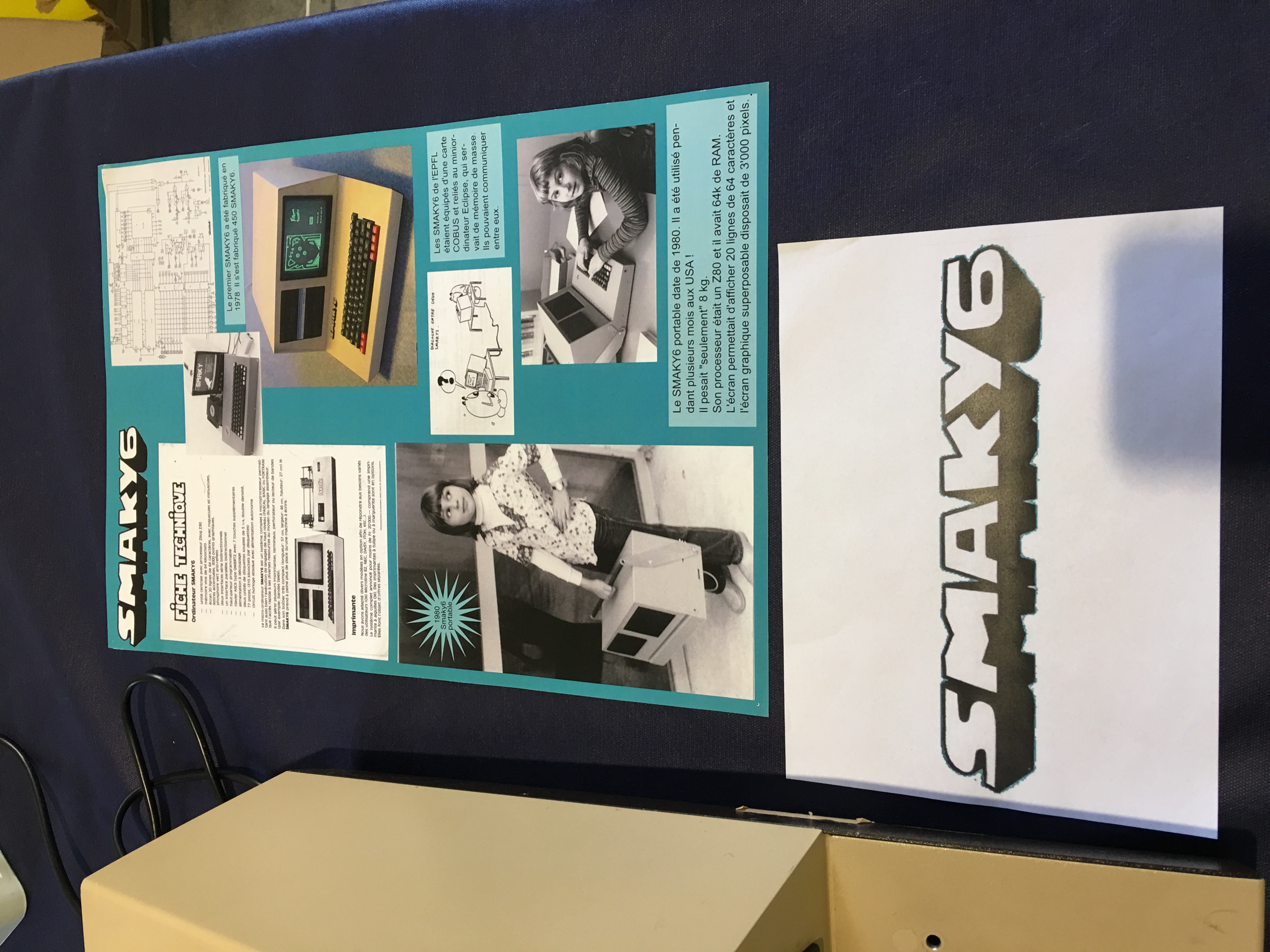

Tom, I agree with your thoughts here. A detail: >> Wozniak himself is prouder of the Apple II and proudest of the Apple II disk controller. You can easily buy the former for $150 in working condition, and the latter for about $20 Original Apple IIs, especially the earliest revisions, are going for four figures now among hobbyists. I've seen some as high as $2K-$4K. Even the early revisions of the II+ are getting up there in hobbyist prices, because Apple kept selling the straight II for a short time after the II+ introduction, thus some II+ computers are older than some original IIs. However it's the later II+ systems (which are most of them) and of course the //e, //c, and IIgs which are readily available for two/three figures. Various sub-versions go for more, such as the //e Platinum, //c Plus, and IIgs Woz Edition. On 8/1/20 12:37 PM, thomas.haigh@gmail.com wrote:
Hmm. I posted this as a kind of quirky head scratching moment, but Lisa asks a valid question so let me attempt an answer informed by our recent work on the Revised History of Modern Computing. The “unhinged” comment referred not to the specific seller, but to the market that might make such a price at least somewhat plausible. (Apparently the listing started at $1.75 million last year, so maybe a further reduction will follow).
First off, the real competence to answer this question would come from economic sociology within which there’s a thriving group of scholars looking at the pricing and collection of artworks. There’s a also a literature on collections and collectors that goes back to Walter Benjamin, and an associated steam looking at “authenticity” and the reproduction of cultural artifacts.
Like artwork the price of the Apple 1 would be set by collectors and auction houses guided by an infrastructure of authentication, evaluation, and (as Debbie shared) previous sales of similar items. Everyone involved in that process has an incentive to see values rise. Compared to a van Gough, Picasso, or Banksy the Apple 1 in question is rather affordable. But unlike traditional artworks, where uniqueness is the point, the Apple 1 is only accidentally rare.
So the parallel is stronger with well-established expensive collectibles like classic sportscars. Today’s Bloomberg reports a Ferrari sold for $3 million at auction. I assume this is the direct model being followed with Apple 1s. There’s also the recent boom in prices for unopened Nintendo cartridges, the fixation on pristine condition creating an artificial scarcity for a mass produced item for which supply generally exceeds current demand. (https://www.nytimes.com/2020/01/27/business/video-games-wata-heritage.html) Like Star Wars toys, old comics, and the former bubble in baseball cards, I think the conventional explanation is that rich men of a certain age want to own the things they dreamed of having as a boy.
No child ever dreamed of having an Apple 1 and hung its poster on the wall. Actual customers quickly traded them in for better machines. And it’s a rather ugly bare circuit board, though the hand built wooden case that’s also part of the eBay offering does evoke the amateur nature of the early personal computing community. But there is certainly a lot of money floating around the tech industry and so (entering my actual area of expertise) the question is how the Apple 1 became the definitive early personal computing artifact that a museum or wealthy collector might justify spending so much money on.
Being a famous _/personal/_ computer certainly helps. A PDP-1 or Univac 1 would be more historically significant and rarer, but you’d need to know something about history to appreciate that and they are all rather bulky. Fewer people feel personal ties to those technologies, and for the 1950s computers their generations have faded out. (IIRC there was a crash in Elvis memorabilia a few years ago, as the people who cared about Elvis left the marketplace). The Cray 1 is a lot better looking than an Apple 1, more technologically interesting (miles of hardwired connections), and was actually expensive at the time. The one and only prototype Cray 4 processor fetched just $37,500 when auctioned (https://www.bonhams.com/auctions/22964/lot/78/), and what claimed to be a piece of the Serial 001 Cray 1 from Los Alamos failed to sell for GBP 550 (https://www.theregister.com/2010/05/24/cray_1_gate_module_ebay/). Some significant portions of ENIAC, which does have name recognition, are not controlled by the Smithsonian but I don’t think any kind of secondary market has developed for them.
The Apple 1 was not, in itself, a particularly important or successful machine. It also wasn’t a “first” anything, except the first Apple product. It gets two sentences in our book, which serve as a bridge from the Homebrew Computer Club to the Apple II. The Altair 8800 was much “firstier” and did far more to establish the personal computer category, though people who care about such things have documented many earlier personal computers and microprocessor based machines. An Altair sold at auction for $8,125 in 2017. (https://www.bonhams.com/auctions/24495/lot/108/) Cromemcos, IMSAIS, the Processor Technology Sol, etc. were also more visible in 1976 than the Apple 1. The Apple 1 matters because it led to the Apple II, but even that was not the most initially important of the three mass produced personal computers launched in 1977. The TRS-80 sold much better for several years (allegedly until 1981). Steve Wozniak is said to have produced an impressively efficient design, but at the time Chuck Peddle was more renowned as a designer of elegant circuits (having produced the MOS 6502 chip the Apple was based on) and according to Wikipedia he also designed the third of the 1977 trio, the Commodore Pet 2001 (currently being auctioned on eBay for $211.50). So even the Apple II didn’t really establish itself as _/the/_ important machine of its generation years later. The Apple IIe, which outsold the 1970s models many times over to account for the bulk of Apple II sales, wasn’t launched until 1983 (well after the IBM PC which complicates the traditional succession story).
Rarity clearly matters (which the Apple 1 achieved by not being a particularly strong seller). Wozniak’s cult following is important, but Wozniak himself is prouder of the Apple II and proudest of the Apple II disk controller. You can easily buy the former for $150 in working condition, and the latter for about $20. The IBM PC matters a lot more to history, but those also cost just a few hundred dollars. A very low serial number might make a difference, but not enough to add several zeros to the prices.
The thing that really sets the Apple 1 apart is the fact that Apple is the world’s most successful company and many people feel a personal connection to it and its products. A billionaire can point to it and say “The first Apple, very rare (subtext, very expensive)” and visitors won’t need a history lecture to appreciate the importance. The story of Woz and Jobs in the garage has become the paradigmatic story of innovation, told in movies, documentaries, a bestselling books. (Misapplication of the Woz/Jobs template crippled the first season of /Halt and Catch Fire/, so if you haven’t seen it skip that and start with season 2). There’s the allure of thinking that one or both handled this circuit board in that garage. Add the rarity of its first product to that cult following and the amount of money percolating in Silicon Valley and you have a unique combination of factors converging to pump up the value of a computer that didn’t, in itself, much matter to the course of history.
Best wishes,
Tom
*From:* Members <members-bounces@lists.sigcis.org> *On Behalf Of *LO*OP CENTER, INC. *Sent:* Friday, July 31, 2020 11:34 PM *To:* Deborah Douglas <ddouglas@mit.edu> *Cc:* Sigcis <members@sigcis.org> *Subject:* Re: [SIGCIS-Members] eBay is selling an Apple 1 for $1.5 million
I feel like I ought to say something in response to this thread but I'm not sure what. Do you-all think the first Apple 1 should be worth more than the others? Pricing collectables is sooooo difficult.
Cheers,
Liza
On Fri, Jul 31, 2020 at 4:13 PM Deborah Douglas <ddouglas@mit.edu <mailto:ddouglas@mit.edu>> wrote:
For those who are curious here are some of the prices paid for Apple 1 computers in the past 6 years.
2014: $910,000 (Charity auction) https://www.cultofmac.com/498888/apple-history-celebration-apple-1-auction/
2016: $815,000 (Charity auction) https://www.cultofmac.com/498888/apple-history-celebration-apple-1-auction/
2018: $375,000 https://www.cnet.com/news/rare-apple-1-sells-at-auction-for-over-500-times-o...
2019: $470,000 https://www.cnbc.com/2019/05/28/wozniak-built-apple-1-computer-sold-for-almo...
2020: $458,711.25. https://appleinsider.com/articles/20/03/13/rare-functional-apple-1-computer-...
Debbie Douglas
On Jul 31, 2020, at 6:24 PM, mike@willegal.net <mailto:mike@willegal.net> wrote:
I talked to Krishna a few years ago. I don’t think he is unhinged, but I can’t imagine any Apple 1 fetching that price, even though it appears to be one of the nicer survivors. It’s funny, when I first became interested in Apple 1s, condition mattered little, but now the market has evolved to the point where condition seems to matter. Note that the Henry Ford Museum paid around 1 million dollars for an Apple 1 several years ago, though that price hasn’t been approached since.
Regards,
Mike Willegal
On Jul 31, 2020, at 4:05 PM, <thomas.haigh@gmail.com <mailto:thomas.haigh@gmail.com>> <thomas.haigh@gmail.com <mailto:thomas.haigh@gmail.com>> wrote:
https://www.ebay.com/i/174195921349. There is at least a “Make offer” button.
I have to say that this is more than a little unhinged, possibly a further sign (as if one were needed) of the approach of the end times. Though I did recently pay $250 for a working Apple IIe with disk drives and monitor. Simple mathematics suggests for a Bezos, Musk or Zuckerberg this would be a very much smaller purchase relative to net worth.
Full description at http://vi.raptor.ebaydesc.com/ws/eBayISAPI.dll?ViewItemDescV4&item=174195921349&category=162075&pm=1&ds=0&t=1582079090000&ver=0
Also an entry in the Apple 1 registry (which of course): https://www.apple1registry.com/en/79.html.
Best wishes,
Tom
_______________________________________________ This email is relayed from members at sigcis.org <http://sigcis.org/>, the email discussion list of SHOT SIGCIS. Opinions expressed here are those of the member posting and are not reviewed, edited, or endorsed by SIGCIS. The list archives are at http://lists.sigcis.org/pipermail/members-sigcis.org/ and you can change your subscription options at http://lists.sigcis.org/listinfo.cgi/members-sigcis.org
_______________________________________________ This email is relayed from members at sigcis.org <http://sigcis.org>, the email discussion list of SHOT SIGCIS. Opinions expressed here are those of the member posting and are not reviewed, edited, or endorsed by SIGCIS. The list archives are at http://lists.sigcis.org/pipermail/members-sigcis.org/ and you can change your subscription options at http://lists.sigcis.org/listinfo.cgi/members-sigcis.org
*Deborah G. Douglas, PhD *• Director of Collections and Curator of Science and Technology, MIT Museum; Research Associate, Program in Science, Technology, and Society • Room N51-209 • 265 Massachusetts Avenue • Cambridge, MA 02139-4307 • ddouglas@mit.edu <mailto:ddouglas@mit.edu> • 617-253-1766 telephone • 617-253-8994 facsimile • http://mitmuseum.mit.edu • she/her/hers
_______________________________________________ This email is relayed from members at sigcis.org <http://sigcis.org>, the email discussion list of SHOT SIGCIS. Opinions expressed here are those of the member posting and are not reviewed, edited, or endorsed by SIGCIS. The list archives are at http://lists.sigcis.org/pipermail/members-sigcis.org/ and you can change your subscription options at http://lists.sigcis.org/listinfo.cgi/members-sigcis.org
--
Liza Loop
Executive Director, LO*OP Center, Inc.
Guerneville, CA 95446
www.loopcenter.org <http://www.loopcenter.org>
650 619 1099 (between 8 am and 10 pm Pacific time only please)
_______________________________________________ This email is relayed from members at sigcis.org, the email discussion list of SHOT SIGCIS. Opinions expressed here are those of the member posting and are not reviewed, edited, or endorsed by SIGCIS. The list archives are at http://lists.sigcis.org/pipermail/members-sigcis.org/ and you can change your subscription options at http://lists.sigcis.org/listinfo.cgi/members-sigcis.org
Agreed about Woz and the Apple II, whose initial 1977 version came with a cassette drive for storage. Its 1978 upgrade included the floppy drive, and this allowed its sales to really take off. I documented its design in this paragraph in the Apple II IEEE Milestone description <https://ethw.org/Milestones:Introduction_of_the_Apple_II_Computer:_1977-1978> : *in 1978, Apple introduced the Disk II, a 5 ¼” floppy disk drive with an expansion slot controller card that effectively supplanted its original cassette tape drive. It was a design marvel of Apple co-founder Steve Wozniak’s in that it used just six low-cost chips as compared with the dozens of chips used by other floppy disk controllers that were then on the market. The six chips required special software that was included in the Apple DOS operating system in order to perform all of the operations necessary to fully support a fully functional floppy disk drive. The software was streamlined to run in a small footprint of the machine’s limited memory space.* This ingenious design was incorporated in the Macintosh as the "Integrated Woz Machine" (IWM) chip, which scored a patent, and as I documented in this paragraph in the Macintosh IEEE Milestone description <https://ethw.org/Milestones:Apple_Macintosh_Computer>: *The Macintosh was the first large-scale (and keystone) commercial user of the Sony 3.5” micro-floppy, a drive whose hard shell and shutter protected the media as compared with the industry-standard 5.25" floppy. Wendell Sander and Bob Bailey, with help from Ron Nicholson, designed a single-chip integrated floppy controller called the "Integrated Woz Machine" (IWM) [Ref-4: '448 patent <https://ethw.org/w/index.php?title=Special:Upload&wpDestFile=Ref4-US4742448.pdf>]. The IWM chip exactly implemented the state machine of Steve Wozniak’s ingenious Apple II floppy disk controller design, which had already dramatically reduced the number of chips used as compared with earlier floppy disk controllers. This IWM chip thus maintained compatibility with older Disk II media, and also supported the faster 3.5" micro-floppy drive which used the more complex system clock of the Macintosh.* Sales of subsequent models of the Apple II kept Apple afloat until the Macintosh finally took off. Brian Berg On Sun, Aug 2, 2020 at 6:01 PM Evan Koblentz <evan@snarc.net> wrote:
Tom,
I agree with your thoughts here.
A detail: >> Wozniak himself is prouder of the Apple II and proudest of the Apple II disk controller. You can easily buy the former for $150 in working condition, and the latter for about $20
Original Apple IIs, especially the earliest revisions, are going for four figures now among hobbyists. I've seen some as high as $2K-$4K.
Even the early revisions of the II+ are getting up there in hobbyist prices, because Apple kept selling the straight II for a short time after the II+ introduction, thus some II+ computers are older than some original IIs. However it's the later II+ systems (which are most of them) and of course the //e, //c, and IIgs which are readily available for two/three figures. Various sub-versions go for more, such as the //e Platinum, //c Plus, and IIgs Woz Edition.
On 8/1/20 12:37 PM, thomas.haigh@gmail.com wrote:
Hmm. I posted this as a kind of quirky head scratching moment, but Lisa asks a valid question so let me attempt an answer informed by our recent work on the Revised History of Modern Computing. The “unhinged” comment referred not to the specific seller, but to the market that might make such a price at least somewhat plausible. (Apparently the listing started at $1.75 million last year, so maybe a further reduction will follow).
First off, the real competence to answer this question would come from economic sociology within which there’s a thriving group of scholars looking at the pricing and collection of artworks. There’s a also a literature on collections and collectors that goes back to Walter Benjamin, and an associated steam looking at “authenticity” and the reproduction of cultural artifacts.
Like artwork the price of the Apple 1 would be set by collectors and auction houses guided by an infrastructure of authentication, evaluation, and (as Debbie shared) previous sales of similar items. Everyone involved in that process has an incentive to see values rise. Compared to a van Gough, Picasso, or Banksy the Apple 1 in question is rather affordable. But unlike traditional artworks, where uniqueness is the point, the Apple 1 is only accidentally rare.
So the parallel is stronger with well-established expensive collectibles like classic sportscars. Today’s Bloomberg reports a Ferrari sold for $3 million at auction. I assume this is the direct model being followed with Apple 1s. There’s also the recent boom in prices for unopened Nintendo cartridges, the fixation on pristine condition creating an artificial scarcity for a mass produced item for which supply generally exceeds current demand. ( https://www.nytimes.com/2020/01/27/business/video-games-wata-heritage.html) Like Star Wars toys, old comics, and the former bubble in baseball cards, I think the conventional explanation is that rich men of a certain age want to own the things they dreamed of having as a boy.
No child ever dreamed of having an Apple 1 and hung its poster on the wall. Actual customers quickly traded them in for better machines. And it’s a rather ugly bare circuit board, though the hand built wooden case that’s also part of the eBay offering does evoke the amateur nature of the early personal computing community. But there is certainly a lot of money floating around the tech industry and so (entering my actual area of expertise) the question is how the Apple 1 became the definitive early personal computing artifact that a museum or wealthy collector might justify spending so much money on.
Being a famous _*personal*_ computer certainly helps. A PDP-1 or Univac 1 would be more historically significant and rarer, but you’d need to know something about history to appreciate that and they are all rather bulky. Fewer people feel personal ties to those technologies, and for the 1950s computers their generations have faded out. (IIRC there was a crash in Elvis memorabilia a few years ago, as the people who cared about Elvis left the marketplace). The Cray 1 is a lot better looking than an Apple 1, more technologically interesting (miles of hardwired connections), and was actually expensive at the time. The one and only prototype Cray 4 processor fetched just $37,500 when auctioned ( https://www.bonhams.com/auctions/22964/lot/78/), and what claimed to be a piece of the Serial 001 Cray 1 from Los Alamos failed to sell for GBP 550 ( https://www.theregister.com/2010/05/24/cray_1_gate_module_ebay/). Some significant portions of ENIAC, which does have name recognition, are not controlled by the Smithsonian but I don’t think any kind of secondary market has developed for them.
The Apple 1 was not, in itself, a particularly important or successful machine. It also wasn’t a “first” anything, except the first Apple product. It gets two sentences in our book, which serve as a bridge from the Homebrew Computer Club to the Apple II. The Altair 8800 was much “firstier” and did far more to establish the personal computer category, though people who care about such things have documented many earlier personal computers and microprocessor based machines. An Altair sold at auction for $8,125 in 2017. (https://www.bonhams.com/auctions/24495/lot/108/) Cromemcos, IMSAIS, the Processor Technology Sol, etc. were also more visible in 1976 than the Apple 1. The Apple 1 matters because it led to the Apple II, but even that was not the most initially important of the three mass produced personal computers launched in 1977. The TRS-80 sold much better for several years (allegedly until 1981). Steve Wozniak is said to have produced an impressively efficient design, but at the time Chuck Peddle was more renowned as a designer of elegant circuits (having produced the MOS 6502 chip the Apple was based on) and according to Wikipedia he also designed the third of the 1977 trio, the Commodore Pet 2001 (currently being auctioned on eBay for $211.50). So even the Apple II didn’t really establish itself as _*the*_ important machine of its generation years later. The Apple IIe, which outsold the 1970s models many times over to account for the bulk of Apple II sales, wasn’t launched until 1983 (well after the IBM PC which complicates the traditional succession story).
Rarity clearly matters (which the Apple 1 achieved by not being a particularly strong seller). Wozniak’s cult following is important, but Wozniak himself is prouder of the Apple II and proudest of the Apple II disk controller. You can easily buy the former for $150 in working condition, and the latter for about $20. The IBM PC matters a lot more to history, but those also cost just a few hundred dollars. A very low serial number might make a difference, but not enough to add several zeros to the prices.
The thing that really sets the Apple 1 apart is the fact that Apple is the world’s most successful company and many people feel a personal connection to it and its products. A billionaire can point to it and say “The first Apple, very rare (subtext, very expensive)” and visitors won’t need a history lecture to appreciate the importance. The story of Woz and Jobs in the garage has become the paradigmatic story of innovation, told in movies, documentaries, a bestselling books. (Misapplication of the Woz/Jobs template crippled the first season of *Halt and Catch Fire*, so if you haven’t seen it skip that and start with season 2). There’s the allure of thinking that one or both handled this circuit board in that garage. Add the rarity of its first product to that cult following and the amount of money percolating in Silicon Valley and you have a unique combination of factors converging to pump up the value of a computer that didn’t, in itself, much matter to the course of history.
Best wishes,
Tom
*From:* Members <members-bounces@lists.sigcis.org> <members-bounces@lists.sigcis.org> *On Behalf Of *LO*OP CENTER, INC. *Sent:* Friday, July 31, 2020 11:34 PM *To:* Deborah Douglas <ddouglas@mit.edu> <ddouglas@mit.edu> *Cc:* Sigcis <members@sigcis.org> <members@sigcis.org> *Subject:* Re: [SIGCIS-Members] eBay is selling an Apple 1 for $1.5 million
I feel like I ought to say something in response to this thread but I'm not sure what. Do you-all think the first Apple 1 should be worth more than the others? Pricing collectables is sooooo difficult.
Cheers,
Liza
On Fri, Jul 31, 2020 at 4:13 PM Deborah Douglas <ddouglas@mit.edu> wrote:
For those who are curious here are some of the prices paid for Apple 1 computers in the past 6 years.
2014: $910,000 (Charity auction) https://www.cultofmac.com/498888/apple-history-celebration-apple-1-auction/
2016: $815,000 (Charity auction) https://www.cultofmac.com/498888/apple-history-celebration-apple-1-auction/
2018: $375,000 https://www.cnet.com/news/rare-apple-1-sells-at-auction-for-over-500-times-o...
2019: $470,000 https://www.cnbc.com/2019/05/28/wozniak-built-apple-1-computer-sold-for-almo...
2020: $458,711.25. https://appleinsider.com/articles/20/03/13/rare-functional-apple-1-computer-...
Debbie Douglas
On Jul 31, 2020, at 6:24 PM, mike@willegal.net wrote:
I talked to Krishna a few years ago. I don’t think he is unhinged, but I can’t imagine any Apple 1 fetching that price, even though it appears to be one of the nicer survivors. It’s funny, when I first became interested in Apple 1s, condition mattered little, but now the market has evolved to the point where condition seems to matter. Note that the Henry Ford Museum paid around 1 million dollars for an Apple 1 several years ago, though that price hasn’t been approached since.
Regards,
Mike Willegal
On Jul 31, 2020, at 4:05 PM, <thomas.haigh@gmail.com> < thomas.haigh@gmail.com> wrote:
https://www.ebay.com/i/174195921349. There is at least a “Make offer” button.
I have to say that this is more than a little unhinged, possibly a further sign (as if one were needed) of the approach of the end times. Though I did recently pay $250 for a working Apple IIe with disk drives and monitor. Simple mathematics suggests for a Bezos, Musk or Zuckerberg this would be a very much smaller purchase relative to net worth.
Full description at http://vi.raptor.ebaydesc.com/ws/eBayISAPI.dll?ViewItemDescV4&item=174195921349&category=162075&pm=1&ds=0&t=1582079090000&ver=0
Also an entry in the Apple 1 registry (which of course): https://www.apple1registry.com/en/79.html.
Best wishes,
Tom
_______________________________________________ This email is relayed from members at sigcis.org, the email discussion list of SHOT SIGCIS. Opinions expressed here are those of the member posting and are not reviewed, edited, or endorsed by SIGCIS. The list archives are at http://lists.sigcis.org/pipermail/members-sigcis.org/ and you can change your subscription options at http://lists.sigcis.org/listinfo.cgi/members-sigcis.org
_______________________________________________ This email is relayed from members at sigcis.org, the email discussion list of SHOT SIGCIS. Opinions expressed here are those of the member posting and are not reviewed, edited, or endorsed by SIGCIS. The list archives are at http://lists.sigcis.org/pipermail/members-sigcis.org/ and you can change your subscription options at http://lists.sigcis.org/listinfo.cgi/members-sigcis.org
*Deborah G. Douglas, PhD *• Director of Collections and Curator of Science and Technology, MIT Museum; Research Associate, Program in Science, Technology, and Society • Room N51-209 • 265 Massachusetts Avenue • Cambridge, MA 02139-4307 • ddouglas@mit.edu • 617-253-1766 telephone • 617-253-8994 facsimile • http://mitmuseum.mit.edu • she/her/hers
_______________________________________________ This email is relayed from members at sigcis.org, the email discussion list of SHOT SIGCIS. Opinions expressed here are those of the member posting and are not reviewed, edited, or endorsed by SIGCIS. The list archives are at http://lists.sigcis.org/pipermail/members-sigcis.org/ and you can change your subscription options at http://lists.sigcis.org/listinfo.cgi/members-sigcis.org
--
Liza Loop
Executive Director, LO*OP Center, Inc.
Guerneville, CA 95446
www.loopcenter.org
650 619 1099 (between 8 am and 10 pm Pacific time only please)
_______________________________________________ This email is relayed from members at sigcis.org, the email discussion list of SHOT SIGCIS. Opinions expressed here are those of the member posting and are not reviewed, edited, or endorsed by SIGCIS. The list archives are at http://lists.sigcis.org/pipermail/members-sigcis.org/ and you can change your subscription options at http://lists.sigcis.org/listinfo.cgi/members-sigcis.org
_______________________________________________ This email is relayed from members at sigcis.org, the email discussion list of SHOT SIGCIS. Opinions expressed here are those of the member posting and are not reviewed, edited, or endorsed by SIGCIS. The list archives are at http://lists.sigcis.org/pipermail/members-sigcis.org/ and you can change your subscription options at http://lists.sigcis.org/listinfo.cgi/members-sigcis.org
Liza, Because it was the first that was “shipped”, I’m absolutely sure your Apple 1 is more valuable than the typical Apple 1. There are several others that I put in the same category. Hard to know value of a unique item though. Here are some others, I may have forgotten about one or two other significant units. 1) The Apple 1 recently donated to the Living Computer Museum that used to be the demonstrator unit that Steve Jobs Kept in his office. 2) The Apple 1 currently at the Smithsonian, primarily because it’s at the Smithsonian. 3) Steve Wozniak’s Apple 1, even though it isn’t a prototype or special in any other way. Current evidence indicates that any prototypes have been lost. Pictures exist of a hand wired prototype and a PCB prototype. regards, Mike Willegal
On Aug 1, 2020, at 12:33 AM, LO*OP CENTER, INC. <lizaloop@loopcenter.org> wrote:
I feel like I ought to say something in response to this thread but I'm not sure what. Do you-all think the first Apple 1 should be worth more than the others? Pricing collectables is sooooo difficult.
Cheers,
Liza
On Fri, Jul 31, 2020 at 4:13 PM Deborah Douglas <ddouglas@mit.edu <mailto:ddouglas@mit.edu>> wrote:
For those who are curious here are some of the prices paid for Apple 1 computers in the past 6 years.
2014: $910,000 (Charity auction) https://www.cultofmac.com/498888/apple-history-celebration-apple-1-auction/ <https://www.cultofmac.com/498888/apple-history-celebration-apple-1-auction/> 2016: $815,000 (Charity auction) https://www.cultofmac.com/498888/apple-history-celebration-apple-1-auction/ <https://www.cultofmac.com/498888/apple-history-celebration-apple-1-auction/> 2018: $375,000 https://www.cnet.com/news/rare-apple-1-sells-at-auction-for-over-500-times-o... <https://www.cnet.com/news/rare-apple-1-sells-at-auction-for-over-500-times-original-price/> 2019: $470,000 https://www.cnbc.com/2019/05/28/wozniak-built-apple-1-computer-sold-for-almo... <https://www.cnbc.com/2019/05/28/wozniak-built-apple-1-computer-sold-for-almost-500000-at-christies.html> 2020: $458,711.25. https://appleinsider.com/articles/20/03/13/rare-functional-apple-1-computer-... <https://appleinsider.com/articles/20/03/13/rare-functional-apple-1-computer-sold-at-auction-for-458711>
Debbie Douglas
On Jul 31, 2020, at 6:24 PM, mike@willegal.net <mailto:mike@willegal.net> wrote:
I talked to Krishna a few years ago. I don’t think he is unhinged, but I can’t imagine any Apple 1 fetching that price, even though it appears to be one of the nicer survivors. It’s funny, when I first became interested in Apple 1s, condition mattered little, but now the market has evolved to the point where condition seems to matter. Note that the Henry Ford Museum paid around 1 million dollars for an Apple 1 several years ago, though that price hasn’t been approached since.
Regards, Mike Willegal
On Jul 31, 2020, at 4:05 PM, <thomas.haigh@gmail.com <mailto:thomas.haigh@gmail.com>> <thomas.haigh@gmail.com <mailto:thomas.haigh@gmail.com>> wrote:
https://www.ebay.com/i/174195921349 <https://www.ebay.com/i/174195921349>. There is at least a “Make offer” button.
I have to say that this is more than a little unhinged, possibly a further sign (as if one were needed) of the approach of the end times. Though I did recently pay $250 for a working Apple IIe with disk drives and monitor. Simple mathematics suggests for a Bezos, Musk or Zuckerberg this would be a very much smaller purchase relative to net worth.
Full description at http://vi.raptor.ebaydesc.com/ws/eBayISAPI.dll?ViewItemDescV4&item=174195921349&category=162075&pm=1&ds=0&t=1582079090000&ver=0 <http://vi.raptor.ebaydesc.com/ws/eBayISAPI.dll?ViewItemDescV4&item=174195921349&category=162075&pm=1&ds=0&t=1582079090000&ver=0>
Also an entry in the Apple 1 registry (which of course): https://www.apple1registry.com/en/79.html <https://www.apple1registry.com/en/79.html>.
Best wishes,
Tom _______________________________________________ This email is relayed from members at sigcis.org <http://sigcis.org/>, the email discussion list of SHOT SIGCIS. Opinions expressed here are those of the member posting and are not reviewed, edited, or endorsed by SIGCIS. The list archives are at http://lists.sigcis.org/pipermail/members-sigcis.org/ <http://lists.sigcis.org/pipermail/members-sigcis.org/> and you can change your subscription options at http://lists.sigcis.org/listinfo.cgi/members-sigcis.org <http://lists.sigcis.org/listinfo.cgi/members-sigcis.org>
This email is relayed from members at sigcis.org <http://sigcis.org/>, the email discussion list of SHOT SIGCIS. Opinions expressed here are those of the member posting and are not reviewed, edited, or endorsed by SIGCIS. The list archives are at http://lists.sigcis.org/pipermail/members-sigcis.org/ <http://lists.sigcis.org/pipermail/members-sigcis.org/> and you can change your subscription options at http://lists.sigcis.org/listinfo.cgi/members-sigcis.org <http://lists.sigcis.org/listinfo.cgi/members-sigcis.org> Deborah G. Douglas, PhD • Director of Collections and Curator of Science and Technology, MIT Museum; Research Associate, Program in Science, Technology, and Society • Room N51-209 • 265 Massachusetts Avenue • Cambridge, MA 02139-4307 • ddouglas@mit.edu <mailto:ddouglas@mit.edu> • 617-253-1766 telephone • 617-253-8994 facsimile • http://mitmuseum.mit.edu <http://mitmuseum.mit.edu/> • she/her/hers
_______________________________________________ This email is relayed from members at sigcis.org <http://sigcis.org/>, the email discussion list of SHOT SIGCIS. Opinions expressed here are those of the member posting and are not reviewed, edited, or endorsed by SIGCIS. The list archives are at http://lists.sigcis.org/pipermail/members-sigcis.org/ <http://lists.sigcis.org/pipermail/members-sigcis.org/> and you can change your subscription options at http://lists.sigcis.org/listinfo.cgi/members-sigcis.org <http://lists.sigcis.org/listinfo.cgi/members-sigcis.org>
-- Liza Loop Executive Director, LO*OP Center, Inc. Guerneville, CA 95446 www.loopcenter.org <http://www.loopcenter.org/> 650 619 1099 (between 8 am and 10 pm Pacific time only please)
Well, sorta' "shipped". I don't think this machine has ever been commercially shipped. Woz drove it to Cotati, CA to hand deliver it to me. I've driven it around to shows and schools but never "shipped" it. It has lived a very sheltered life! Cheers, Liza On Sat, Aug 1, 2020 at 3:47 PM MikeWillegal <mike@willegal.net> wrote:
Liza,
Because it was the first that was “shipped”, I’m absolutely sure your Apple 1 is more valuable than the typical Apple 1. There are several others that I put in the same category. Hard to know value of a unique item though.
Here are some others, I may have forgotten about one or two other significant units.
1) The Apple 1 recently donated to the Living Computer Museum that used to be the demonstrator unit that Steve Jobs Kept in his office. 2) The Apple 1 currently at the Smithsonian, primarily because it’s at the Smithsonian. 3) Steve Wozniak’s Apple 1, even though it isn’t a prototype or special in any other way. Current evidence indicates that any prototypes have been lost. Pictures exist of a hand wired prototype and a PCB prototype.
regards, Mike Willegal
On Aug 1, 2020, at 12:33 AM, LO*OP CENTER, INC. <lizaloop@loopcenter.org> wrote:
I feel like I ought to say something in response to this thread but I'm not sure what. Do you-all think the first Apple 1 should be worth more than the others? Pricing collectables is sooooo difficult.
Cheers,
Liza
On Fri, Jul 31, 2020 at 4:13 PM Deborah Douglas <ddouglas@mit.edu> wrote:
For those who are curious here are some of the prices paid for Apple 1 computers in the past 6 years.
2014: $910,000 (Charity auction) https://www.cultofmac.com/498888/apple-history-celebration-apple-1-auction/ 2016: $815,000 (Charity auction) https://www.cultofmac.com/498888/apple-history-celebration-apple-1-auction/ 2018: $375,000 https://www.cnet.com/news/rare-apple-1-sells-at-auction-for-over-500-times-o... 2019: $470,000 https://www.cnbc.com/2019/05/28/wozniak-built-apple-1-computer-sold-for-almo... 2020: $458,711.25. https://appleinsider.com/articles/20/03/13/rare-functional-apple-1-computer-...
Debbie Douglas
On Jul 31, 2020, at 6:24 PM, mike@willegal.net wrote:
I talked to Krishna a few years ago. I don’t think he is unhinged, but I can’t imagine any Apple 1 fetching that price, even though it appears to be one of the nicer survivors. It’s funny, when I first became interested in Apple 1s, condition mattered little, but now the market has evolved to the point where condition seems to matter. Note that the Henry Ford Museum paid around 1 million dollars for an Apple 1 several years ago, though that price hasn’t been approached since.
Regards, Mike Willegal
On Jul 31, 2020, at 4:05 PM, <thomas.haigh@gmail.com> < thomas.haigh@gmail.com> wrote:
https://www.ebay.com/i/174195921349. There is at least a “Make offer” button.
I have to say that this is more than a little unhinged, possibly a further sign (as if one were needed) of the approach of the end times. Though I did recently pay $250 for a working Apple IIe with disk drives and monitor. Simple mathematics suggests for a Bezos, Musk or Zuckerberg this would be a very much smaller purchase relative to net worth.
Full description at http://vi.raptor.ebaydesc.com/ws/eBayISAPI.dll?ViewItemDescV4&item=174195921349&category=162075&pm=1&ds=0&t=1582079090000&ver=0
Also an entry in the Apple 1 registry (which of course): https://www.apple1registry.com/en/79.html.
Best wishes,
Tom _______________________________________________ This email is relayed from members at sigcis.org, the email discussion list of SHOT SIGCIS. Opinions expressed here are those of the member posting and are not reviewed, edited, or endorsed by SIGCIS. The list archives are at http://lists.sigcis.org/pipermail/members-sigcis.org/ and you can change your subscription options at http://lists.sigcis.org/listinfo.cgi/members-sigcis.org
_______________________________________________ This email is relayed from members at sigcis.org, the email discussion list of SHOT SIGCIS. Opinions expressed here are those of the member posting and are not reviewed, edited, or endorsed by SIGCIS. The list archives are at http://lists.sigcis.org/pipermail/members-sigcis.org/ and you can change your subscription options at http://lists.sigcis.org/listinfo.cgi/members-sigcis.org
*Deborah G. Douglas, PhD *• Director of Collections and Curator of Science and Technology, MIT Museum; Research Associate, Program in Science, Technology, and Society • Room N51-209 • 265 Massachusetts Avenue • Cambridge, MA 02139-4307 • ddouglas@mit.edu • 617-253-1766 telephone • 617-253-8994 facsimile • http://mitmuseum.mit.edu • she/her/hers
_______________________________________________ This email is relayed from members at sigcis.org, the email discussion list of SHOT SIGCIS. Opinions expressed here are those of the member posting and are not reviewed, edited, or endorsed by SIGCIS. The list archives are at http://lists.sigcis.org/pipermail/members-sigcis.org/ and you can change your subscription options at http://lists.sigcis.org/listinfo.cgi/members-sigcis.org
-- Liza Loop Executive Director, LO*OP Center, Inc. Guerneville, CA 95446 www.loopcenter.org 650 619 1099 (between 8 am and 10 pm Pacific time only please)
-- Liza Loop Executive Director, LO*OP Center, Inc. Guerneville, CA 95446 www.loopcenter.org 650 619 1099 (between 8 am and 10 pm Pacific time only please)
participants (8)
-
 Brian Berg
 -
 Deborah Douglas
 -
 Evan Koblentz
 -
 Laine Nooney
 -
 LO*OP CENTER, INC.
 -
 mike@willegal.net
 -
MikeWillegal
-
 thomas.haigh@gmail.com