Query: mobile phones and science fiction

Hi again SIGCIS - please see below, forwarded with permission via Peggy Kidwell -
From: Baker, Alexi <alexi.baker@yale.edu <mailto:alexi.baker@yale.edu>> Sent: Wednesday, October 13, 2021 2:14 PM To: rete@maillist.ox.ac.uk <mailto:rete@maillist.ox.ac.uk> <rete@maillist.ox.ac.uk <mailto:rete@maillist.ox.ac.uk>> Subject: [rete] History of telecommunications / mobile phones
This is perhaps going a bit far afield in the history of technology, but I have a student who is interested in the history of mobile phones with respect to science fiction. She is in particular interested in how the development of such telecommunications influenced, was represented in, and was influenced by science fiction films. Do any of you happen to know of historians who have focused on the development of mobile phones and/or on the relationship between sci fi and technology in general?
Many thanks for any suggestions - Alexi
Dr. Alexi Baker Division of the History of Science & Technology Yale Peabody Museum of Natural History Tel. 203-737-3084 alexi.baker@yale.edu <mailto:alexi.baker@yale.edu>

I don’t have any recommendations for sci fi and mobile phones, but I do have a neat little article from a turn-of=the-last century issue of Electrical World describing mobile telephones for police to use. They would carry the handset with them and plug into a phone line to use it. If of interest, I’ll dig it out. -Julie Julie Cohn, Ph.D. Non-Resident Scholar, Center for Energy Studies Baker Institute for Public Policy, Rice University, and Research Historian, Center for Public History University of Houston email: cohnconnor@gmail.com cell: 713.516.0849 Author: The Grid: Biography of an American Technology (MIT Press, 2017) https://mitpress.mit.edu/books/grid
On Oct 13, 2021, at 2:29 PM, Andrew Russell <arussell@arussell.org> wrote:
Hi again SIGCIS - please see below, forwarded with permission via Peggy Kidwell -
From: Baker, Alexi <alexi.baker@yale.edu <mailto:alexi.baker@yale.edu>> Sent: Wednesday, October 13, 2021 2:14 PM To: rete@maillist.ox.ac.uk <mailto:rete@maillist.ox.ac.uk> <rete@maillist.ox.ac.uk <mailto:rete@maillist.ox.ac.uk>> Subject: [rete] History of telecommunications / mobile phones
This is perhaps going a bit far afield in the history of technology, but I have a student who is interested in the history of mobile phones with respect to science fiction. She is in particular interested in how the development of such telecommunications influenced, was represented in, and was influenced by science fiction films. Do any of you happen to know of historians who have focused on the development of mobile phones and/or on the relationship between sci fi and technology in general?
Many thanks for any suggestions - Alexi
Dr. Alexi Baker Division of the History of Science & Technology Yale Peabody Museum of Natural History Tel. 203-737-3084 alexi.baker@yale.edu <mailto:alexi.baker@yale.edu>
_______________________________________________ This email is relayed from members at sigcis.org, the email discussion list of SHOT SIGCIS. Opinions expressed here are those of the member posting and are not reviewed, edited, or endorsed by SIGCIS. The list archives are at http://lists.sigcis.org/pipermail/members-sigcis.org/ and you can change your subscription options at http://lists.sigcis.org/listinfo.cgi/members-sigcis.org

I'm not an historian, but in my co-author and I have written about the feedback loops between science fiction and technology in parts of our "Hollyweird Science" books, published by Springer ( https://www.springer.com/gp/book/9783319150710 ) . The mobile phone is actually a classic example, being inspired by Star Trek's communicators, c.f. this Forbes article, which also mentions some other innovations. https://www.forbes.com/sites/michaelvenables/2013/04/03/captain-kirks-call-t... In an interview with Jason Pontin, then EIC of MIT Technology Review for the 2013 Twelve Tomorrows hard sci-fi anthology (which I edited, so another shameless self-plug, sorry :) ), Neal Stephenson put it very well: "...science fiction can provide a coherent picture of an alternate realty in which some innovation happened. Not just the technical innovation itself, but the social context and the economic context that causes the innovation to make sense. It can be sort of like an invisible magnetic field that gets the iron filings to line up. In big engineering organizations, you've got all these people working on small pieces of a bigger problem, and there's an enormous amount of communication that has to take place to keep them all working in a coordinated fashion. That communication is tedious and expensive, but if everybody's got the same picture in their heads, maybe you don't have to communicate as much." Currently, the best academics to talk to are likely at ASU's Center for Science and the Imagination: https://csi.asu.edu/about-us/ They've done some innovation projects, including the "Hieroglyph: Stories & Visions for a Better Future" anthology and ASU's Threatcasting Lab uses science fiction as a tool for e.g, military and intelligence folks: https://threatcasting.asu.edu/ Hope this is of some help! S. On Wed, Oct 13, 2021 at 3:29 PM Andrew Russell <arussell@arussell.org> wrote:
Hi again SIGCIS - please see below, forwarded with permission via Peggy Kidwell -
*From:* Baker, Alexi <alexi.baker@yale.edu> *Sent:* Wednesday, October 13, 2021 2:14 PM *To:* rete@maillist.ox.ac.uk <rete@maillist.ox.ac.uk> *Subject:* [rete] History of telecommunications / mobile phones
This is perhaps going a bit far afield in the history of technology, but I have a student who is interested in the history of mobile phones with respect to science fiction. She is in particular interested in how the development of such telecommunications influenced, was represented in, and was influenced by science fiction films. Do any of you happen to know of historians who have focused on the development of mobile phones and/or on the relationship between sci fi and technology in general?
Many thanks for any suggestions - Alexi
Dr. Alexi Baker Division of the History of Science & Technology Yale Peabody Museum of Natural History Tel. 203-737-3084 alexi.baker@yale.edu
_______________________________________________ This email is relayed from members at sigcis.org, the email discussion list of SHOT SIGCIS. Opinions expressed here are those of the member posting and are not reviewed, edited, or endorsed by SIGCIS. The list archives are at http://lists.sigcis.org/pipermail/members-sigcis.org/ and you can change your subscription options at http://lists.sigcis.org/listinfo.cgi/members-sigcis.org

The mobile phone is actually a classic example, being inspired by Star Trek's communicators
I call foul. The original communicator was in "The Man from U.N.C.L.E." (premiered on September 22, 1964). Star Trek came later (September 8, 1966). I was a fan of "The Man from U.N.C.L.E." before I was a Trekkie. https://en.wikipedia.org/wiki/The_Man_from_U.N.C.L.E.#Communications_devices Regards Brian Carpenter On 14-Oct-21 12:45, Stephen Cass wrote:
I'm not an historian, but in my co-author and I have written about the feedback loops between science fiction and technology in parts of our "Hollyweird Science" books, published by Springer ( https://www.springer.com/gp/book/9783319150710 <https://www.springer.com/gp/book/9783319150710> ) . The mobile phone is actually a classic example, being inspired by Star Trek's communicators, c.f. this Forbes article, which also mentions some other innovations.
https://www.forbes.com/sites/michaelvenables/2013/04/03/captain-kirks-call-t... <https://www.forbes.com/sites/michaelvenables/2013/04/03/captain-kirks-call-to-spock/?sh=368b37f6a92c>
In an interview with Jason Pontin, then EIC of MIT Technology Review for the 2013 Twelve Tomorrows hard sci-fi anthology (which I edited, so another shameless self-plug, sorry :) ), Neal Stephenson put it very well: "...science fiction can provide a coherent picture of an alternate realty in which some innovation happened. Not just the technical innovation itself, but the social context and the economic context that causes the innovation to make sense. It can be sort of like an invisible magnetic field that gets the iron filings to line up. In big engineering organizations, you've got all these people working on small pieces of a bigger problem, and there's an enormous amount of communication that has to take place to keep them all working in a coordinated fashion. That communication is tedious and expensive, but if everybody's got the same picture in their heads, maybe you don't have to communicate as much."
Currently, the best academics to talk to are likely at ASU's Center for Science and the Imagination:
https://csi.asu.edu/about-us/ <https://csi.asu.edu/about-us/>
They've done some innovation projects, including the "Hieroglyph: Stories & Visions for a Better Future" anthology and ASU's Threatcasting Lab uses science fiction as a tool for e.g, military and intelligence folks: https://threatcasting.asu.edu/ <https://threatcasting.asu.edu/>
Hope this is of some help!
S.
On Wed, Oct 13, 2021 at 3:29 PM Andrew Russell <arussell@arussell.org <mailto:arussell@arussell.org>> wrote:
Hi again SIGCIS - please see below, forwarded with permission via Peggy Kidwell -
*From:* Baker, Alexi <alexi.baker@yale.edu <mailto:alexi.baker@yale.edu>> *Sent:* Wednesday, October 13, 2021 2:14 PM *To:* rete@maillist.ox.ac.uk <mailto:rete@maillist.ox.ac.uk> <rete@maillist.ox.ac.uk <mailto:rete@maillist.ox.ac.uk>> *Subject:* [rete] History of telecommunications / mobile phones This is perhaps going a bit far afield in the history of technology, but I have a student who is interested in the history of mobile phones
with respect to science fiction. She is in particular interested in how the development of such telecommunications influenced, was represented in, and was influenced by science fiction films. Do any of you happen to know of historians who have focused on the development of mobile phones and/or on the relationship between sci fi and technology in general?
Many thanks for any suggestions - Alexi
Dr. Alexi Baker Division of the History of Science & Technology Yale Peabody Museum of Natural History Tel. 203-737-3084 alexi.baker@yale.edu <mailto:alexi.baker@yale.edu>
_______________________________________________ This email is relayed from members at sigcis.org <http://sigcis.org>, the email discussion list of SHOT SIGCIS. Opinions expressed here are those of the member posting and are not reviewed, edited, or endorsed by SIGCIS. The list archives are at http://lists.sigcis.org/pipermail/members-sigcis.org/ <http://lists.sigcis.org/pipermail/members-sigcis.org/> and you can change your subscription options at http://lists.sigcis.org/listinfo.cgi/members-sigcis.org <http://lists.sigcis.org/listinfo.cgi/members-sigcis.org>
_______________________________________________ This email is relayed from members at sigcis.org, the email discussion list of SHOT SIGCIS. Opinions expressed here are those of the member posting and are not reviewed, edited, or endorsed by SIGCIS. The list archives are at http://lists.sigcis.org/pipermail/members-sigcis.org/ and you can change your subscription options at http://lists.sigcis.org/listinfo.cgi/members-sigcis.org

Dick Tracy had a watch…
On Oct 13, 2021, at 18:33, Brian E Carpenter <brian.e.carpenter@gmail.com> wrote:
The mobile phone is actually a classic example, being inspired by Star Trek's communicators
I call foul. The original communicator was in "The Man from U.N.C.L.E." (premiered on September 22, 1964). Star Trek came later (September 8, 1966).
I was a fan of "The Man from U.N.C.L.E." before I was a Trekkie.
https://en.wikipedia.org/wiki/The_Man_from_U.N.C.L.E.#Communications_devices
Regards Brian Carpenter
On 14-Oct-21 12:45, Stephen Cass wrote:
I'm not an historian, but in my co-author and I have written about the feedback loops between science fiction and technology in parts of our "Hollyweird Science" books, published by Springer ( https://www.springer.com/gp/book/9783319150710 <https://www.springer.com/gp/book/9783319150710> ) . The mobile phone is actually a classic example, being inspired by Star Trek's communicators, c.f. this Forbes article, which also mentions some other innovations.
https://www.forbes.com/sites/michaelvenables/2013/04/03/captain-kirks-call-t... <https://www.forbes.com/sites/michaelvenables/2013/04/03/captain-kirks-call-to-spock/?sh=368b37f6a92c>
In an interview with Jason Pontin, then EIC of MIT Technology Review for the 2013 Twelve Tomorrows hard sci-fi anthology (which I edited, so another shameless self-plug, sorry :) ), Neal Stephenson put it very well: "...science fiction can provide a coherent picture of an alternate realty in which some innovation happened. Not just the technical innovation itself, but the social context and the economic context that causes the innovation to make sense. It can be sort of like an invisible magnetic field that gets the iron filings to line up. In big engineering organizations, you've got all these people working on small pieces of a bigger problem, and there's an enormous amount of communication that has to take place to keep them all working in a coordinated fashion. That communication is tedious and expensive, but if everybody's got the same picture in their heads, maybe you don't have to communicate as much."
Currently, the best academics to talk to are likely at ASU's Center for Science and the Imagination:
https://csi.asu.edu/about-us/ <https://csi.asu.edu/about-us/>
They've done some innovation projects, including the "Hieroglyph: Stories & Visions for a Better Future" anthology and ASU's Threatcasting Lab uses science fiction as a tool for e.g, military and intelligence folks: https://threatcasting.asu.edu/ <https://threatcasting.asu.edu/>
Hope this is of some help!
S.
On Wed, Oct 13, 2021 at 3:29 PM Andrew Russell <arussell@arussell.org <mailto:arussell@arussell.org>> wrote:
Hi again SIGCIS - please see below, forwarded with permission via Peggy Kidwell -
*From:* Baker, Alexi <alexi.baker@yale.edu <mailto:alexi.baker@yale.edu>> *Sent:* Wednesday, October 13, 2021 2:14 PM *To:* rete@maillist.ox.ac.uk <mailto:rete@maillist.ox.ac.uk> <rete@maillist.ox.ac.uk <mailto:rete@maillist.ox.ac.uk>> *Subject:* [rete] History of telecommunications / mobile phones
This is perhaps going a bit far afield in the history of technology, but I have a student who is interested in the history of mobile phones
with respect to science fiction. She is in particular interested in how the development of such telecommunications influenced, was represented in, and was influenced by science fiction films. Do any of you happen to know of historians who have focused on the development of mobile phones and/or on the relationship between sci fi and technology in general?
Many thanks for any suggestions - Alexi
Dr. Alexi Baker Division of the History of Science & Technology Yale Peabody Museum of Natural History Tel. 203-737-3084 alexi.baker@yale.edu <mailto:alexi.baker@yale.edu>
_______________________________________________ This email is relayed from members at sigcis.org <http://sigcis.org>, the email discussion list of SHOT SIGCIS. Opinions expressed here are those of the member posting and are not reviewed, edited, or endorsed by SIGCIS. The list archives are at http://lists.sigcis.org/pipermail/members-sigcis.org/ <http://lists.sigcis.org/pipermail/members-sigcis.org/> and you can change your subscription options at http://lists.sigcis.org/listinfo.cgi/members-sigcis.org <http://lists.sigcis.org/listinfo.cgi/members-sigcis.org>
_______________________________________________ This email is relayed from members at sigcis.org, the email discussion list of SHOT SIGCIS. Opinions expressed here are those of the member posting and are not reviewed, edited, or endorsed by SIGCIS. The list archives are at http://lists.sigcis.org/pipermail/members-sigcis.org/ and you can change your subscription options at http://lists.sigcis.org/listinfo.cgi/members-sigcis.org
_______________________________________________ This email is relayed from members at sigcis.org, the email discussion list of SHOT SIGCIS. Opinions expressed here are those of the member posting and are not reviewed, edited, or endorsed by SIGCIS. The list archives are at http://lists.sigcis.org/pipermail/members-sigcis.org/ and you can change your subscription options at http://lists.sigcis.org/listinfo.cgi/members-sigcis.org
I call foul. The original communicator was in "The Man from U.N.C.L.E." (premiered on September 22, 1964). Star Trek came later (September 8, 1966).
Hah! For sure, but the inventor of the phone watched Star Trek, not the The Man from Uncle :) This is why we had to toss so many well-worn examples from our book drafts, because we couldn't establish specific links. Teasing out the specific linkages between sci-fi and tech is really tough, because inspiration is so personal to those involved, and barring a direct quote from them, it's hard to be sure about the casual relationships: first in fiction may not mean much. Or even non-fiction: in a related example of the relationship between science and art it's reasonable to suggest Van Gogh's Starry Night was influenced by the drawings of M50 by the Earl of Rosse, because the drawings were widely reproduced and there's some evidence Van Gogh saw them, but we can't say for sure.... S. On Wed, Oct 13, 2021 at 9:34 PM Brian E Carpenter < brian.e.carpenter@gmail.com> wrote:
The mobile phone is actually a classic example, being inspired by Star Trek's communicators
I call foul. The original communicator was in "The Man from U.N.C.L.E." (premiered on September 22, 1964). Star Trek came later (September 8, 1966).
I was a fan of "The Man from U.N.C.L.E." before I was a Trekkie.
https://en.wikipedia.org/wiki/The_Man_from_U.N.C.L.E.#Communications_devices
Regards Brian Carpenter
On 14-Oct-21 12:45, Stephen Cass wrote:
I'm not an historian, but in my co-author and I have written about the feedback loops between science fiction and technology in parts of our "Hollyweird Science" books, published by Springer ( https://www.springer.com/gp/book/9783319150710 < https://www.springer.com/gp/book/9783319150710> ) . The mobile phone is actually a classic example, being inspired by Star Trek's communicators, c.f. this Forbes article, which also mentions some other innovations.
https://www.forbes.com/sites/michaelvenables/2013/04/03/captain-kirks-call-t... < https://www.forbes.com/sites/michaelvenables/2013/04/03/captain-kirks-call-t...
In an interview with Jason Pontin, then EIC of MIT Technology Review for
the 2013 Twelve Tomorrows hard sci-fi anthology (which I edited, so another shameless self-plug, sorry :) ), Neal Stephenson put it very well: "...science fiction can provide a coherent picture of an alternate realty in which some innovation happened. Not just the technical innovation itself, but the social context and the economic context that causes the innovation to make sense. It can be sort of like an invisible magnetic field that gets the iron filings to line up. In big engineering organizations, you've got all these people working on small pieces of a bigger problem, and there's an enormous amount of communication that has to take place to keep them all working in a coordinated fashion. That communication is tedious and expensive, but if everybody's got the same picture in their heads, maybe you don't have to communicate as much."
Currently, the best academics to talk to are likely at ASU's Center for
Science and the Imagination:
https://csi.asu.edu/about-us/ <https://csi.asu.edu/about-us/>
They've done some innovation projects, including the "Hieroglyph:
Stories & Visions for a Better Future" anthology and ASU's Threatcasting Lab uses science fiction as a tool for e.g, military and intelligence folks: https://threatcasting.asu.edu/ <https://threatcasting.asu.edu/>
Hope this is of some help!
S.
On Wed, Oct 13, 2021 at 3:29 PM Andrew Russell <arussell@arussell.org
<mailto:arussell@arussell.org>> wrote:
Hi again SIGCIS - please see below, forwarded with permission via
Peggy Kidwell -
*From:* Baker, Alexi <alexi.baker@yale.edu <mailto:
*Sent:* Wednesday, October 13, 2021 2:14 PM *To:* rete@maillist.ox.ac.uk <mailto:rete@maillist.ox.ac.uk> <
rete@maillist.ox.ac.uk <mailto:rete@maillist.ox.ac.uk>>
*Subject:* [rete] History of telecommunications / mobile phones
This is perhaps going a bit far afield in the history of
technology, but I have a student who is interested in the history of mobile
Many thanks for any suggestions - Alexi
Dr. Alexi Baker Division of the History of Science & Technology Yale Peabody Museum of Natural History Tel. 203-737-3084 alexi.baker@yale.edu <mailto:alexi.baker@yale.edu>
_______________________________________________ This email is relayed from members at sigcis.org <http://sigcis.org>,
alexi.baker@yale.edu>> phones with respect to science fiction. She is in particular interested in how the development of such telecommunications influenced, was represented in, and was influenced by science fiction films. Do any of you happen to know of historians who have focused on the development of mobile phones and/or on the relationship between sci fi and technology in general? the email discussion list of SHOT SIGCIS. Opinions expressed here are those of the member posting and are not reviewed, edited, or endorsed by SIGCIS. The list archives are at http://lists.sigcis.org/pipermail/members-sigcis.org/ < http://lists.sigcis.org/pipermail/members-sigcis.org/> and you can change your subscription options at http://lists.sigcis.org/listinfo.cgi/members-sigcis.org < http://lists.sigcis.org/listinfo.cgi/members-sigcis.org>
_______________________________________________ This email is relayed from members at sigcis.org, the email discussion
list of SHOT SIGCIS. Opinions expressed here are those of the member posting and are not reviewed, edited, or endorsed by SIGCIS. The list archives are at http://lists.sigcis.org/pipermail/members-sigcis.org/ and you can change your subscription options at http://lists.sigcis.org/listinfo.cgi/members-sigcis.org
_______________________________________________ This email is relayed from members at sigcis.org, the email discussion list of SHOT SIGCIS. Opinions expressed here are those of the member posting and are not reviewed, edited, or endorsed by SIGCIS. The list archives are at http://lists.sigcis.org/pipermail/members-sigcis.org/ and you can change your subscription options at http://lists.sigcis.org/listinfo.cgi/members-sigcis.org
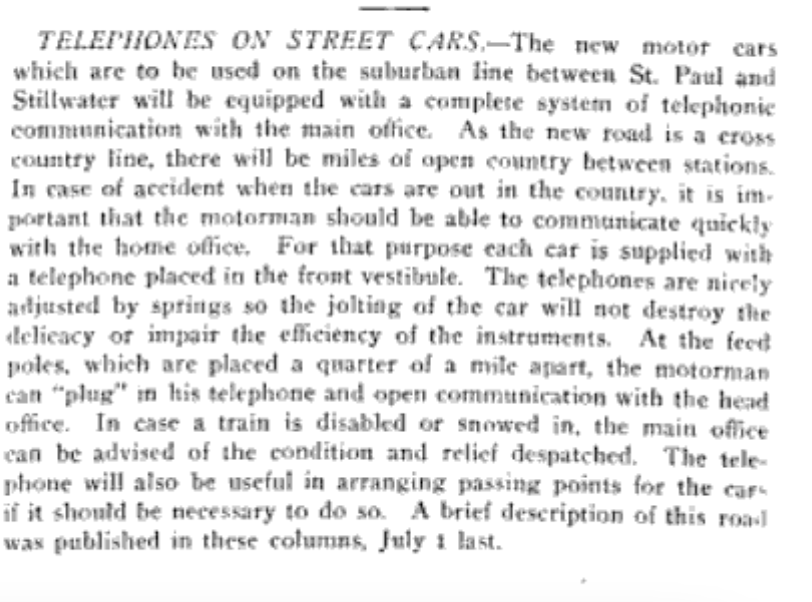
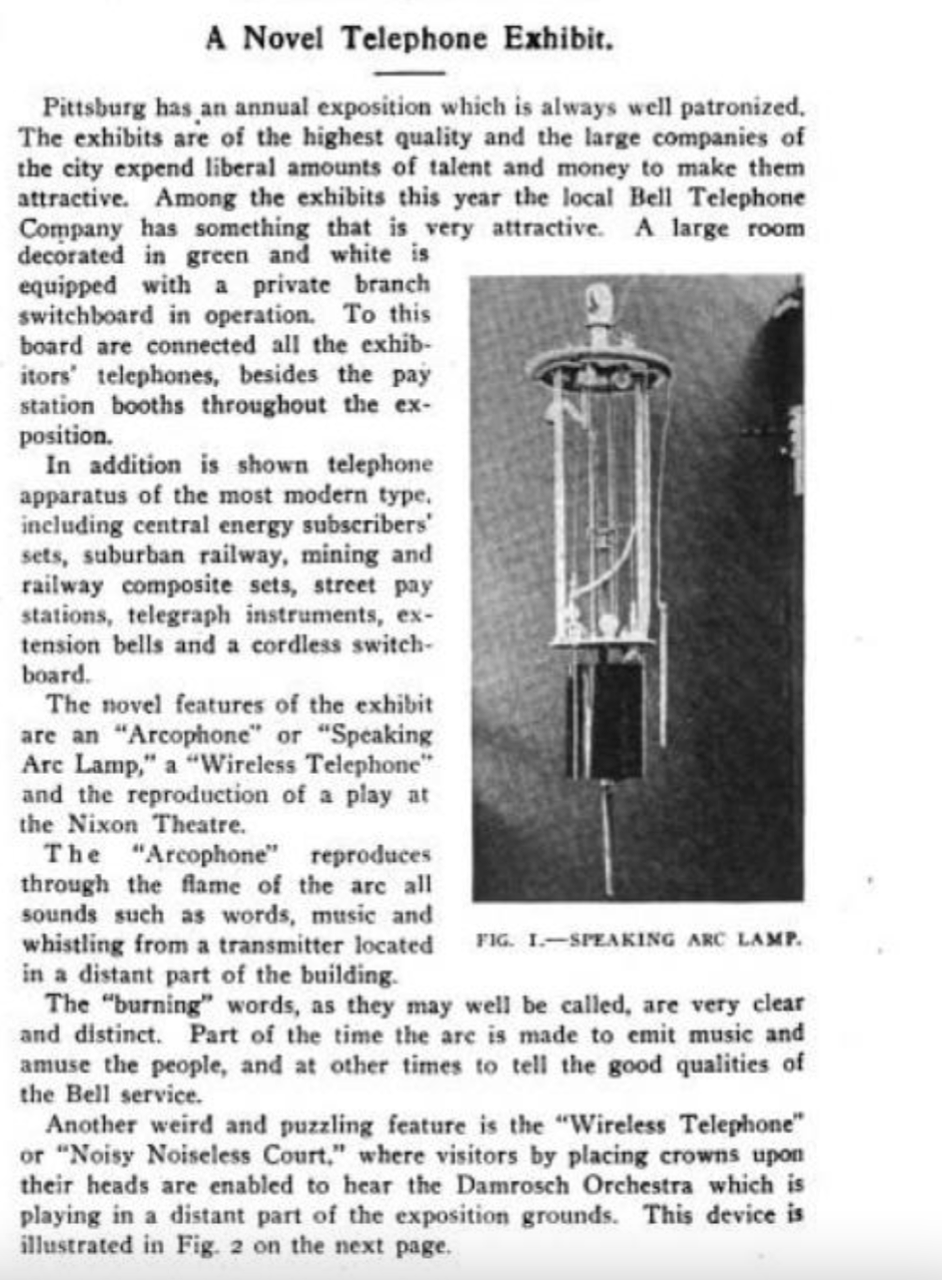
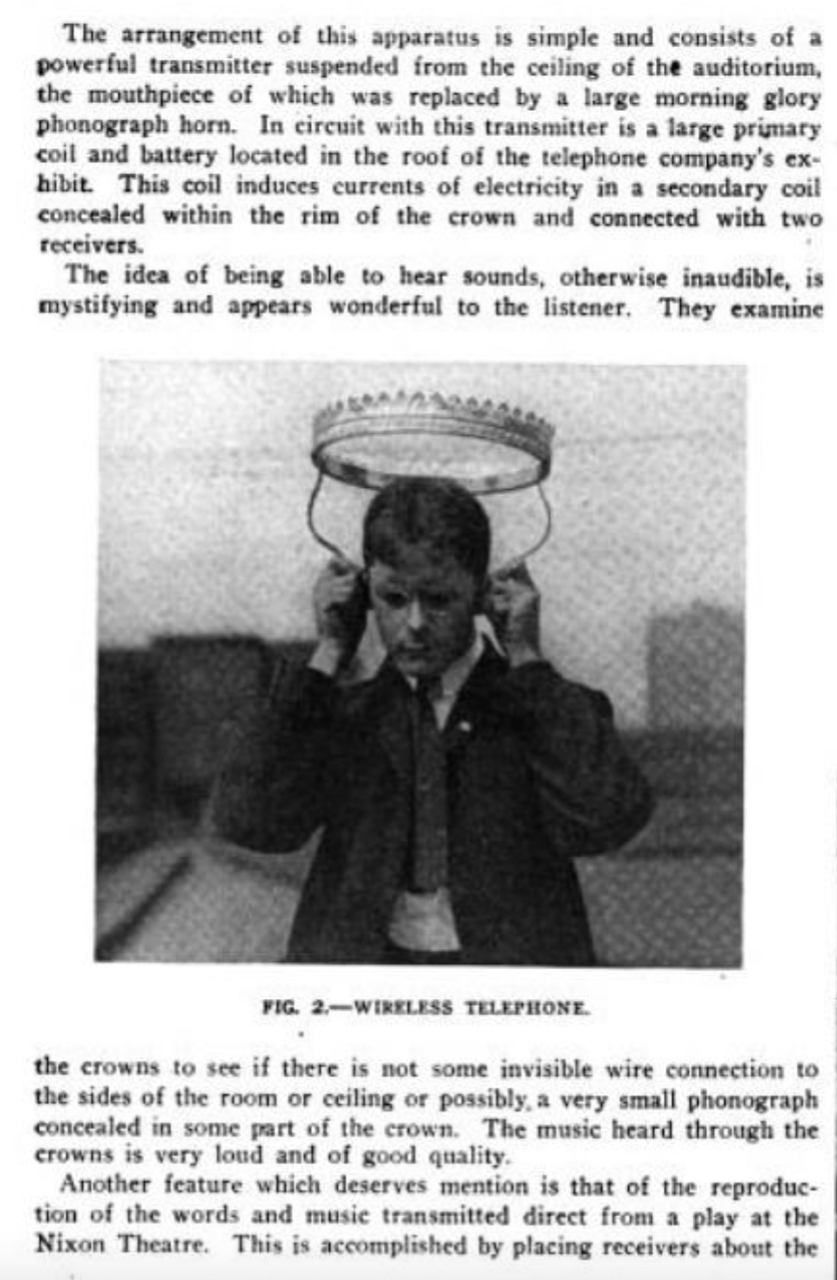
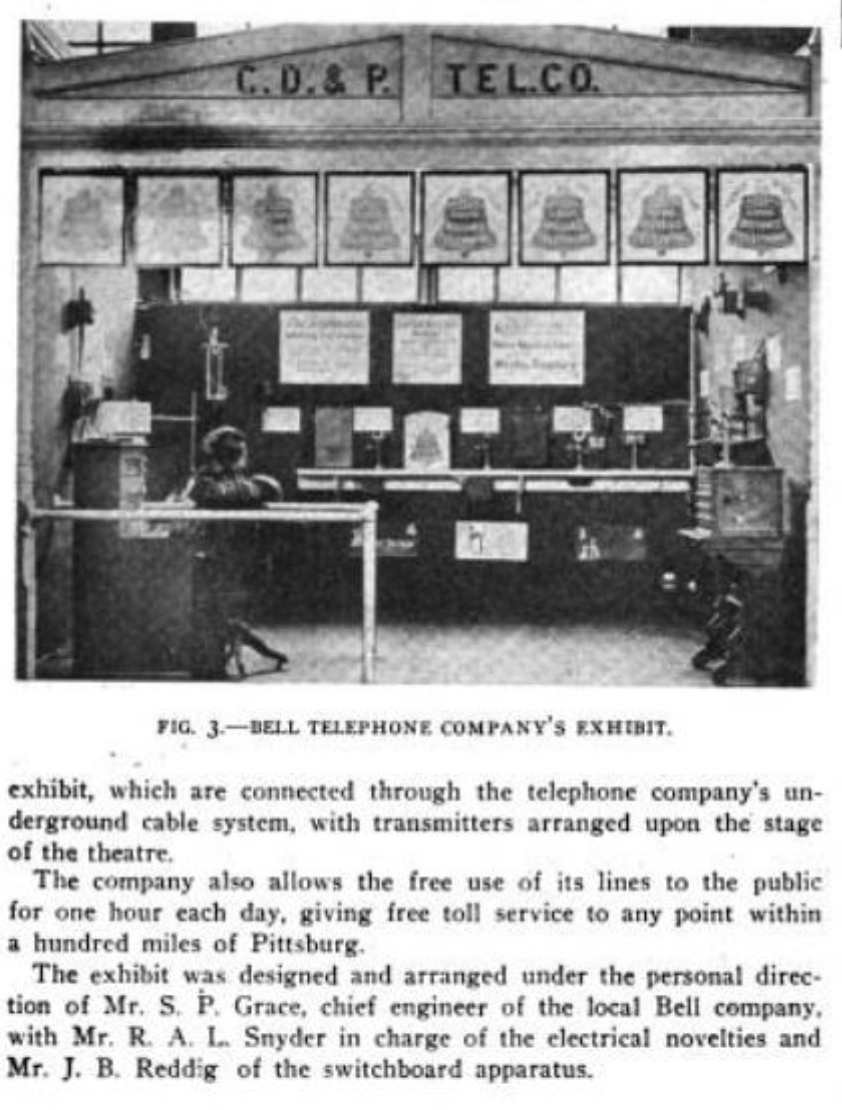
I actually have more than one early reference, but have not found the one related to police. This one, which I may have misremembered as referring to policemen, describes telephones on streetcars, from vol. 34, July 22, 1899, p. 129: This article from Electrical World, vol. 44, October 29, 1904, pp. 742-743, may be more relevant to the sci-fi conversation. I love the photo of the headset: Julie Cohn, Ph.D. Non-Resident Scholar, Center for Energy Studies Baker Institute for Public Policy, Rice University, and Research Historian, Center for Public History University of Houston email: cohnconnor@gmail.com cell: 713.516.0849 Author: The Grid: Biography of an American Technology (MIT Press, 2017) https://mitpress.mit.edu/books/grid
On Oct 13, 2021, at 9:11 PM, Stephen Cass <stephen.cass@gmail.com> wrote:
I call foul. The original communicator was in "The Man from U.N.C.L.E." (premiered on September 22, 1964). Star Trek came later (September 8, 1966).
Hah! For sure, but the inventor of the phone watched Star Trek, not the The Man from Uncle :) This is why we had to toss so many well-worn examples from our book drafts, because we couldn't establish specific links. Teasing out the specific linkages between sci-fi and tech is really tough, because inspiration is so personal to those involved, and barring a direct quote from them, it's hard to be sure about the casual relationships: first in fiction may not mean much. Or even non-fiction: in a related example of the relationship between science and art it's reasonable to suggest Van Gogh's Starry Night was influenced by the drawings of M50 by the Earl of Rosse, because the drawings were widely reproduced and there's some evidence Van Gogh saw them, but we can't say for sure....
S.
On Wed, Oct 13, 2021 at 9:34 PM Brian E Carpenter <brian.e.carpenter@gmail.com <mailto:brian.e.carpenter@gmail.com>> wrote:
The mobile phone is actually a classic example, being inspired by Star Trek's communicators
I call foul. The original communicator was in "The Man from U.N.C.L.E." (premiered on September 22, 1964). Star Trek came later (September 8, 1966).
I was a fan of "The Man from U.N.C.L.E." before I was a Trekkie.
https://en.wikipedia.org/wiki/The_Man_from_U.N.C.L.E.#Communications_devices <https://en.wikipedia.org/wiki/The_Man_from_U.N.C.L.E.#Communications_devices>
Regards Brian Carpenter
On 14-Oct-21 12:45, Stephen Cass wrote:
I'm not an historian, but in my co-author and I have written about the feedback loops between science fiction and technology in parts of our "Hollyweird Science" books, published by Springer ( https://www.springer.com/gp/book/9783319150710 <https://www.springer.com/gp/book/9783319150710> <https://www.springer.com/gp/book/9783319150710 <https://www.springer.com/gp/book/9783319150710>> ) . The mobile phone is actually a classic example, being inspired by Star Trek's communicators, c.f. this Forbes article, which also mentions some other innovations.
https://www.forbes.com/sites/michaelvenables/2013/04/03/captain-kirks-call-t... <https://www.forbes.com/sites/michaelvenables/2013/04/03/captain-kirks-call-to-spock/?sh=368b37f6a92c> <https://www.forbes.com/sites/michaelvenables/2013/04/03/captain-kirks-call-t... <https://www.forbes.com/sites/michaelvenables/2013/04/03/captain-kirks-call-to-spock/?sh=368b37f6a92c>>
In an interview with Jason Pontin, then EIC of MIT Technology Review for the 2013 Twelve Tomorrows hard sci-fi anthology (which I edited, so another shameless self-plug, sorry :) ), Neal Stephenson put it very well: "...science fiction can provide a coherent picture of an alternate realty in which some innovation happened. Not just the technical innovation itself, but the social context and the economic context that causes the innovation to make sense. It can be sort of like an invisible magnetic field that gets the iron filings to line up. In big engineering organizations, you've got all these people working on small pieces of a bigger problem, and there's an enormous amount of communication that has to take place to keep them all working in a coordinated fashion. That communication is tedious and expensive, but if everybody's got the same picture in their heads, maybe you don't have to communicate as much."
Currently, the best academics to talk to are likely at ASU's Center for Science and the Imagination:
https://csi.asu.edu/about-us/ <https://csi.asu.edu/about-us/> <https://csi.asu.edu/about-us/ <https://csi.asu.edu/about-us/>>
They've done some innovation projects, including the "Hieroglyph: Stories & Visions for a Better Future" anthology and ASU's Threatcasting Lab uses science fiction as a tool for e.g, military and intelligence folks: https://threatcasting.asu.edu/ <https://threatcasting.asu.edu/> <https://threatcasting.asu.edu/ <https://threatcasting.asu.edu/>>
Hope this is of some help!
S.
On Wed, Oct 13, 2021 at 3:29 PM Andrew Russell <arussell@arussell.org <mailto:arussell@arussell.org> <mailto:arussell@arussell.org <mailto:arussell@arussell.org>>> wrote:
Hi again SIGCIS - please see below, forwarded with permission via Peggy Kidwell -
*From:* Baker, Alexi <alexi.baker@yale.edu <mailto:alexi.baker@yale.edu> <mailto:alexi.baker@yale.edu <mailto:alexi.baker@yale.edu>>> *Sent:* Wednesday, October 13, 2021 2:14 PM *To:* rete@maillist.ox.ac.uk <mailto:rete@maillist.ox.ac.uk> <mailto:rete@maillist.ox.ac.uk <mailto:rete@maillist.ox.ac.uk>> <rete@maillist.ox.ac.uk <mailto:rete@maillist.ox.ac.uk> <mailto:rete@maillist.ox.ac.uk <mailto:rete@maillist.ox.ac.uk>>> *Subject:* [rete] History of telecommunications / mobile phones
This is perhaps going a bit far afield in the history of technology, but I have a student who is interested in the history of mobile phones
with respect to science fiction. She is in particular interested in how the development of such telecommunications influenced, was represented in, and was influenced by science fiction films. Do any of you happen to know of historians who have focused on the development of mobile phones and/or on the relationship between sci fi and technology in general?
Many thanks for any suggestions - Alexi
Dr. Alexi Baker Division of the History of Science & Technology Yale Peabody Museum of Natural History Tel. 203-737-3084 alexi.baker@yale.edu <mailto:alexi.baker@yale.edu> <mailto:alexi.baker@yale.edu <mailto:alexi.baker@yale.edu>>
_______________________________________________ This email is relayed from members at sigcis.org <http://sigcis.org/> <http://sigcis.org <http://sigcis.org/>>, the email discussion list of SHOT SIGCIS. Opinions expressed here are those of the member posting and are not reviewed, edited, or endorsed by SIGCIS. The list archives are at http://lists.sigcis.org/pipermail/members-sigcis.org/ <http://lists.sigcis.org/pipermail/members-sigcis.org/> <http://lists.sigcis.org/pipermail/members-sigcis.org/ <http://lists.sigcis.org/pipermail/members-sigcis.org/>> and you can change your subscription options at http://lists.sigcis.org/listinfo.cgi/members-sigcis.org <http://lists.sigcis.org/listinfo.cgi/members-sigcis.org> <http://lists.sigcis.org/listinfo.cgi/members-sigcis.org <http://lists.sigcis.org/listinfo.cgi/members-sigcis.org>>
_______________________________________________ This email is relayed from members at sigcis.org <http://sigcis.org/>, the email discussion list of SHOT SIGCIS. Opinions expressed here are those of the member posting and are not reviewed, edited, or endorsed by SIGCIS. The list archives are at http://lists.sigcis.org/pipermail/members-sigcis.org/ <http://lists.sigcis.org/pipermail/members-sigcis.org/> and you can change your subscription options at http://lists.sigcis.org/listinfo.cgi/members-sigcis.org <http://lists.sigcis.org/listinfo.cgi/members-sigcis.org>
_______________________________________________ This email is relayed from members at sigcis.org <http://sigcis.org/>, the email discussion list of SHOT SIGCIS. Opinions expressed here are those of the member posting and are not reviewed, edited, or endorsed by SIGCIS. The list archives are at http://lists.sigcis.org/pipermail/members-sigcis.org/ <http://lists.sigcis.org/pipermail/members-sigcis.org/> and you can change your subscription options at http://lists.sigcis.org/listinfo.cgi/members-sigcis.org <http://lists.sigcis.org/listinfo.cgi/members-sigcis.org>_______________________________________________ This email is relayed from members at sigcis.org, the email discussion list of SHOT SIGCIS. Opinions expressed here are those of the member posting and are not reviewed, edited, or endorsed by SIGCIS. The list archives are at http://lists.sigcis.org/pipermail/members-sigcis.org/ and you can change your subscription options at http://lists.sigcis.org/listinfo.cgi/members-sigcis.org

Cuneo, in the chapter cited above in the Ferro & Swedin edited volume, quotes Martin Cooper, one of the designers of the original Motorola cell phone: " "...And suddenly , there's Captain Kirk talking on his communicator. Talking, with no dialing. That was not a fantasy to us... that was an objective." He also quotes Rob Haitani, at Palm and later Handspring: "When I designed the UI for the Palm OS back in '93, my first sketches were influenced by the UI of the Enterprise bridge panels...Years later, when we designed the first [Handspring] Treo, it had a form factor similar to the communicators in the original series." The Treo's design looks even closer to the communicator than the Motorola flip-phones. The crew of the ill-fated Discovery One, from 2001, a Space Odyssey, used a tablet computer. But also voice recognition & synthesis with HAL; no need for a keyboard. This was in 1968. Paul Ceruzzi ________________________________ From: Members <members-bounces@lists.sigcis.org> on behalf of Stephen Cass <stephen.cass@gmail.com> Sent: Wednesday, October 13, 2021 10:11 PM To: Brian E Carpenter <brian.e.carpenter@gmail.com> Cc: members@lists.sigcis.org <members@lists.sigcis.org> Subject: Re: [SIGCIS-Members] Query: mobile phones and science fiction External Email - Exercise Caution
I call foul. The original communicator was in "The Man from U.N.C.L.E." (premiered on September 22, 1964). Star Trek came later (September 8, 1966).
Hah! For sure, but the inventor of the phone watched Star Trek, not the The Man from Uncle :) This is why we had to toss so many well-worn examples from our book drafts, because we couldn't establish specific links. Teasing out the specific linkages between sci-fi and tech is really tough, because inspiration is so personal to those involved, and barring a direct quote from them, it's hard to be sure about the casual relationships: first in fiction may not mean much. Or even non-fiction: in a related example of the relationship between science and art it's reasonable to suggest Van Gogh's Starry Night was influenced by the drawings of M50 by the Earl of Rosse, because the drawings were widely reproduced and there's some evidence Van Gogh saw them, but we can't say for sure.... S. On Wed, Oct 13, 2021 at 9:34 PM Brian E Carpenter <brian.e.carpenter@gmail.com<mailto:brian.e.carpenter@gmail.com>> wrote:
The mobile phone is actually a classic example, being inspired by Star Trek's communicators
I call foul. The original communicator was in "The Man from U.N.C.L.E." (premiered on September 22, 1964). Star Trek came later (September 8, 1966). I was a fan of "The Man from U.N.C.L.E." before I was a Trekkie. https://en.wikipedia.org/wiki/The_Man_from_U.N.C.L.E.#Communications_devices<https://nam02.safelinks.protection.outlook.com/?url=https%3A%2F%2Fen.wikipedia.org%2Fwiki%2FThe_Man_from_U.N.C.L.E.%23Communications_devices&data=04%7C01%7Cceruzzip%40si.edu%7C1dd0f62fc17c46b0cd7608d98eb7f468%7C989b5e2a14e44efe93b78cdd5fc5d11c%7C0%7C0%7C637697744042882273%7CUnknown%7CTWFpbGZsb3d8eyJWIjoiMC4wLjAwMDAiLCJQIjoiV2luMzIiLCJBTiI6Ik1haWwiLCJXVCI6Mn0%3D%7C3000&sdata=NMy6ZGcqbfwZ1u744SwJy3CRnnz2bBs8RYkuJLSUwMc%3D&reserved=0> Regards Brian Carpenter On 14-Oct-21 12:45, Stephen Cass wrote:
I'm not an historian, but in my co-author and I have written about the feedback loops between science fiction and technology in parts of our "Hollyweird Science" books, published by Springer ( https://www.springer.com/gp/book/9783319150710<https://nam02.safelinks.protection.outlook.com/?url=https%3A%2F%2Fwww.springer.com%2Fgp%2Fbook%2F9783319150710&data=04%7C01%7Cceruzzip%40si.edu%7C1dd0f62fc17c46b0cd7608d98eb7f468%7C989b5e2a14e44efe93b78cdd5fc5d11c%7C0%7C0%7C637697744042892270%7CUnknown%7CTWFpbGZsb3d8eyJWIjoiMC4wLjAwMDAiLCJQIjoiV2luMzIiLCJBTiI6Ik1haWwiLCJXVCI6Mn0%3D%7C3000&sdata=krJDWMXiX7vd4WhnrJ79dt5LeqVZaVbOzSwDv6J1N40%3D&reserved=0> <https://www.springer.com/gp/book/9783319150710<https://nam02.safelinks.protection.outlook.com/?url=https%3A%2F%2Fwww.springer.com%2Fgp%2Fbook%2F9783319150710&data=04%7C01%7Cceruzzip%40si.edu%7C1dd0f62fc17c46b0cd7608d98eb7f468%7C989b5e2a14e44efe93b78cdd5fc5d11c%7C0%7C0%7C637697744042892270%7CUnknown%7CTWFpbGZsb3d8eyJWIjoiMC4wLjAwMDAiLCJQIjoiV2luMzIiLCJBTiI6Ik1haWwiLCJXVCI6Mn0%3D%7C3000&sdata=krJDWMXiX7vd4WhnrJ79dt5LeqVZaVbOzSwDv6J1N40%3D&reserved=0>> ) . The mobile phone is actually a classic example, being inspired by Star Trek's communicators, c.f. this Forbes article, which also mentions some other innovations.
https://www.forbes.com/sites/michaelvenables/2013/04/03/captain-kirks-call-to-spock/?sh=368b37f6a92c<https://nam02.safelinks.protection.outlook.com/?url=https%3A%2F%2Fwww.forbes.com%2Fsites%2Fmichaelvenables%2F2013%2F04%2F03%2Fcaptain-kirks-call-to-spock%2F%3Fsh%3D368b37f6a92c&data=04%7C01%7Cceruzzip%40si.edu%7C1dd0f62fc17c46b0cd7608d98eb7f468%7C989b5e2a14e44efe93b78cdd5fc5d11c%7C0%7C0%7C637697744042902264%7CUnknown%7CTWFpbGZsb3d8eyJWIjoiMC4wLjAwMDAiLCJQIjoiV2luMzIiLCJBTiI6Ik1haWwiLCJXVCI6Mn0%3D%7C3000&sdata=AY569V4IrWonwX0uBvDqj1dbLDJqyklUiGoyQ5epVpw%3D&reserved=0> <https://www.forbes.com/sites/michaelvenables/2013/04/03/captain-kirks-call-to-spock/?sh=368b37f6a92c<https://nam02.safelinks.protection.outlook.com/?url=https%3A%2F%2Fwww.forbes.com%2Fsites%2Fmichaelvenables%2F2013%2F04%2F03%2Fcaptain-kirks-call-to-spock%2F%3Fsh%3D368b37f6a92c&data=04%7C01%7Cceruzzip%40si.edu%7C1dd0f62fc17c46b0cd7608d98eb7f468%7C989b5e2a14e44efe93b78cdd5fc5d11c%7C0%7C0%7C637697744042902264%7CUnknown%7CTWFpbGZsb3d8eyJWIjoiMC4wLjAwMDAiLCJQIjoiV2luMzIiLCJBTiI6Ik1haWwiLCJXVCI6Mn0%3D%7C3000&sdata=AY569V4IrWonwX0uBvDqj1dbLDJqyklUiGoyQ5epVpw%3D&reserved=0>>
In an interview with Jason Pontin, then EIC of MIT Technology Review for the 2013 Twelve Tomorrows hard sci-fi anthology (which I edited, so another shameless self-plug, sorry :) ), Neal Stephenson put it very well: "...science fiction can provide a coherent picture of an alternate realty in which some innovation happened. Not just the technical innovation itself, but the social context and the economic context that causes the innovation to make sense. It can be sort of like an invisible magnetic field that gets the iron filings to line up. In big engineering organizations, you've got all these people working on small pieces of a bigger problem, and there's an enormous amount of communication that has to take place to keep them all working in a coordinated fashion. That communication is tedious and expensive, but if everybody's got the same picture in their heads, maybe you don't have to communicate as much."
Currently, the best academics to talk to are likely at ASU's Center for Science and the Imagination:
https://csi.asu.edu/about-us/<https://nam02.safelinks.protection.outlook.com/?url=https%3A%2F%2Fcsi.asu.edu%2Fabout-us%2F&data=04%7C01%7Cceruzzip%40si.edu%7C1dd0f62fc17c46b0cd7608d98eb7f468%7C989b5e2a14e44efe93b78cdd5fc5d11c%7C0%7C0%7C637697744042912260%7CUnknown%7CTWFpbGZsb3d8eyJWIjoiMC4wLjAwMDAiLCJQIjoiV2luMzIiLCJBTiI6Ik1haWwiLCJXVCI6Mn0%3D%7C3000&sdata=K5LjbvUhV2PkDCb6qFLIoCqlybPGVOIDi4vULPdN5dY%3D&reserved=0> <https://csi.asu.edu/about-us/<https://nam02.safelinks.protection.outlook.com/?url=https%3A%2F%2Fcsi.asu.edu%2Fabout-us%2F&data=04%7C01%7Cceruzzip%40si.edu%7C1dd0f62fc17c46b0cd7608d98eb7f468%7C989b5e2a14e44efe93b78cdd5fc5d11c%7C0%7C0%7C637697744042912260%7CUnknown%7CTWFpbGZsb3d8eyJWIjoiMC4wLjAwMDAiLCJQIjoiV2luMzIiLCJBTiI6Ik1haWwiLCJXVCI6Mn0%3D%7C3000&sdata=K5LjbvUhV2PkDCb6qFLIoCqlybPGVOIDi4vULPdN5dY%3D&reserved=0>>
They've done some innovation projects, including the "Hieroglyph: Stories & Visions for a Better Future" anthology and ASU's Threatcasting Lab uses science fiction as a tool for e.g, military and intelligence folks: https://threatcasting.asu.edu/<https://nam02.safelinks.protection.outlook.com/?url=https%3A%2F%2Fthreatcasting.asu.edu%2F&data=04%7C01%7Cceruzzip%40si.edu%7C1dd0f62fc17c46b0cd7608d98eb7f468%7C989b5e2a14e44efe93b78cdd5fc5d11c%7C0%7C0%7C637697744042922254%7CUnknown%7CTWFpbGZsb3d8eyJWIjoiMC4wLjAwMDAiLCJQIjoiV2luMzIiLCJBTiI6Ik1haWwiLCJXVCI6Mn0%3D%7C3000&sdata=KWzEx5pZ0S3Zjam5EJhEVZEQxPeHx%2FUEHgZe2%2B4vEGE%3D&reserved=0> <https://threatcasting.asu.edu/<https://nam02.safelinks.protection.outlook.com/?url=https%3A%2F%2Fthreatcasting.asu.edu%2F&data=04%7C01%7Cceruzzip%40si.edu%7C1dd0f62fc17c46b0cd7608d98eb7f468%7C989b5e2a14e44efe93b78cdd5fc5d11c%7C0%7C0%7C637697744042922254%7CUnknown%7CTWFpbGZsb3d8eyJWIjoiMC4wLjAwMDAiLCJQIjoiV2luMzIiLCJBTiI6Ik1haWwiLCJXVCI6Mn0%3D%7C3000&sdata=KWzEx5pZ0S3Zjam5EJhEVZEQxPeHx%2FUEHgZe2%2B4vEGE%3D&reserved=0>>
Hope this is of some help!
S.
On Wed, Oct 13, 2021 at 3:29 PM Andrew Russell <arussell@arussell.org<mailto:arussell@arussell.org> <mailto:arussell@arussell.org<mailto:arussell@arussell.org>>> wrote:
Hi again SIGCIS - please see below, forwarded with permission via Peggy Kidwell -
*From:* Baker, Alexi <alexi.baker@yale.edu<mailto:alexi.baker@yale.edu> <mailto:alexi.baker@yale.edu<mailto:alexi.baker@yale.edu>>> *Sent:* Wednesday, October 13, 2021 2:14 PM *To:* rete@maillist.ox.ac.uk<mailto:rete@maillist.ox.ac.uk> <mailto:rete@maillist.ox.ac.uk<mailto:rete@maillist.ox.ac.uk>> <rete@maillist.ox.ac.uk<mailto:rete@maillist.ox.ac.uk> <mailto:rete@maillist.ox.ac.uk<mailto:rete@maillist.ox.ac.uk>>> *Subject:* [rete] History of telecommunications / mobile phones
This is perhaps going a bit far afield in the history of technology, but I have a student who is interested in the history of mobile phones
with respect to science fiction. She is in particular interested in how the development of such telecommunications influenced, was represented in, and was influenced by science fiction films. Do any of you happen to know of historians who have focused on the development of mobile phones and/or on the relationship between sci fi and technology in general?
Many thanks for any suggestions - Alexi
Dr. Alexi Baker Division of the History of Science & Technology Yale Peabody Museum of Natural History Tel. 203-737-3084 alexi.baker@yale.edu<mailto:alexi.baker@yale.edu> <mailto:alexi.baker@yale.edu<mailto:alexi.baker@yale.edu>>
_______________________________________________ This email is relayed from members at sigcis.org<https://nam02.safelinks.protection.outlook.com/?url=http%3A%2F%2Fsigcis.org%2F&data=04%7C01%7Cceruzzip%40si.edu%7C1dd0f62fc17c46b0cd7608d98eb7f468%7C989b5e2a14e44efe93b78cdd5fc5d11c%7C0%7C0%7C637697744042932243%7CUnknown%7CTWFpbGZsb3d8eyJWIjoiMC4wLjAwMDAiLCJQIjoiV2luMzIiLCJBTiI6Ik1haWwiLCJXVCI6Mn0%3D%7C3000&sdata=S%2B0SY8F9PIzRY%2BxpYiBKD7wF3wZI%2BnsFD24HI5pZUiU%3D&reserved=0> <http://sigcis.org<https://nam02.safelinks.protection.outlook.com/?url=http%3A%2F%2Fsigcis.org%2F&data=04%7C01%7Cceruzzip%40si.edu%7C1dd0f62fc17c46b0cd7608d98eb7f468%7C989b5e2a14e44efe93b78cdd5fc5d11c%7C0%7C0%7C637697744042932243%7CUnknown%7CTWFpbGZsb3d8eyJWIjoiMC4wLjAwMDAiLCJQIjoiV2luMzIiLCJBTiI6Ik1haWwiLCJXVCI6Mn0%3D%7C3000&sdata=S%2B0SY8F9PIzRY%2BxpYiBKD7wF3wZI%2BnsFD24HI5pZUiU%3D&reserved=0>>, the email discussion list of SHOT SIGCIS. Opinions expressed here are those of the member posting and are not reviewed, edited, or endorsed by SIGCIS. The list archives are at http://lists.sigcis.org/pipermail/members-sigcis.org/<https://nam02.safelinks.protection.outlook.com/?url=http%3A%2F%2Flists.sigcis.org%2Fpipermail%2Fmembers-sigcis.org%2F&data=04%7C01%7Cceruzzip%40si.edu%7C1dd0f62fc17c46b0cd7608d98eb7f468%7C989b5e2a14e44efe93b78cdd5fc5d11c%7C0%7C0%7C637697744042942242%7CUnknown%7CTWFpbGZsb3d8eyJWIjoiMC4wLjAwMDAiLCJQIjoiV2luMzIiLCJBTiI6Ik1haWwiLCJXVCI6Mn0%3D%7C3000&sdata=1t5NKQbr2Fl5aV6ayUHmrJ%2BnWCNsxN5Ym2Kp24XAoD0%3D&reserved=0> <http://lists.sigcis.org/pipermail/members-sigcis.org/<https://nam02.safelinks.protection.outlook.com/?url=http%3A%2F%2Flists.sigcis.org%2Fpipermail%2Fmembers-sigcis.org%2F&data=04%7C01%7Cceruzzip%40si.edu%7C1dd0f62fc17c46b0cd7608d98eb7f468%7C989b5e2a14e44efe93b78cdd5fc5d11c%7C0%7C0%7C637697744042942242%7CUnknown%7CTWFpbGZsb3d8eyJWIjoiMC4wLjAwMDAiLCJQIjoiV2luMzIiLCJBTiI6Ik1haWwiLCJXVCI6Mn0%3D%7C3000&sdata=1t5NKQbr2Fl5aV6ayUHmrJ%2BnWCNsxN5Ym2Kp24XAoD0%3D&reserved=0>> and you can change your subscription options at http://lists.sigcis.org/listinfo.cgi/members-sigcis.org<https://nam02.safelinks.protection.outlook.com/?url=http%3A%2F%2Flists.sigcis.org%2Flistinfo.cgi%2Fmembers-sigcis.org&data=04%7C01%7Cceruzzip%40si.edu%7C1dd0f62fc17c46b0cd7608d98eb7f468%7C989b5e2a14e44efe93b78cdd5fc5d11c%7C0%7C0%7C637697744042952230%7CUnknown%7CTWFpbGZsb3d8eyJWIjoiMC4wLjAwMDAiLCJQIjoiV2luMzIiLCJBTiI6Ik1haWwiLCJXVCI6Mn0%3D%7C3000&sdata=nEyFdhjbvEKckLLDUTAwJS8AVmyX2kA29rp4%2FmKHUqA%3D&reserved=0> <http://lists.sigcis.org/listinfo.cgi/members-sigcis.org<https://nam02.safelinks.protection.outlook.com/?url=http%3A%2F%2Flists.sigcis.org%2Flistinfo.cgi%2Fmembers-sigcis.org&data=04%7C01%7Cceruzzip%40si.edu%7C1dd0f62fc17c46b0cd7608d98eb7f468%7C989b5e2a14e44efe93b78cdd5fc5d11c%7C0%7C0%7C637697744042962228%7CUnknown%7CTWFpbGZsb3d8eyJWIjoiMC4wLjAwMDAiLCJQIjoiV2luMzIiLCJBTiI6Ik1haWwiLCJXVCI6Mn0%3D%7C3000&sdata=LtsaNre9VNJeWLb4wlj91Kl59SnuqEsmn6zEoLnbT%2Bk%3D&reserved=0>>
_______________________________________________ This email is relayed from members at sigcis.org<https://nam02.safelinks.protection.outlook.com/?url=http%3A%2F%2Fsigcis.org%2F&data=04%7C01%7Cceruzzip%40si.edu%7C1dd0f62fc17c46b0cd7608d98eb7f468%7C989b5e2a14e44efe93b78cdd5fc5d11c%7C0%7C0%7C637697744042962228%7CUnknown%7CTWFpbGZsb3d8eyJWIjoiMC4wLjAwMDAiLCJQIjoiV2luMzIiLCJBTiI6Ik1haWwiLCJXVCI6Mn0%3D%7C3000&sdata=em7pKN%2BQDeS8o%2BJoUTYOYJ%2FcUsiaInDqfUUaMrVgOCA%3D&reserved=0>, the email discussion list of SHOT SIGCIS. Opinions expressed here are those of the member posting and are not reviewed, edited, or endorsed by SIGCIS. The list archives are at http://lists.sigcis.org/pipermail/members-sigcis.org/<https://nam02.safelinks.protection.outlook.com/?url=http%3A%2F%2Flists.sigcis.org%2Fpipermail%2Fmembers-sigcis.org%2F&data=04%7C01%7Cceruzzip%40si.edu%7C1dd0f62fc17c46b0cd7608d98eb7f468%7C989b5e2a14e44efe93b78cdd5fc5d11c%7C0%7C0%7C637697744042972220%7CUnknown%7CTWFpbGZsb3d8eyJWIjoiMC4wLjAwMDAiLCJQIjoiV2luMzIiLCJBTiI6Ik1haWwiLCJXVCI6Mn0%3D%7C3000&sdata=pOl0z2uW5T8JhLiLRuvvoMc0dslO8AOZ1FFXfgUMATk%3D&reserved=0> and you can change your subscription options at http://lists.sigcis.org/listinfo.cgi/members-sigcis.org<https://nam02.safelinks.protection.outlook.com/?url=http%3A%2F%2Flists.sigcis.org%2Flistinfo.cgi%2Fmembers-sigcis.org&data=04%7C01%7Cceruzzip%40si.edu%7C1dd0f62fc17c46b0cd7608d98eb7f468%7C989b5e2a14e44efe93b78cdd5fc5d11c%7C0%7C0%7C637697744042972220%7CUnknown%7CTWFpbGZsb3d8eyJWIjoiMC4wLjAwMDAiLCJQIjoiV2luMzIiLCJBTiI6Ik1haWwiLCJXVCI6Mn0%3D%7C3000&sdata=ZtsY9%2FR9nXTbY%2Bqw8WSkGYDSvFS%2FQdQXU6GHFA%2BIA8A%3D&reserved=0>
_______________________________________________ This email is relayed from members at sigcis.org<https://nam02.safelinks.protection.outlook.com/?url=http%3A%2F%2Fsigcis.org%2F&data=04%7C01%7Cceruzzip%40si.edu%7C1dd0f62fc17c46b0cd7608d98eb7f468%7C989b5e2a14e44efe93b78cdd5fc5d11c%7C0%7C0%7C637697744042982215%7CUnknown%7CTWFpbGZsb3d8eyJWIjoiMC4wLjAwMDAiLCJQIjoiV2luMzIiLCJBTiI6Ik1haWwiLCJXVCI6Mn0%3D%7C3000&sdata=iVkc%2BG820gmFaki0nVq5GO%2ByKXPPLKilwZP8KHIyGl8%3D&reserved=0>, the email discussion list of SHOT SIGCIS. Opinions expressed here are those of the member posting and are not reviewed, edited, or endorsed by SIGCIS. The list archives are at http://lists.sigcis.org/pipermail/members-sigcis.org/<https://nam02.safelinks.protection.outlook.com/?url=http%3A%2F%2Flists.sigcis.org%2Fpipermail%2Fmembers-sigcis.org%2F&data=04%7C01%7Cceruzzip%40si.edu%7C1dd0f62fc17c46b0cd7608d98eb7f468%7C989b5e2a14e44efe93b78cdd5fc5d11c%7C0%7C0%7C637697744042982215%7CUnknown%7CTWFpbGZsb3d8eyJWIjoiMC4wLjAwMDAiLCJQIjoiV2luMzIiLCJBTiI6Ik1haWwiLCJXVCI6Mn0%3D%7C3000&sdata=%2FTsVpRuIM9va1%2FinjQuLW3C5cCotbacepbv6bPEtGSg%3D&reserved=0> and you can change your subscription options at http://lists.sigcis.org/listinfo.cgi/members-sigcis.org<https://nam02.safelinks.protection.outlook.com/?url=http%3A%2F%2Flists.sigcis.org%2Flistinfo.cgi%2Fmembers-sigcis.org&data=04%7C01%7Cceruzzip%40si.edu%7C1dd0f62fc17c46b0cd7608d98eb7f468%7C989b5e2a14e44efe93b78cdd5fc5d11c%7C0%7C0%7C637697744042992209%7CUnknown%7CTWFpbGZsb3d8eyJWIjoiMC4wLjAwMDAiLCJQIjoiV2luMzIiLCJBTiI6Ik1haWwiLCJXVCI6Mn0%3D%7C3000&sdata=br2Ml3pUU7lePWk6O6yblTT%2Fd8gZ0PuY6J9zz3jyGuo%3D&reserved=0>

Martin Cooper has since revised his story about Star Trek and the inspiration behind the cellular telephone. From the Santa Cruz /Good Times/, August 17, 2021 <https://goodtimes.sc/cover-stories/cell-phone-inventor-martin-cooper/>, in a piece promoting his book /Cutting the Cord/ <https://www.simonandschuster.com/books/Cutting-the-Cord/Martin-Cooper/9781948122740>: In actual fact, it wasn’t /Star Trek/’s communicator that inspired the cell phone, but the two-way radio wristwatch that Dick Tracy wore in the 1930s comic strip the 92-year-old Cooper read as a kid. So who’s responsible for this long-standing lie? Uh, well … Martin Cooper. “I did it,” Cooper told me in an interview earlier this year. “It’s one of the mistakes I made.” It’s true. People had assumed that the show/predicted/ the cell phone for decades, but it was actually a 2005 TV movie called /How/ /William Shatner Changed the World/ that first claimed that Cooper literally conceived of the cell phone after happening to catch an episode of /Star Trek/ on TV one day. Cooper endorsed the story—you can still see the clip on YouTube—and he’s been paying for it ever since. Herb Jellinek On 10/13/21 8:55 PM, Ceruzzi, Paul wrote:
Cuneo, in the chapter cited above in the Ferro & Swedin edited volume, quotes Martin Cooper, one of the designers of the original Motorola cell phone: " "...And suddenly , there's Captain Kirk talking on his communicator. Talking, with no dialing. That was not a fantasy to us... that was an objective." He also quotes Rob Haitani, at Palm and later Handspring: "When I designed the UI for the Palm OS back in '93, my first sketches were influenced by the UI of the /Enterprise/ bridge panels...Years later, when we designed the first [Handspring] Treo, it had a form factor similar to the communicators in the original series." The Treo's design looks even closer to the communicator than the Motorola flip-phones.
The crew of the ill-fated /Discovery One/, from /2001, a Space Odyssey/, used a tablet computer. But also voice recognition & synthesis with HAL; no need for a keyboard. This was in 1968.
Paul Ceruzzi
------------------------------------------------------------------------ *From:* Members <members-bounces@lists.sigcis.org> on behalf of Stephen Cass <stephen.cass@gmail.com> *Sent:* Wednesday, October 13, 2021 10:11 PM *To:* Brian E Carpenter <brian.e.carpenter@gmail.com> *Cc:* members@lists.sigcis.org <members@lists.sigcis.org> *Subject:* Re: [SIGCIS-Members] Query: mobile phones and science fiction
*External Email - Exercise Caution*
I call foul. The original communicator was in "The Man from U.N.C.L.E." (premiered on September 22, 1964). Star Trek came later (September 8, 1966).
Hah! For sure, but the inventor of the phone watched Star Trek, not the The Man from Uncle :) This is why we had to toss so many well-worn examples from our book drafts, because we couldn't establish specific links. Teasing out the specific linkages between sci-fi and tech is really tough, because inspiration is so personal to those involved, and barring a direct quote from them, it's hard to be sure about the casual relationships: first in fiction may not mean much. Or even non-fiction: in a related example of the relationship between science and art it's reasonable to suggest Van Gogh's Starry Night was influenced by the drawings of M50 by the Earl of Rosse, because the drawings were widely reproduced and there's some evidence Van Gogh saw them, but we can't say for sure....
S.
On Wed, Oct 13, 2021 at 9:34 PM Brian E Carpenter <brian.e.carpenter@gmail.com <mailto:brian.e.carpenter@gmail.com>> wrote:
> The mobile phone is actually a classic example, being inspired by Star Trek's communicators
I call foul. The original communicator was in "The Man from U.N.C.L.E." (premiered on September 22, 1964). Star Trek came later (September 8, 1966).
I was a fan of "The Man from U.N.C.L.E." before I was a Trekkie.
https://en.wikipedia.org/wiki/The_Man_from_U.N.C.L.E.#Communications_devices <https://nam02.safelinks.protection.outlook.com/?url=https%3A%2F%2Fen.wikipedia.org%2Fwiki%2FThe_Man_from_U.N.C.L.E.%23Communications_devices&data=04%7C01%7Cceruzzip%40si.edu%7C1dd0f62fc17c46b0cd7608d98eb7f468%7C989b5e2a14e44efe93b78cdd5fc5d11c%7C0%7C0%7C637697744042882273%7CUnknown%7CTWFpbGZsb3d8eyJWIjoiMC4wLjAwMDAiLCJQIjoiV2luMzIiLCJBTiI6Ik1haWwiLCJXVCI6Mn0%3D%7C3000&sdata=NMy6ZGcqbfwZ1u744SwJy3CRnnz2bBs8RYkuJLSUwMc%3D&reserved=0>
Regards Brian Carpenter
On 14-Oct-21 12:45, Stephen Cass wrote: > I'm not an historian, but in my co-author and I have written about the feedback loops between science fiction and technology in parts of our "Hollyweird Science" books, published by Springer ( https://www.springer.com/gp/book/9783319150710 <https://nam02.safelinks.protection.outlook.com/?url=https%3A%2F%2Fwww.springer.com%2Fgp%2Fbook%2F9783319150710&data=04%7C01%7Cceruzzip%40si.edu%7C1dd0f62fc17c46b0cd7608d98eb7f468%7C989b5e2a14e44efe93b78cdd5fc5d11c%7C0%7C0%7C637697744042892270%7CUnknown%7CTWFpbGZsb3d8eyJWIjoiMC4wLjAwMDAiLCJQIjoiV2luMzIiLCJBTiI6Ik1haWwiLCJXVCI6Mn0%3D%7C3000&sdata=krJDWMXiX7vd4WhnrJ79dt5LeqVZaVbOzSwDv6J1N40%3D&reserved=0> <https://www.springer.com/gp/book/9783319150710 <https://nam02.safelinks.protection.outlook.com/?url=https%3A%2F%2Fwww.springer.com%2Fgp%2Fbook%2F9783319150710&data=04%7C01%7Cceruzzip%40si.edu%7C1dd0f62fc17c46b0cd7608d98eb7f468%7C989b5e2a14e44efe93b78cdd5fc5d11c%7C0%7C0%7C637697744042892270%7CUnknown%7CTWFpbGZsb3d8eyJWIjoiMC4wLjAwMDAiLCJQIjoiV2luMzIiLCJBTiI6Ik1haWwiLCJXVCI6Mn0%3D%7C3000&sdata=krJDWMXiX7vd4WhnrJ79dt5LeqVZaVbOzSwDv6J1N40%3D&reserved=0>> ) . The mobile phone is actually a classic example, being inspired by Star Trek's communicators, c.f. this Forbes article, which also mentions some other innovations. > > https://www.forbes.com/sites/michaelvenables/2013/04/03/captain-kirks-call-t... <https://nam02.safelinks.protection.outlook.com/?url=https%3A%2F%2Fwww.forbes.com%2Fsites%2Fmichaelvenables%2F2013%2F04%2F03%2Fcaptain-kirks-call-to-spock%2F%3Fsh%3D368b37f6a92c&data=04%7C01%7Cceruzzip%40si.edu%7C1dd0f62fc17c46b0cd7608d98eb7f468%7C989b5e2a14e44efe93b78cdd5fc5d11c%7C0%7C0%7C637697744042902264%7CUnknown%7CTWFpbGZsb3d8eyJWIjoiMC4wLjAwMDAiLCJQIjoiV2luMzIiLCJBTiI6Ik1haWwiLCJXVCI6Mn0%3D%7C3000&sdata=AY569V4IrWonwX0uBvDqj1dbLDJqyklUiGoyQ5epVpw%3D&reserved=0> <https://www.forbes.com/sites/michaelvenables/2013/04/03/captain-kirks-call-t... <https://nam02.safelinks.protection.outlook.com/?url=https%3A%2F%2Fwww.forbes.com%2Fsites%2Fmichaelvenables%2F2013%2F04%2F03%2Fcaptain-kirks-call-to-spock%2F%3Fsh%3D368b37f6a92c&data=04%7C01%7Cceruzzip%40si.edu%7C1dd0f62fc17c46b0cd7608d98eb7f468%7C989b5e2a14e44efe93b78cdd5fc5d11c%7C0%7C0%7C637697744042902264%7CUnknown%7CTWFpbGZsb3d8eyJWIjoiMC4wLjAwMDAiLCJQIjoiV2luMzIiLCJBTiI6Ik1haWwiLCJXVCI6Mn0%3D%7C3000&sdata=AY569V4IrWonwX0uBvDqj1dbLDJqyklUiGoyQ5epVpw%3D&reserved=0>> > > In an interview with Jason Pontin, then EIC of MIT Technology Review for the 2013 Twelve Tomorrows hard sci-fi anthology (which I edited, so another shameless self-plug, sorry :) ), Neal Stephenson put it very well: "...science fiction can provide a coherent picture of an alternate realty in which some innovation happened. Not just the technical innovation itself, but the social context and the economic context that causes the innovation to make sense. It can be sort of like an invisible magnetic field that gets the iron filings to line up. In big engineering organizations, you've got all these people working on small pieces of a bigger problem, and there's an enormous amount of communication that has to take place to keep them all working in a coordinated fashion. That communication is tedious and expensive, but if everybody's got the same picture in their heads, maybe you don't have to communicate as much." > > Currently, the best academics to talk to are likely at ASU's Center for Science and the Imagination: > > https://csi.asu.edu/about-us/ <https://nam02.safelinks.protection.outlook.com/?url=https%3A%2F%2Fcsi.asu.edu%2Fabout-us%2F&data=04%7C01%7Cceruzzip%40si.edu%7C1dd0f62fc17c46b0cd7608d98eb7f468%7C989b5e2a14e44efe93b78cdd5fc5d11c%7C0%7C0%7C637697744042912260%7CUnknown%7CTWFpbGZsb3d8eyJWIjoiMC4wLjAwMDAiLCJQIjoiV2luMzIiLCJBTiI6Ik1haWwiLCJXVCI6Mn0%3D%7C3000&sdata=K5LjbvUhV2PkDCb6qFLIoCqlybPGVOIDi4vULPdN5dY%3D&reserved=0> <https://csi.asu.edu/about-us/ <https://nam02.safelinks.protection.outlook.com/?url=https%3A%2F%2Fcsi.asu.edu%2Fabout-us%2F&data=04%7C01%7Cceruzzip%40si.edu%7C1dd0f62fc17c46b0cd7608d98eb7f468%7C989b5e2a14e44efe93b78cdd5fc5d11c%7C0%7C0%7C637697744042912260%7CUnknown%7CTWFpbGZsb3d8eyJWIjoiMC4wLjAwMDAiLCJQIjoiV2luMzIiLCJBTiI6Ik1haWwiLCJXVCI6Mn0%3D%7C3000&sdata=K5LjbvUhV2PkDCb6qFLIoCqlybPGVOIDi4vULPdN5dY%3D&reserved=0>> > > They've done some innovation projects, including the "Hieroglyph: Stories & Visions for a Better Future" anthology and ASU's Threatcasting Lab uses science fiction as a tool for e.g, military and intelligence folks: https://threatcasting.asu.edu/ <https://nam02.safelinks.protection.outlook.com/?url=https%3A%2F%2Fthreatcasting.asu.edu%2F&data=04%7C01%7Cceruzzip%40si.edu%7C1dd0f62fc17c46b0cd7608d98eb7f468%7C989b5e2a14e44efe93b78cdd5fc5d11c%7C0%7C0%7C637697744042922254%7CUnknown%7CTWFpbGZsb3d8eyJWIjoiMC4wLjAwMDAiLCJQIjoiV2luMzIiLCJBTiI6Ik1haWwiLCJXVCI6Mn0%3D%7C3000&sdata=KWzEx5pZ0S3Zjam5EJhEVZEQxPeHx%2FUEHgZe2%2B4vEGE%3D&reserved=0> <https://threatcasting.asu.edu/ <https://nam02.safelinks.protection.outlook.com/?url=https%3A%2F%2Fthreatcasting.asu.edu%2F&data=04%7C01%7Cceruzzip%40si.edu%7C1dd0f62fc17c46b0cd7608d98eb7f468%7C989b5e2a14e44efe93b78cdd5fc5d11c%7C0%7C0%7C637697744042922254%7CUnknown%7CTWFpbGZsb3d8eyJWIjoiMC4wLjAwMDAiLCJQIjoiV2luMzIiLCJBTiI6Ik1haWwiLCJXVCI6Mn0%3D%7C3000&sdata=KWzEx5pZ0S3Zjam5EJhEVZEQxPeHx%2FUEHgZe2%2B4vEGE%3D&reserved=0>> > > Hope this is of some help! > > S. > > > On Wed, Oct 13, 2021 at 3:29 PM Andrew Russell <arussell@arussell.org <mailto:arussell@arussell.org> <mailto:arussell@arussell.org <mailto:arussell@arussell.org>>> wrote: > > Hi again SIGCIS - please see below, forwarded with permission via Peggy Kidwell - > >> >> *From:* Baker, Alexi <alexi.baker@yale.edu <mailto:alexi.baker@yale.edu> <mailto:alexi.baker@yale.edu <mailto:alexi.baker@yale.edu>>> >> *Sent:* Wednesday, October 13, 2021 2:14 PM >> *To:* rete@maillist.ox.ac.uk <mailto:rete@maillist.ox.ac.uk> <mailto:rete@maillist.ox.ac.uk <mailto:rete@maillist.ox.ac.uk>> <rete@maillist.ox.ac.uk <mailto:rete@maillist.ox.ac.uk> <mailto:rete@maillist.ox.ac.uk <mailto:rete@maillist.ox.ac.uk>>> >> *Subject:* [rete] History of telecommunications / mobile phones >> >> This is perhaps going a bit far afield in the history of technology, but I have a student who is interested in the history of mobile phones with respect to science fiction. She is in particular interested in how the development of such telecommunications influenced, was represented in, and was influenced by science fiction films. Do any of you happen to know of historians who have focused on the development of mobile phones and/or on the relationship between sci fi and technology in general? >> >> Many thanks for any suggestions - Alexi >> >> Dr. Alexi Baker >> Division of the History of Science & Technology >> Yale Peabody Museum of Natural History >> Tel. 203-737-3084 >> alexi.baker@yale.edu <mailto:alexi.baker@yale.edu> <mailto:alexi.baker@yale.edu <mailto:alexi.baker@yale.edu>> > > _______________________________________________ > This email is relayed from members at sigcis.org <https://nam02.safelinks.protection.outlook.com/?url=http%3A%2F%2Fsigcis.org%2F&data=04%7C01%7Cceruzzip%40si.edu%7C1dd0f62fc17c46b0cd7608d98eb7f468%7C989b5e2a14e44efe93b78cdd5fc5d11c%7C0%7C0%7C637697744042932243%7CUnknown%7CTWFpbGZsb3d8eyJWIjoiMC4wLjAwMDAiLCJQIjoiV2luMzIiLCJBTiI6Ik1haWwiLCJXVCI6Mn0%3D%7C3000&sdata=S%2B0SY8F9PIzRY%2BxpYiBKD7wF3wZI%2BnsFD24HI5pZUiU%3D&reserved=0> <http://sigcis.org <https://nam02.safelinks.protection.outlook.com/?url=http%3A%2F%2Fsigcis.org%2F&data=04%7C01%7Cceruzzip%40si.edu%7C1dd0f62fc17c46b0cd7608d98eb7f468%7C989b5e2a14e44efe93b78cdd5fc5d11c%7C0%7C0%7C637697744042932243%7CUnknown%7CTWFpbGZsb3d8eyJWIjoiMC4wLjAwMDAiLCJQIjoiV2luMzIiLCJBTiI6Ik1haWwiLCJXVCI6Mn0%3D%7C3000&sdata=S%2B0SY8F9PIzRY%2BxpYiBKD7wF3wZI%2BnsFD24HI5pZUiU%3D&reserved=0>>, the email discussion list of SHOT SIGCIS. Opinions expressed here are those of the member posting and are not reviewed, edited, or endorsed by SIGCIS. The list archives are at http://lists.sigcis.org/pipermail/members-sigcis.org/ <https://nam02.safelinks.protection.outlook.com/?url=http%3A%2F%2Flists.sigcis.org%2Fpipermail%2Fmembers-sigcis.org%2F&data=04%7C01%7Cceruzzip%40si.edu%7C1dd0f62fc17c46b0cd7608d98eb7f468%7C989b5e2a14e44efe93b78cdd5fc5d11c%7C0%7C0%7C637697744042942242%7CUnknown%7CTWFpbGZsb3d8eyJWIjoiMC4wLjAwMDAiLCJQIjoiV2luMzIiLCJBTiI6Ik1haWwiLCJXVCI6Mn0%3D%7C3000&sdata=1t5NKQbr2Fl5aV6ayUHmrJ%2BnWCNsxN5Ym2Kp24XAoD0%3D&reserved=0> <http://lists.sigcis.org/pipermail/members-sigcis.org/ <https://nam02.safelinks.protection.outlook.com/?url=http%3A%2F%2Flists.sigcis.org%2Fpipermail%2Fmembers-sigcis.org%2F&data=04%7C01%7Cceruzzip%40si.edu%7C1dd0f62fc17c46b0cd7608d98eb7f468%7C989b5e2a14e44efe93b78cdd5fc5d11c%7C0%7C0%7C637697744042942242%7CUnknown%7CTWFpbGZsb3d8eyJWIjoiMC4wLjAwMDAiLCJQIjoiV2luMzIiLCJBTiI6Ik1haWwiLCJXVCI6Mn0%3D%7C3000&sdata=1t5NKQbr2Fl5aV6ayUHmrJ%2BnWCNsxN5Ym2Kp24XAoD0%3D&reserved=0>> and you can change your subscription options at http://lists.sigcis.org/listinfo.cgi/members-sigcis.org <https://nam02.safelinks.protection.outlook.com/?url=http%3A%2F%2Flists.sigcis.org%2Flistinfo.cgi%2Fmembers-sigcis.org&data=04%7C01%7Cceruzzip%40si.edu%7C1dd0f62fc17c46b0cd7608d98eb7f468%7C989b5e2a14e44efe93b78cdd5fc5d11c%7C0%7C0%7C637697744042952230%7CUnknown%7CTWFpbGZsb3d8eyJWIjoiMC4wLjAwMDAiLCJQIjoiV2luMzIiLCJBTiI6Ik1haWwiLCJXVCI6Mn0%3D%7C3000&sdata=nEyFdhjbvEKckLLDUTAwJS8AVmyX2kA29rp4%2FmKHUqA%3D&reserved=0> <http://lists.sigcis.org/listinfo.cgi/members-sigcis.org <https://nam02.safelinks.protection.outlook.com/?url=http%3A%2F%2Flists.sigcis.org%2Flistinfo.cgi%2Fmembers-sigcis.org&data=04%7C01%7Cceruzzip%40si.edu%7C1dd0f62fc17c46b0cd7608d98eb7f468%7C989b5e2a14e44efe93b78cdd5fc5d11c%7C0%7C0%7C637697744042962228%7CUnknown%7CTWFpbGZsb3d8eyJWIjoiMC4wLjAwMDAiLCJQIjoiV2luMzIiLCJBTiI6Ik1haWwiLCJXVCI6Mn0%3D%7C3000&sdata=LtsaNre9VNJeWLb4wlj91Kl59SnuqEsmn6zEoLnbT%2Bk%3D&reserved=0>> > > > _______________________________________________ > This email is relayed from members at sigcis.org <https://nam02.safelinks.protection.outlook.com/?url=http%3A%2F%2Fsigcis.org%2F&data=04%7C01%7Cceruzzip%40si.edu%7C1dd0f62fc17c46b0cd7608d98eb7f468%7C989b5e2a14e44efe93b78cdd5fc5d11c%7C0%7C0%7C637697744042962228%7CUnknown%7CTWFpbGZsb3d8eyJWIjoiMC4wLjAwMDAiLCJQIjoiV2luMzIiLCJBTiI6Ik1haWwiLCJXVCI6Mn0%3D%7C3000&sdata=em7pKN%2BQDeS8o%2BJoUTYOYJ%2FcUsiaInDqfUUaMrVgOCA%3D&reserved=0>, the email discussion list of SHOT SIGCIS. Opinions expressed here are those of the member posting and are not reviewed, edited, or endorsed by SIGCIS. The list archives are at http://lists.sigcis.org/pipermail/members-sigcis.org/ <https://nam02.safelinks.protection.outlook.com/?url=http%3A%2F%2Flists.sigcis.org%2Fpipermail%2Fmembers-sigcis.org%2F&data=04%7C01%7Cceruzzip%40si.edu%7C1dd0f62fc17c46b0cd7608d98eb7f468%7C989b5e2a14e44efe93b78cdd5fc5d11c%7C0%7C0%7C637697744042972220%7CUnknown%7CTWFpbGZsb3d8eyJWIjoiMC4wLjAwMDAiLCJQIjoiV2luMzIiLCJBTiI6Ik1haWwiLCJXVCI6Mn0%3D%7C3000&sdata=pOl0z2uW5T8JhLiLRuvvoMc0dslO8AOZ1FFXfgUMATk%3D&reserved=0> and you can change your subscription options at http://lists.sigcis.org/listinfo.cgi/members-sigcis.org <https://nam02.safelinks.protection.outlook.com/?url=http%3A%2F%2Flists.sigcis.org%2Flistinfo.cgi%2Fmembers-sigcis.org&data=04%7C01%7Cceruzzip%40si.edu%7C1dd0f62fc17c46b0cd7608d98eb7f468%7C989b5e2a14e44efe93b78cdd5fc5d11c%7C0%7C0%7C637697744042972220%7CUnknown%7CTWFpbGZsb3d8eyJWIjoiMC4wLjAwMDAiLCJQIjoiV2luMzIiLCJBTiI6Ik1haWwiLCJXVCI6Mn0%3D%7C3000&sdata=ZtsY9%2FR9nXTbY%2Bqw8WSkGYDSvFS%2FQdQXU6GHFA%2BIA8A%3D&reserved=0> >
_______________________________________________ This email is relayed from members at sigcis.org <https://nam02.safelinks.protection.outlook.com/?url=http%3A%2F%2Fsigcis.org%2F&data=04%7C01%7Cceruzzip%40si.edu%7C1dd0f62fc17c46b0cd7608d98eb7f468%7C989b5e2a14e44efe93b78cdd5fc5d11c%7C0%7C0%7C637697744042982215%7CUnknown%7CTWFpbGZsb3d8eyJWIjoiMC4wLjAwMDAiLCJQIjoiV2luMzIiLCJBTiI6Ik1haWwiLCJXVCI6Mn0%3D%7C3000&sdata=iVkc%2BG820gmFaki0nVq5GO%2ByKXPPLKilwZP8KHIyGl8%3D&reserved=0>, the email discussion list of SHOT SIGCIS. Opinions expressed here are those of the member posting and are not reviewed, edited, or endorsed by SIGCIS. The list archives are at http://lists.sigcis.org/pipermail/members-sigcis.org/ <https://nam02.safelinks.protection.outlook.com/?url=http%3A%2F%2Flists.sigcis.org%2Fpipermail%2Fmembers-sigcis.org%2F&data=04%7C01%7Cceruzzip%40si.edu%7C1dd0f62fc17c46b0cd7608d98eb7f468%7C989b5e2a14e44efe93b78cdd5fc5d11c%7C0%7C0%7C637697744042982215%7CUnknown%7CTWFpbGZsb3d8eyJWIjoiMC4wLjAwMDAiLCJQIjoiV2luMzIiLCJBTiI6Ik1haWwiLCJXVCI6Mn0%3D%7C3000&sdata=%2FTsVpRuIM9va1%2FinjQuLW3C5cCotbacepbv6bPEtGSg%3D&reserved=0> and you can change your subscription options at http://lists.sigcis.org/listinfo.cgi/members-sigcis.org <https://nam02.safelinks.protection.outlook.com/?url=http%3A%2F%2Flists.sigcis.org%2Flistinfo.cgi%2Fmembers-sigcis.org&data=04%7C01%7Cceruzzip%40si.edu%7C1dd0f62fc17c46b0cd7608d98eb7f468%7C989b5e2a14e44efe93b78cdd5fc5d11c%7C0%7C0%7C637697744042992209%7CUnknown%7CTWFpbGZsb3d8eyJWIjoiMC4wLjAwMDAiLCJQIjoiV2luMzIiLCJBTiI6Ik1haWwiLCJXVCI6Mn0%3D%7C3000&sdata=br2Ml3pUU7lePWk6O6yblTT%2Fd8gZ0PuY6J9zz3jyGuo%3D&reserved=0>
_______________________________________________ This email is relayed from members at sigcis.org, the email discussion list of SHOT SIGCIS. Opinions expressed here are those of the member posting and are not reviewed, edited, or endorsed by SIGCIS. The list archives are at http://lists.sigcis.org/pipermail/members-sigcis.org/ and you can change your subscription options at http://lists.sigcis.org/listinfo.cgi/members-sigcis.org
Dammit, now I’m going to have to change a bunch of powerpoints! But thanks for the correction! S Sent from my iPhone
On Oct 14, 2021, at 11:22 AM, Herb Jellinek <jellinek@newscenter.com> wrote:
Martin Cooper has since revised his story about Star Trek and the inspiration behind the cellular telephone.
From the Santa Cruz Good Times, August 17, 2021, in a piece promoting his book Cutting the Cord: In actual fact, it wasn’t Star Trek’s communicator that inspired the cell phone, but the two-way radio wristwatch that Dick Tracy wore in the 1930s comic strip the 92-year-old Cooper read as a kid. So who’s responsible for this long-standing lie? Uh, well … Martin Cooper.
“I did it,” Cooper told me in an interview earlier this year. “It’s one of the mistakes I made.”
It’s true. People had assumed that the show predicted the cell phone for decades, but it was actually a 2005 TV movie called How William Shatner Changed the World that first claimed that Cooper literally conceived of the cell phone after happening to catch an episode of Star Trek on TV one day. Cooper endorsed the story—you can still see the clip on YouTube—and he’s been paying for it ever since.
Herb Jellinek
On 10/13/21 8:55 PM, Ceruzzi, Paul wrote:
Cuneo, in the chapter cited above in the Ferro & Swedin edited volume, quotes Martin Cooper, one of the designers of the original Motorola cell phone: " "...And suddenly , there's Captain Kirk talking on his communicator. Talking, with no dialing. That was not a fantasy to us... that was an objective." He also quotes Rob Haitani, at Palm and later Handspring: "When I designed the UI for the Palm OS back in '93, my first sketches were influenced by the UI of the Enterprise bridge panels...Years later, when we designed the first [Handspring] Treo, it had a form factor similar to the communicators in the original series." The Treo's design looks even closer to the communicator than the Motorola flip-phones.
The crew of the ill-fated Discovery One, from 2001, a Space Odyssey, used a tablet computer. But also voice recognition & synthesis with HAL; no need for a keyboard. This was in 1968.
Paul Ceruzzi
From: Members <members-bounces@lists.sigcis.org> on behalf of Stephen Cass <stephen.cass@gmail.com> Sent: Wednesday, October 13, 2021 10:11 PM To: Brian E Carpenter <brian.e.carpenter@gmail.com> Cc: members@lists.sigcis.org <members@lists.sigcis.org> Subject: Re: [SIGCIS-Members] Query: mobile phones and science fiction
External Email - Exercise Caution
I call foul. The original communicator was in "The Man from U.N.C.L.E." (premiered on September 22, 1964). Star Trek came later (September 8, 1966).
Hah! For sure, but the inventor of the phone watched Star Trek, not the The Man from Uncle :) This is why we had to toss so many well-worn examples from our book drafts, because we couldn't establish specific links. Teasing out the specific linkages between sci-fi and tech is really tough, because inspiration is so personal to those involved, and barring a direct quote from them, it's hard to be sure about the casual relationships: first in fiction may not mean much. Or even non-fiction: in a related example of the relationship between science and art it's reasonable to suggest Van Gogh's Starry Night was influenced by the drawings of M50 by the Earl of Rosse, because the drawings were widely reproduced and there's some evidence Van Gogh saw them, but we can't say for sure....
S.
On Wed, Oct 13, 2021 at 9:34 PM Brian E Carpenter <brian.e.carpenter@gmail.com> wrote:
The mobile phone is actually a classic example, being inspired by Star Trek's communicators
I call foul. The original communicator was in "The Man from U.N.C.L.E." (premiered on September 22, 1964). Star Trek came later (September 8, 1966).
I was a fan of "The Man from U.N.C.L.E." before I was a Trekkie.
https://en.wikipedia.org/wiki/The_Man_from_U.N.C.L.E.#Communications_devices
Regards Brian Carpenter
On 14-Oct-21 12:45, Stephen Cass wrote:
I'm not an historian, but in my co-author and I have written about the feedback loops between science fiction and technology in parts of our "Hollyweird Science" books, published by Springer ( https://www.springer.com/gp/book/9783319150710 <https://www.springer.com/gp/book/9783319150710> ) . The mobile phone is actually a classic example, being inspired by Star Trek's communicators, c.f. this Forbes article, which also mentions some other innovations.
https://www.forbes.com/sites/michaelvenables/2013/04/03/captain-kirks-call-t... <https://www.forbes.com/sites/michaelvenables/2013/04/03/captain-kirks-call-to-spock/?sh=368b37f6a92c>
In an interview with Jason Pontin, then EIC of MIT Technology Review for the 2013 Twelve Tomorrows hard sci-fi anthology (which I edited, so another shameless self-plug, sorry :) ), Neal Stephenson put it very well: "...science fiction can provide a coherent picture of an alternate realty in which some innovation happened. Not just the technical innovation itself, but the social context and the economic context that causes the innovation to make sense. It can be sort of like an invisible magnetic field that gets the iron filings to line up. In big engineering organizations, you've got all these people working on small pieces of a bigger problem, and there's an enormous amount of communication that has to take place to keep them all working in a coordinated fashion. That communication is tedious and expensive, but if everybody's got the same picture in their heads, maybe you don't have to communicate as much."
Currently, the best academics to talk to are likely at ASU's Center for Science and the Imagination:
https://csi.asu.edu/about-us/ <https://csi.asu.edu/about-us/>
They've done some innovation projects, including the "Hieroglyph: Stories & Visions for a Better Future" anthology and ASU's Threatcasting Lab uses science fiction as a tool for e.g, military and intelligence folks: https://threatcasting.asu.edu/ <https://threatcasting.asu.edu/>
Hope this is of some help!
S.
On Wed, Oct 13, 2021 at 3:29 PM Andrew Russell <arussell@arussell.org <mailto:arussell@arussell.org>> wrote:
Hi again SIGCIS - please see below, forwarded with permission via Peggy Kidwell -
*From:* Baker, Alexi <alexi.baker@yale.edu <mailto:alexi.baker@yale.edu>> *Sent:* Wednesday, October 13, 2021 2:14 PM *To:* rete@maillist.ox.ac.uk <mailto:rete@maillist.ox.ac.uk> <rete@maillist.ox.ac.uk <mailto:rete@maillist.ox.ac.uk>> *Subject:* [rete] History of telecommunications / mobile phones
This is perhaps going a bit far afield in the history of technology, but I have a student who is interested in the history of mobile phones
with respect to science fiction. She is in particular interested in how the development of such telecommunications influenced, was represented in, and was influenced by science fiction films. Do any of you happen to know of historians who have focused on the development of mobile phones and/or on the relationship between sci fi and technology in general?
Many thanks for any suggestions - Alexi
Dr. Alexi Baker Division of the History of Science & Technology Yale Peabody Museum of Natural History Tel. 203-737-3084 alexi.baker@yale.edu <mailto:alexi.baker@yale.edu>
_______________________________________________ This email is relayed from members at sigcis.org <http://sigcis.org>, the email discussion list of SHOT SIGCIS. Opinions expressed here are those of the member posting and are not reviewed, edited, or endorsed by SIGCIS. The list archives are at http://lists.sigcis.org/pipermail/members-sigcis.org/ <http://lists.sigcis.org/pipermail/members-sigcis.org/> and you can change your subscription options at http://lists.sigcis.org/listinfo.cgi/members-sigcis.org <http://lists.sigcis.org/listinfo.cgi/members-sigcis.org>
_______________________________________________ This email is relayed from members at sigcis.org, the email discussion list of SHOT SIGCIS. Opinions expressed here are those of the member posting and are not reviewed, edited, or endorsed by SIGCIS. The list archives are at http://lists.sigcis.org/pipermail/members-sigcis.org/ and you can change your subscription options at http://lists.sigcis.org/listinfo.cgi/members-sigcis.org
_______________________________________________ This email is relayed from members at sigcis.org, the email discussion list of SHOT SIGCIS. Opinions expressed here are those of the member posting and are not reviewed, edited, or endorsed by SIGCIS. The list archives are at http://lists.sigcis.org/pipermail/members-sigcis.org/ and you can change your subscription options at http://lists.sigcis.org/listinfo.cgi/members-sigcis.org
_______________________________________________ This email is relayed from members at sigcis.org, the email discussion list of SHOT SIGCIS. Opinions expressed here are those of the member posting and are not reviewed, edited, or endorsed by SIGCIS. The list archives are at http://lists.sigcis.org/pipermail/members-sigcis.org/ and you can change your subscription options at http://lists.sigcis.org/listinfo.cgi/members-sigcis.org

I don't know if a comic strip counts as sci fi, but there was the wrist radio of detective Dick Tracy, going back to 1946: https://dicktracy.fandom.com/wiki/2-Way_Wrist_Radio "It was powered by a strong atomic battery [ ! ], and used an aerial wire that ran up the inside of the wearer's sleeve. It was considered vastly superior to bulky walkie-talkies or CB radio devices, and was used very effectively by Dick Tracy<https://dicktracy.fandom.com/wiki/Dick_Tracy> and the members of his department." A radio, but with the functionality of a mobile phone. In 1964 the device became a wrist TV. I don't know of any academic or historical consideration of the gadget. Bill ________________________________ From: Members [members-bounces@lists.sigcis.org] on behalf of Andrew Russell [arussell@arussell.org] Sent: Wednesday, October 13, 2021 3:29 PM To: members@lists.sigcis.org Subject: [SIGCIS-Members] Query: mobile phones and science fiction Hi again SIGCIS - please see below, forwarded with permission via Peggy Kidwell - From: Baker, Alexi <alexi.baker@yale.edu<mailto:alexi.baker@yale.edu>> Sent: Wednesday, October 13, 2021 2:14 PM To: rete@maillist.ox.ac.uk<mailto:rete@maillist.ox.ac.uk> <rete@maillist.ox.ac.uk<mailto:rete@maillist.ox.ac.uk>> Subject: [rete] History of telecommunications / mobile phones This is perhaps going a bit far afield in the history of technology, but I have a student who is interested in the history of mobile phones with respect to science fiction. She is in particular interested in how the development of such telecommunications influenced, was represented in, and was influenced by science fiction films. Do any of you happen to know of historians who have focused on the development of mobile phones and/or on the relationship between sci fi and technology in general? Many thanks for any suggestions - Alexi Dr. Alexi Baker Division of the History of Science & Technology Yale Peabody Museum of Natural History Tel. 203-737-3084 alexi.baker@yale.edu<mailto:alexi.baker@yale.edu>

One section of my edited collection "Technology: A Reader for Writers" (Oxford, 2014) is comprised of readings exploring issues related to the question "Does Science Fiction Inform Our Technological Reality?" A list of the readings in that section can be accessed here: https://global.oup.com/ushe/product/technology-9780199340736?cc=us&lang=en& . Kathryn Cramer's "On Science and Science Fiction" (1995) is a must read; a copy of this essay and Gregory Benford's "Real Science, Imaginary Worlds” are both available in Cramer's edited collection of hard sf "The Ascent of Wonder," which you can access here: https://archive.org/details/ascentofwonderev00davi/page/n13/mode/2up All best, Johannah On Wed, Oct 13, 2021 at 3:29 PM Andrew Russell <arussell@arussell.org> wrote:
Hi again SIGCIS - please see below, forwarded with permission via Peggy Kidwell -
*From:* Baker, Alexi <alexi.baker@yale.edu> *Sent:* Wednesday, October 13, 2021 2:14 PM *To:* rete@maillist.ox.ac.uk <rete@maillist.ox.ac.uk> *Subject:* [rete] History of telecommunications / mobile phones
This is perhaps going a bit far afield in the history of technology, but I have a student who is interested in the history of mobile phones with respect to science fiction. She is in particular interested in how the development of such telecommunications influenced, was represented in, and was influenced by science fiction films. Do any of you happen to know of historians who have focused on the development of mobile phones and/or on the relationship between sci fi and technology in general?
Many thanks for any suggestions - Alexi
Dr. Alexi Baker Division of the History of Science & Technology Yale Peabody Museum of Natural History Tel. 203-737-3084 alexi.baker@yale.edu
_______________________________________________ This email is relayed from members at sigcis.org, the email discussion list of SHOT SIGCIS. Opinions expressed here are those of the member posting and are not reviewed, edited, or endorsed by SIGCIS. The list archives are at http://lists.sigcis.org/pipermail/members-sigcis.org/ and you can change your subscription options at http://lists.sigcis.org/listinfo.cgi/members-sigcis.org
-- johannahrodgers@gmail.com www.johannahrodgers.net
Have a look at David Ferro and Eric G. Swedin, eds. Science Fiction and Computing: Essays on Interlinked Domains, (McFarland, 2011), especially Chapter 8: "Hello Computer: The Interplay of Star Trek and Modern Computing," by Joshua Cuneo. Cuneo discusses the relationship between the Star Trek Communicator and the Motorola Flip Phones; also the design of the Palm Pilot PDA. Paul Ceruzzi Tom Haigh & Paul Ceruzzi, A New History of Modern Computing (MIT Press 2021) ________________________________ From: Members <members-bounces@lists.sigcis.org> on behalf of Johannah Rodgers <johannah.rodgers@gmail.com> Sent: Wednesday, October 13, 2021 9:11 PM To: Andrew Russell <arussell@arussell.org> Cc: members@lists.sigcis.org <members@lists.sigcis.org> Subject: Re: [SIGCIS-Members] Query: mobile phones and science fiction External Email - Exercise Caution One section of my edited collection "Technology: A Reader for Writers" (Oxford, 2014) is comprised of readings exploring issues related to the question "Does Science Fiction Inform Our Technological Reality?" A list of the readings in that section can be accessed here: https://global.oup.com/ushe/product/technology-9780199340736?cc=us&lang=en&<https://nam02.safelinks.protection.outlook.com/?url=https%3A%2F%2Fglobal.oup.com%2Fushe%2Fproduct%2Ftechnology-9780199340736%3Fcc%3Dus%26lang%3Den%26&data=04%7C01%7Cceruzzip%40si.edu%7Ce9a04b0fe55c4347155408d98eaf99db%7C989b5e2a14e44efe93b78cdd5fc5d11c%7C0%7C0%7C637697708319986073%7CUnknown%7CTWFpbGZsb3d8eyJWIjoiMC4wLjAwMDAiLCJQIjoiV2luMzIiLCJBTiI6Ik1haWwiLCJXVCI6Mn0%3D%7C3000&sdata=CysRjpXSdr8rFRPhq9ry49TKAslU8m80ddGu24rccNg%3D&reserved=0> . Kathryn Cramer's "On Science and Science Fiction" (1995) is a must read; a copy of this essay and Gregory Benford's "Real Science, Imaginary Worlds” are both available in Cramer's edited collection of hard sf "The Ascent of Wonder," which you can access here: https://archive.org/details/ascentofwonderev00davi/page/n13/mode/2up<https://nam02.safelinks.protection.outlook.com/?url=https%3A%2F%2Farchive.org%2Fdetails%2Fascentofwonderev00davi%2Fpage%2Fn13%2Fmode%2F2up&data=04%7C01%7Cceruzzip%40si.edu%7Ce9a04b0fe55c4347155408d98eaf99db%7C989b5e2a14e44efe93b78cdd5fc5d11c%7C0%7C0%7C637697708319996072%7CUnknown%7CTWFpbGZsb3d8eyJWIjoiMC4wLjAwMDAiLCJQIjoiV2luMzIiLCJBTiI6Ik1haWwiLCJXVCI6Mn0%3D%7C3000&sdata=xHwzZCo1StNcpDofPgEYjDWyZUoex%2FMuu8Y01%2FqlcXc%3D&reserved=0> All best, Johannah On Wed, Oct 13, 2021 at 3:29 PM Andrew Russell <arussell@arussell.org<mailto:arussell@arussell.org>> wrote: Hi again SIGCIS - please see below, forwarded with permission via Peggy Kidwell - From: Baker, Alexi <alexi.baker@yale.edu<mailto:alexi.baker@yale.edu>> Sent: Wednesday, October 13, 2021 2:14 PM To: rete@maillist.ox.ac.uk<mailto:rete@maillist.ox.ac.uk> <rete@maillist.ox.ac.uk<mailto:rete@maillist.ox.ac.uk>> Subject: [rete] History of telecommunications / mobile phones This is perhaps going a bit far afield in the history of technology, but I have a student who is interested in the history of mobile phones with respect to science fiction. She is in particular interested in how the development of such telecommunications influenced, was represented in, and was influenced by science fiction films. Do any of you happen to know of historians who have focused on the development of mobile phones and/or on the relationship between sci fi and technology in general? Many thanks for any suggestions - Alexi Dr. Alexi Baker Division of the History of Science & Technology Yale Peabody Museum of Natural History Tel. 203-737-3084 alexi.baker@yale.edu<mailto:alexi.baker@yale.edu> _______________________________________________ This email is relayed from members at sigcis.org<https://nam02.safelinks.protection.outlook.com/?url=http%3A%2F%2Fsigcis.org%2F&data=04%7C01%7Cceruzzip%40si.edu%7Ce9a04b0fe55c4347155408d98eaf99db%7C989b5e2a14e44efe93b78cdd5fc5d11c%7C0%7C0%7C637697708320006063%7CUnknown%7CTWFpbGZsb3d8eyJWIjoiMC4wLjAwMDAiLCJQIjoiV2luMzIiLCJBTiI6Ik1haWwiLCJXVCI6Mn0%3D%7C3000&sdata=7%2FGy8%2B9fcIgQd13BmCvl9jTeStq19fTedZ5fs8TdW9s%3D&reserved=0>, the email discussion list of SHOT SIGCIS. Opinions expressed here are those of the member posting and are not reviewed, edited, or endorsed by SIGCIS. The list archives are at http://lists.sigcis.org/pipermail/members-sigcis.org/<https://nam02.safelinks.protection.outlook.com/?url=http%3A%2F%2Flists.sigcis.org%2Fpipermail%2Fmembers-sigcis.org%2F&data=04%7C01%7Cceruzzip%40si.edu%7Ce9a04b0fe55c4347155408d98eaf99db%7C989b5e2a14e44efe93b78cdd5fc5d11c%7C0%7C0%7C637697708320006063%7CUnknown%7CTWFpbGZsb3d8eyJWIjoiMC4wLjAwMDAiLCJQIjoiV2luMzIiLCJBTiI6Ik1haWwiLCJXVCI6Mn0%3D%7C3000&sdata=3Df3U2o30reioYOd81wBrJBaR0aKFAWQrjO7spYbk6A%3D&reserved=0> and you can change your subscription options at http://lists.sigcis.org/listinfo.cgi/members-sigcis.org<https://nam02.safelinks.protection.outlook.com/?url=http%3A%2F%2Flists.sigcis.org%2Flistinfo.cgi%2Fmembers-sigcis.org&data=04%7C01%7Cceruzzip%40si.edu%7Ce9a04b0fe55c4347155408d98eaf99db%7C989b5e2a14e44efe93b78cdd5fc5d11c%7C0%7C0%7C637697708320016056%7CUnknown%7CTWFpbGZsb3d8eyJWIjoiMC4wLjAwMDAiLCJQIjoiV2luMzIiLCJBTiI6Ik1haWwiLCJXVCI6Mn0%3D%7C3000&sdata=eedVgNePr0RGUNQycaOCGr0K3x%2Ftq9knJO9NHTMcVlU%3D&reserved=0> -- johannahrodgers@gmail.com<mailto:johannahrodgers@gmail.com> www.johannahrodgers.net<https://nam02.safelinks.protection.outlook.com/?url=http%3A%2F%2Fwww.johannahrodgers.net%2F&data=04%7C01%7Cceruzzip%40si.edu%7Ce9a04b0fe55c4347155408d98eaf99db%7C989b5e2a14e44efe93b78cdd5fc5d11c%7C0%7C0%7C637697708320016056%7CUnknown%7CTWFpbGZsb3d8eyJWIjoiMC4wLjAwMDAiLCJQIjoiV2luMzIiLCJBTiI6Ik1haWwiLCJXVCI6Mn0%3D%7C3000&sdata=oQO5sM%2FB6JEzsamZkfJdFGcKSnoNmWimLo8DQpLcVbk%3D&reserved=0>
participants (9)
-
 Andrew Russell
 -
 Brian E Carpenter
 -
 Ceruzzi, Paul
 -
 Herb Jellinek
 -
 Johannah Rodgers
 -
 Julie Cohn
 -
 Marc Weber
 -
 McMillan, William W
 -
 Stephen Cass